Key Takeaways
PIP playground surfacing in San Diego is a seamless, two-layer poured-in-place rubber system often chosen when a project needs predictable coverage, low-trip accessibility, and impact attenuation tuned to equipment fall heights. Long-term performance depends as much on drainage, substrate stability, and edge detailing as on the rubber materials and mix design.
- Best-use fit vs. limitations: PIP is commonly specified for parks, schools, and childcare settings that need wheelchair-friendly, flush transitions and complex layouts, but it’s not always ideal for tight budgets, unstable subgrades, or sites that can’t control drainage or schedule around cure times.
- Materials and detailing drive durability: Most systems use a recycled SBR shock pad capped with an EPDM wear layer, where UV exposure, color choices, slip resistance, and robust terminations (avoiding thin, feathered edges at curbs, drains, and posts) directly affect wear and peeling risk.
- Safety and compliance are installation-dependent: Projects typically reference ASTM F1292 for impact attenuation and ASTM F1951 for wheelchair maneuverability, and may include field testing after cure because performance depends on installed thickness by use zone and the quality of finishing and transitions.
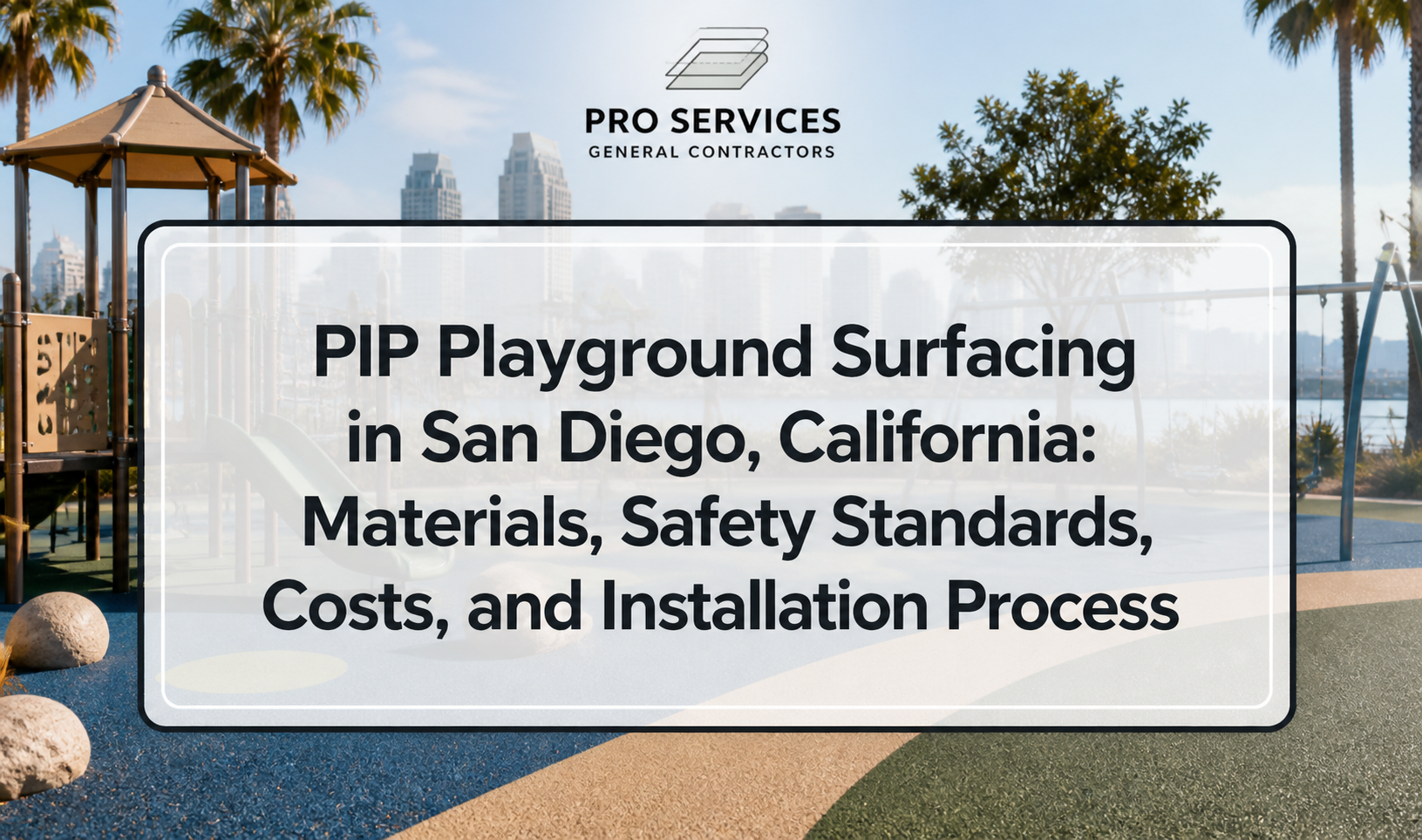
PIP playground surfacing San Diego projects use poured-in-place rubber to create a seamless, impact-attenuating surface designed to reduce fall injuries and improve accessibility on playgrounds. In San Diego, this system is commonly specified for parks, schools, and childcare settings because it can be installed to target fall-height requirements and formed around equipment, curbs, and accessible routes.
Material choices (EPDM vs. recycled rubber base), drainage design, UV exposure, and sub-base preparation directly affect durability and slip resistance in Southern California’s sun and occasional heavy rain. Safety and compliance typically involve evaluating fall heights and testing to ASTM F1292 (impact attenuation) and ASTM F1951 (wheelchair accessibility), along with meeting applicable accessibility requirements and local permitting or site constraints.
This guide breaks down material options, safety standards to look for, typical cost drivers in the San Diego market, and the step-by-step installation process—from site prep and base work to mixing, troweling, curing, and post-installation testing and maintenance.
PIP playground surfacing in San Diego: what it is and when it’s the right choice
PIP playground surfacing (poured-in-place rubber) is a two-layer, troweled rubber system that creates a seamless, unitary surface around play equipment and accessible routes. It’s often chosen in San Diego when owners want a durable, low-trip, wheelchair-friendly surface that can be tuned to the site’s fall-height requirements.
Unlike loose-fill options, PIP is fixed in place, which helps maintain consistent coverage in high-use areas and reduces the daily raking and displacement issues that can happen under swings and slide exits. It’s also commonly used when designs include complex shapes, color patterns, mounds, ramps, curbs, and flush transitions to concrete.
- Best fit: parks, schools, preschools/daycares, civic facilities, and HOA playgrounds where accessibility and predictable maintenance matter.
- Not always ideal: tight budgets, sites with unstable subgrades, or projects that can’t control drainage or schedule around cure times.
- Common goals: impact attenuation, ADA-related access, seamless design, and long-term surface consistency.
System components: base layer, wear layer, binder, and edge details
A typical PIP system uses a resilient base course for impact absorption and a dense wear course for durability, traction, and UV resistance. Performance is influenced by mix design, thickness, and the substrate and drainage beneath it.
Base layer (shock pad): recycled SBR vs. alternative bases
The base layer is usually made from recycled SBR rubber bound with polyurethane, providing the primary impact attenuation. Thickness is typically adjusted to meet the playground’s equipment fall heights.
Recycled SBR is widely used because it’s cost-effective and resilient, but it can be more sensitive to UV if exposed (which is why it’s normally covered by an EPDM wear layer). For projects with higher aesthetic expectations or specific odor/color constraints, teams may discuss alternatives, but availability varies by manufacturer and installer.
- What to confirm in submittals: base thickness by fall height, binder type, and whether the base is fully encapsulated by the wear course.
- Common edge risks: thin edges at borders, drains, and curbs can be weaker if not detailed correctly.
Wear layer: EPDM options and color considerations in Southern California sun
The wear layer is commonly EPDM rubber granules bound with polyurethane, providing the finished color, texture, and day-to-day abrasion resistance. In San Diego’s high-UV environment, UV stability and colorfastness are major decision points.
Darker colors can get hotter in direct sun, and intense sun exposure may gradually fade colors over time depending on the material and binder system. If heat and comfort are priorities, designers often consider lighter colors, increased shade coverage, and thoughtful layout of darker accent zones.
- Design flexibility: graphics, games, striping, and themed color fields can be integrated without seams.
- Slip resistance: texture and cleanliness matter; fine dust/sand can reduce traction if not cleaned periodically.
- Detailing matters: transitions at concrete, drainage inlets, and equipment footings should avoid creating thin, feathered edges.
Sub-base and perimeter constraints: where many failures start
The best PIP mix won’t perform if the base underneath is unstable, poorly drained, or moving. Cracking, delamination, or low spots often trace back to sub-base preparation and water management, not just the rubber itself.
San Diego sites can vary from coastal sandy soils to expansive clays inland, and older parks may have legacy asphalt or concrete substrates. A practical approach is to verify substrate suitability early and plan for repairs, grading, and drainage before surfacing work begins.
- Confirm the existing substrate (asphalt, concrete, engineered base) is structurally sound and appropriately sloped.
- Identify drainage paths and low points; avoid trapping water under or against the rubber.
- Detail edges and terminations to reduce peel forces and water intrusion.
Safety and compliance: what to look for in specs and closeout
PIP playground surfacing in San Diego is typically selected to support fall-impact protection and accessibility. The most common performance references are ASTM F1292 for impact attenuation and ASTM F1951 for wheelchair accessibility on playground surfaces.
Because performance depends on installed thickness and field conditions, many projects also include field testing as part of closeout—especially when surfacing thickness varies by use zone or when inspections are required by an agency or owner.
| Standard / Metric | What it Evaluates | Practical Notes for San Diego Projects |
|---|---|---|
| ASTM F1292 | Impact attenuation (shock absorption) to reduce severity of head injuries from falls at specific heights | Confirm the specified thickness aligns with each piece of equipment’s fall height and consider field testing after cure when required by the owner or inspector. |
| ASTM F1951 | Accessibility (wheelchair maneuverability) of playground surfacing systems | Surface must be installed smoothly with controlled transitions; poor troweling, unevenness, or excessive texture can impact rolling performance. |
| Substrate slope & drainage | Moves water away to reduce ponding and binder degradation risks | Plan for occasional heavy rain events; avoid designs that trap water against curbs, walls, or play equipment footings. |
| Seamless transitions | Trip hazard reduction and route continuity | Detail flush edges at concrete, ramps, and accessible routes; feathered edges are more likely to peel or crumble. |
| Routine inspections & repairs | Keeps surface performing as intended over time | Sand, debris, and UV exposure can accelerate wear; plan for periodic cleaning and localized patching when needed. |
If you need a high-level overview of surface types used in play areas, playground surfacing provides a useful orientation before diving into project-specific specs and testing requirements.
Drainage, climate, and UV: designing for coastal fog and occasional downpours
San Diego’s climate is generally mild, but UV exposure is consistent and rain can be intense when storms hit. Good drainage and UV-aware material selection are key to maintaining traction, appearance, and bond integrity.
Ponding water can introduce long-term problems: it can carry grit that acts like sandpaper, concentrate contaminants, and find its way into weak edges. Coastal environments may also add salt and fine sand, increasing the need for routine cleaning.
- Drainage planning: confirm positive drainage to inlets or landscape areas; avoid “bathtub” conditions created by curbs.
- UV resilience: specify wear-layer materials intended for exterior exposure; confirm binder recommendations for local conditions.
- Shade strategy: consider adding shade structures for comfort, reduced surface temperatures, and potentially slower color fading.
Typical cost drivers for PIP playground surfacing in San Diego
PIP pricing is highly project-specific because it depends on thickness, detail complexity, access, and substrate preparation. In the San Diego market, logistics and jobsite constraints can influence cost as much as the rubber materials themselves.
Rather than focusing on a single square-foot number, it’s usually more accurate to evaluate the scope items that change bids the most.
- Fall-height thickness requirements: higher fall heights generally require thicker base layers, increasing material and labor.
- Site prep and repairs: asphalt/concrete patching, regrading, and drainage corrections can be significant.
- Design complexity: multicolor graphics, tight radii, ramps, and custom patterns add labor time.
- Access and staging: limited access gates, long pump/cart distances, and restricted work hours (schools/parks) can increase labor.
- Edge conditions: curbs, walls, and numerous penetrations (footings, drains, bollards) require careful detailing.
If you’re comparing surface options strictly on upfront cost, it can help to consider lifecycle implications and repairability; the discussion in why cheap surfacing costs more long term is a useful framework for evaluating total cost of ownership.
Installation workflow: what happens from demo to final cure
PIP installations follow a defined sequence—prep, base placement, wear layer placement, and curing—where timing and weather control matter. Understanding the steps helps owners plan site closures and reduces surprises during inspections.
1) Site evaluation, measurements, and fall-height planning
The early phase aligns equipment fall heights, layout, and thickness requirements before any rubber is mixed. This is where many avoidable issues—like under-thickness zones or drainage conflicts—can be solved on paper.
- Confirm play equipment locations and use zones (swings, slides, climbers) and identify required protection areas.
- Map thickness transitions so they occur gradually and away from high-turnover edges.
- Coordinate with other scopes: fencing, concrete flatwork, irrigation, electrical, and shade footings.
2) Substrate preparation and base corrections
Surface preparation is the foundation of adhesion and long-term durability. The goal is a clean, stable, properly sloped base with sound edges and no weak spots.
- Remove unsuitable materials and address soft/unstable areas.
- Patch cracks, spalls, and low spots on asphalt or concrete substrates as needed.
- Clean thoroughly so the primer/binder bonds (dust and laitance are common bond-breakers).
- Install edge restraints or confirm curb/termination conditions where required by the system.
3) Mixing and placing the base layer
The base layer is mixed in controlled batches to maintain consistent binder ratios and density. Installers then spread and trowel it to the planned thickness, accounting for transitions and equipment interfaces.
- Batch control: consistent mixing reduces weak/crumbly areas caused by binder variability.
- Thickness checks: installers may use depth gauges or reference marks to hit target depths.
- Detailing: edges around posts, drains, and curbs should be robust—not feathered thin.
4) Placing the EPDM wear layer and finishing
The wear layer is installed over the base to create a uniform, closed finish. Troweling technique directly affects texture, appearance, and how well the surface resists raveling and dirt pickup.
- Color transitions and graphics are typically laid out before mixing to minimize cold joints.
- Finish texture should balance traction with cleanability; overly open texture can trap debris.
- Terminations should be flush and protected from peeling forces caused by wheels, edging tools, or water flow.
5) Curing, protection, and post-installation checks
Cure time varies by system and weather; the surface must be protected from traffic, water, and vandalism until fully cured. Some projects also include field testing to confirm impact and accessibility performance after installation.
- Site control: fence off the area and keep sprinklers off until the surface is ready.
- Weather timing: avoid installation during rain risk or when overnight moisture can interfere with curing.
- Closeout items: confirm thickness documentation, maintenance guidance, and any required test reports.
For a deeper look at sequencing and what to expect on the jobsite, see the PIP process overview.
Maintenance in real-world San Diego conditions: cleaning, inspections, and repairs
PIP is considered relatively low maintenance, but it is not maintenance-free—especially near beaches, schools with heavy daily use, or sites exposed to landscape debris. A simple routine helps preserve traction, appearance, and edge integrity.
Most problems are easier (and cheaper) to address early, before water gets under an edge or a small crack turns into a larger delamination.
Routine cleaning and housekeeping
Cleaning is primarily about keeping abrasive grit and organic debris off the surface so it doesn’t grind into the wear layer. The right method depends on how dirty the site gets and what the surrounding landscaping contributes.
- Blow or sweep off sand, leaves, and bark on a regular schedule.
- Rinse as needed, but avoid practices that force water into edges or joints.
- Address spills (food, gum) promptly to reduce staining and buildup.
Periodic inspections: what to look for
A quick walk-through can identify developing issues before they become safety hazards. Focus on edges, transitions, and high-impact zones where wear is concentrated.
- Edges and terminations: curling, peeling, or gaps near curbs and concrete.
- High-wear zones: swing bays, slide exits, and tight turning areas on accessible routes.
- Surface changes: cracking, raveling granules, or areas that feel softer than surrounding zones.
- Ponding: standing water after irrigation or rain that indicates a slope/drainage issue.
Repairs and recoats: planning for lifecycle upkeep
PIP repairs can range from small patches to larger cut-and-replace sections depending on the cause and extent of damage. Color matching can be challenging as surfaces weather, so it’s helpful to document original colors and materials for future touch-ups.
- Localized patching: useful for isolated damage, but requires good edge prep for adhesion.
- Drainage correction: may be needed before repair if water is contributing to failure.
- Wear-layer refresh: some systems allow recoats or overlays, but suitability depends on the existing condition and manufacturer guidance.
For practical guidance on upkeep tasks and what owners can monitor between professional visits, refer to PIP maintenance.
Choosing a system and scope that fits your site
The best PIP playground surfacing San Diego projects start with a clear scope: fall-height targets, drainage plan, accessibility needs, and an agreed approach to testing and maintenance. When those pieces are defined early, it’s easier to compare bids and avoid change orders tied to substrate surprises or missing details.
If you’re planning a new build or replacement, it often helps to request submittals that clearly state thickness by fall height, wear-layer material, edge details, and curing/site-control requirements. That level of clarity makes your installation more predictable—and helps the finished surface perform the way it was intended.
When you’re ready to explore project-specific options, poured in place rubber is a good starting point for understanding available system configurations and common applications.
Frequently Asked Questions
Get clarity on fall-height, drainage, and long-term PIP performance
If you’re considering poured-in-place rubber for a San Diego playground, a quick project review can help you confirm the right thickness by equipment fall height, plan clean transitions for accessibility, and avoid common edge and drainage issues that lead to premature wear.
Talking through your site conditions (existing asphalt/concrete, slope, sun exposure, and access) can also make bid comparisons easier and reduce surprises during installation, curing, and any required field testing or closeout documentation.