Playground Safety Surfacing

PIP Installation

Poured-In-Place Rubber Installation

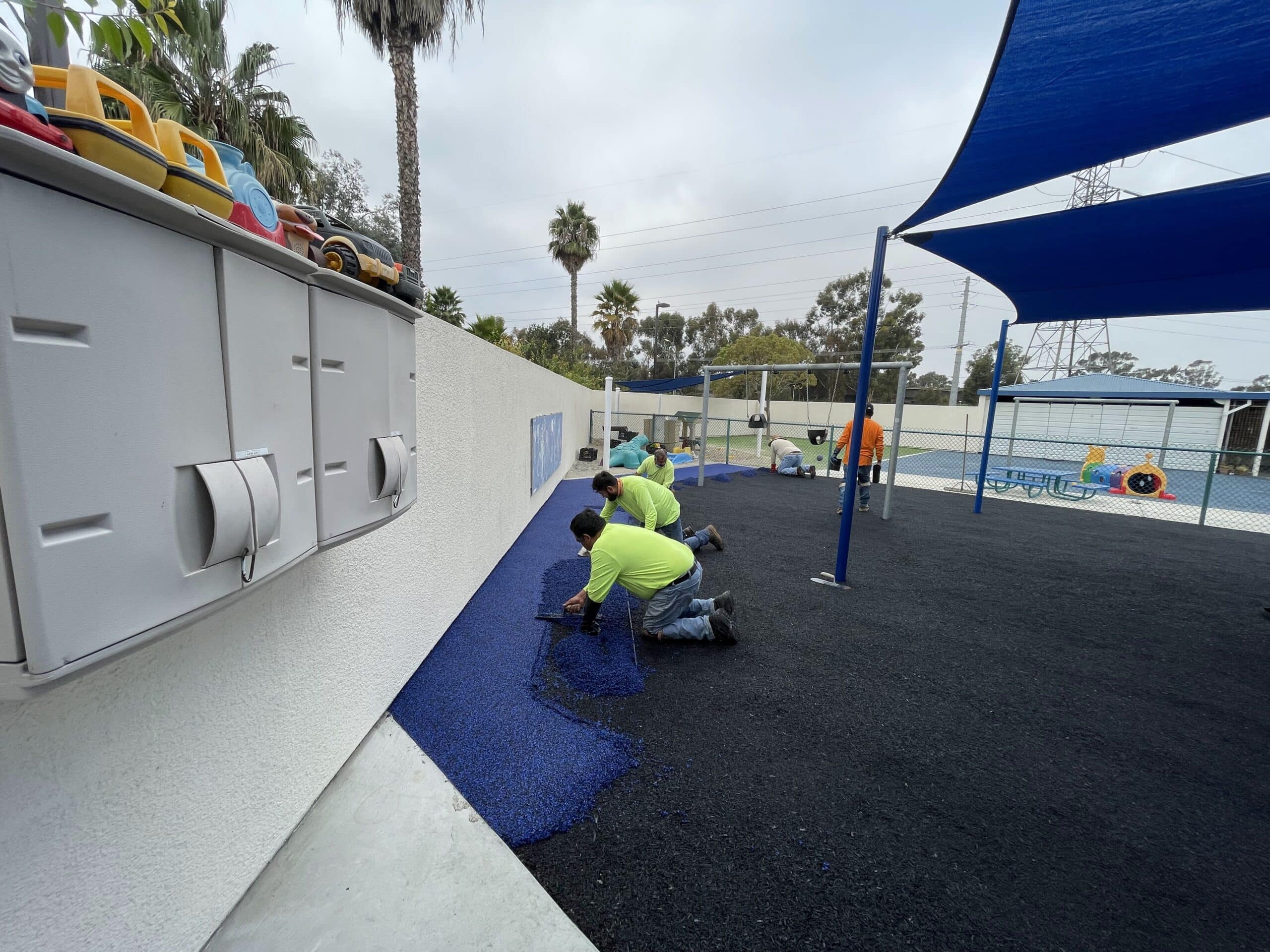
Installing poured-in-place rubber is a site-built process. The base is prepared, the cushion layer is mixed and placed to the depth your equipment’s fall heights require, and the colored wear layer is troweled smooth on top. Our crew handles each step for schools, parks, HOAs and commercial sites across Southern California.

Installers placing poured-in-place rubber under a shade sail beside a building

PIP installation in progress

Quick Answer

How is poured-in-place rubber installed?

PIP is installed in layers, on site. After the area is measured and the base is prepared, a cushion layer of recycled SBR rubber and polyurethane is mixed and placed to the depth each play zone needs. A colored EPDM wear layer is then troweled uniformly on top, and the surface cures before it opens for use.

Installation demands skill and exact mixing ratios, so it isn’t a DIY job. A competent installer also avoids problems such as water pooling and inadequate impact protection, and accounts for the right base materials, slopes and drainage.

Installation at a glance

Installed over
Asphalt, concrete or compacted stone
Layers
Cushion layer + colored EPDM (or TPV) wear layer
Binder
Aromatic or aliphatic urethane; aliphatic recommended for some colors
Depth
Set by the critical fall height of each play area
Details
Wear inlays at swings and slide exits; graphics and logos
Timing
Varies with base work, weather, scope, design and cure time

Installation Workflow

The PIP installation process, step by step.

Every project follows the same sequence, adjusted to your site, equipment and design.

01

Site Evaluation

We measure the area, check slopes and drainage, and review the existing surface, borders and equipment fall heights.

02

Base Preparation

The base is prepared so PIP can be installed over asphalt, concrete or compacted stone, with slopes and drainage accounted for.

03

Cushion Layer

Recycled SBR rubber and polyurethane are mixed on site and placed to the depth each play zone requires.

04

Wear Layer & Details

Colored EPDM or TPV is troweled uniformly over the cushion, with graphics, color blends and wear inlays built in.

05

Cure & Handoff

The surface cures before use. We walk through it with you and explain cleaning, inspection and resealing.

Project timing varies with base conditions, weather, scope, design complexity and cure time. See our process · PIP project timeline

Bases & Layers

What goes under and into a PIP surface.

What can PIP be installed over? Asphalt, concrete or compacted stone. The base is checked for slope and drainage first, because a poorly drained base can cause soft or sunken spots later.

Asphalt or concrete

Existing hard surfaces can serve as the base

Compacted stone

An aggregate base for new installations

Cushion depth

Thicker where equipment is taller

EPDM or TPV

Standard EPDM granules, with a TPV upgrade

Binder choice

Aliphatic is recommended for some colors

Wear inlays

Extra protection at swings and slide exits

How thick is a PIP installation? It depends on the critical fall height of the equipment above it. The cushion layer is adjusted on site using the surfacing manufacturer’s ASTM F1292 test data, so each zone gets the depth it needs.

Gray poured-in-place rubber surrounding a red, blue and yellow play structure

What gets installed

Wear layerEPDM or TPV granules + aromatic or aliphatic urethane binder
Cushion layerRecycled SBR rubber + polyurethane; depth set to critical fall height
BaseAsphalt, concrete or compacted stone
Diagram is illustrative, not to scale.

What to Expect

What owners and contractors should expect.

A clear picture of each stage helps you plan access, scheduling and the handoff to maintenance.

Before installation

Planning & site prep

We confirm the layout, fall heights, colors and graphics, and the base is prepared, including any removal of old surfacing.

During installation

Crew on site

The crew mixes and places each layer on site. The area stays closed while layers are installed and the surface cures.

At handoff

Walkthrough & care plan

We review the finished surface with you and explain cleaning, yearly inspection and periodic resealing.

General contractors: we can price surfacing into your bid and schedule around your construction timeline. Contractors hire us

FAQ

PIP installation questions, answered.

What to know about bases, thickness, timing and what happens after the crew leaves.

Talk to a surfacing specialist

Get help choosing, designing and scoping the right surface.

(888) 902-3777

How is poured-in-place rubber installed?

The site is evaluated and the base prepared, then a cushion layer of recycled SBR rubber and polyurethane is mixed on site and placed to the depth each play zone requires. A colored EPDM or TPV wear layer is troweled uniformly on top, including any graphics and wear inlays, and the surface cures before use.

PIP is installed over asphalt, concrete or compacted stone. The base is checked for slope and drainage first, because drainage problems under the surface can cause sunken areas later.

Thickness depends on the critical fall height of the play equipment. The cushion layer is adjusted on site using the surfacing manufacturer’s ASTM F1292 test data, so taller equipment gets a deeper cushion. A professional should specify the final depth.

It depends on base conditions, weather, the size of the area, design complexity and cure time, so we give you a project-specific schedule with your estimate. See the PIP project timeline.

It is not recommended. Installation demands skill and exact mixing ratios, and mistakes can lead to water pooling, inadequate impact protection or early wear.

Yes. Because it is mixed and troweled on site, PIP can follow slopes, mounds and curved layouts, which also makes it a good fit for themed play areas and paths.

Once the surface has cured, we walk through it with you and explain care: regular cleaning, a yearly inspection and periodic resealing of the wear layer. PIP maintenance & repair.

Yes. We can price surfacing into your bid and schedule installation around your construction timeline. Contractors hire us.

We install poured-in-place rubber throughout San Diego, Orange, Riverside and Los Angeles Counties. See all areas served.

Free Estimates

Planning a PIP installation?

Share your site, equipment and timeline. We’ll confirm the base, depth and layout and give you a project-specific estimate.

Request an Estimate

Let’s plan your PIP installation.

Our playground surfacing specialists are here to assist you at every stage of the process, from choosing the right product to design and installation.

  1. 1Share your projectSite type, location and what you have in mind.
  2. 2We follow upA specialist reviews your needs and next steps.
  3. 3Get your estimateA recommended surface system and scope for your site.

Call us

(888) 902-3777

Email

info@playgroundsafetysurfacing.pro

Service area

San Diego, Orange, Riverside & LA Counties

Request my free estimate

Fields marked * are required.

"*" indicates required fields

This field is for validation purposes and should be left unchanged.
Name*