

PIP Applications
Poured-in-place rubber started on playgrounds, but its seamless, cushioned and slip-resistant surface now serves schools, parks, rooftops, decks, fitness areas, senior communities and HOAs. See how each setting uses PIP, and what to plan for in yours.
★★★★★★★★★★ 4.6 out of 5 based on 10 Google reviews
PIP applications · Southern California
Quick Answer
Poured-in-place rubber is used wherever people need a soft, seamless, slip-resistant surface. That includes under playground equipment, around splash pads, on rooftops, decks and patios, in exercise and fitness areas, along walkways and entryways, and in outdoor spaces at schools, parks, HOAs, senior centers and corporate campuses, indoors or outdoors.
The same two-layer system adapts to each setting. Where there is play equipment, cushion depth follows its fall heights; elsewhere, the focus shifts to slip resistance, drainage, accessibility and design.
Common PIP settings
By Setting
Each card links to a page with more detail on that setting.
Most requested
Seamless, impact-absorbing surfacing planned around equipment fall heights, plus splash pad surfacing.


More PIP applications: Corporate Campus Homes & HOAs Senior Centers & Assisted Living
Application Details
The surface is the same; the priorities change. Here is what matters most in each type of space.
Playgrounds
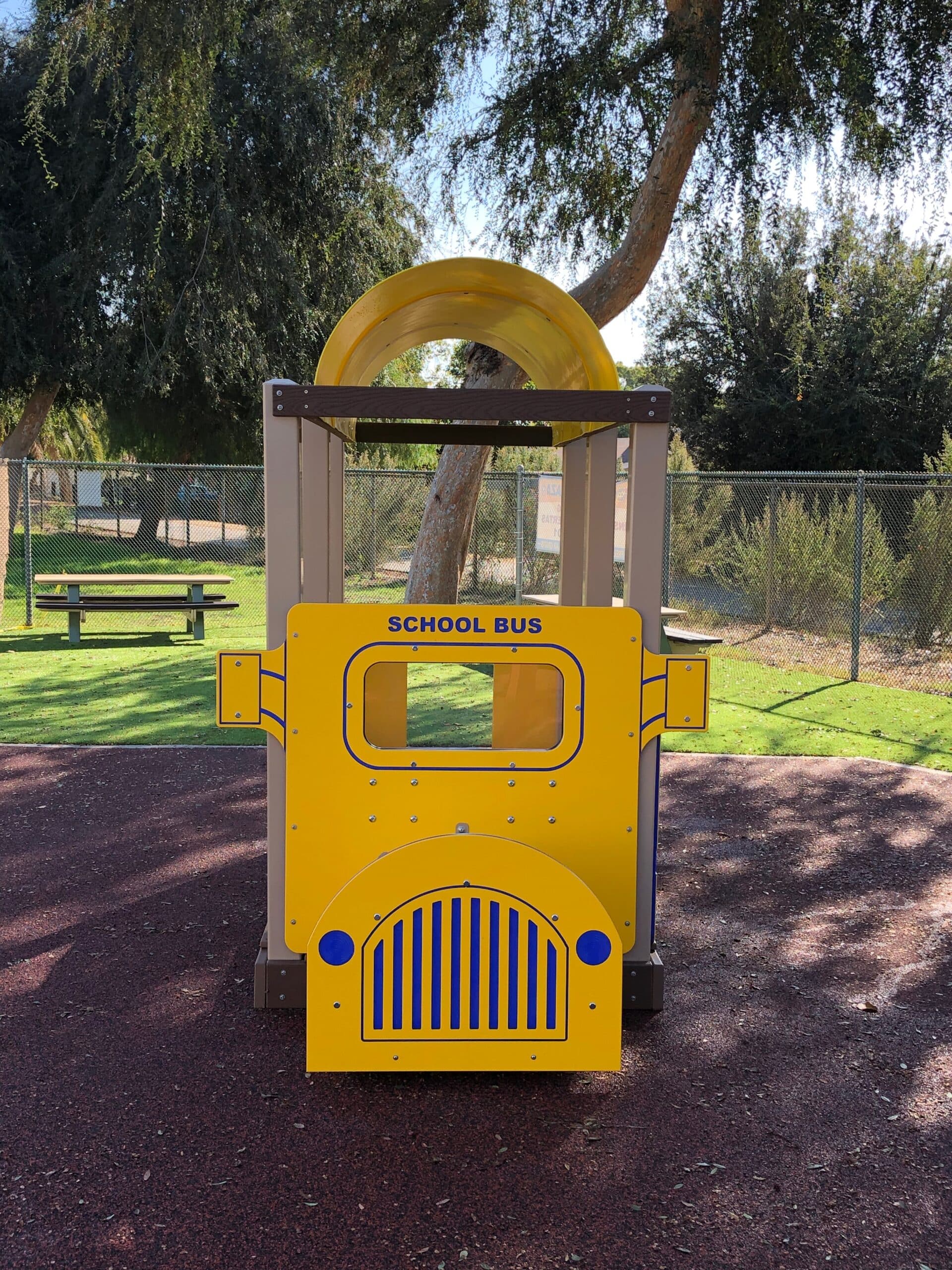
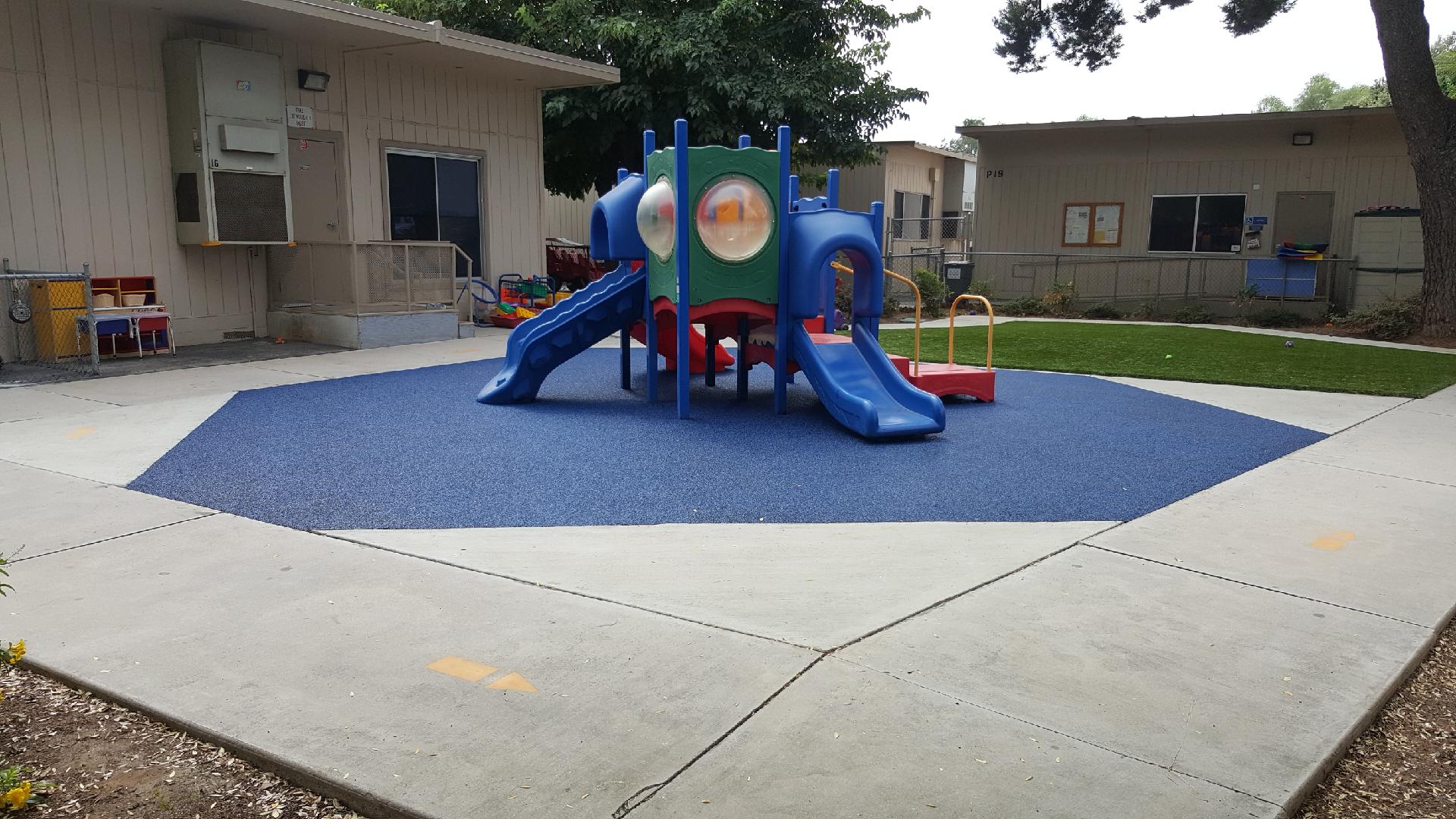
Cushion depth is matched to each play component’s critical fall height, with seamless, accessible routes and wear inlays at swings and slide exits.
Schools & childcare
School colors, logos, games and geometric shapes can be built permanently into the surface of busy play yards.
Parks & public works
A seamless surface avoids the raking and replenishing loose fill needs, and gives wheelchairs and strollers a smooth route.
Rooftops, decks & patios
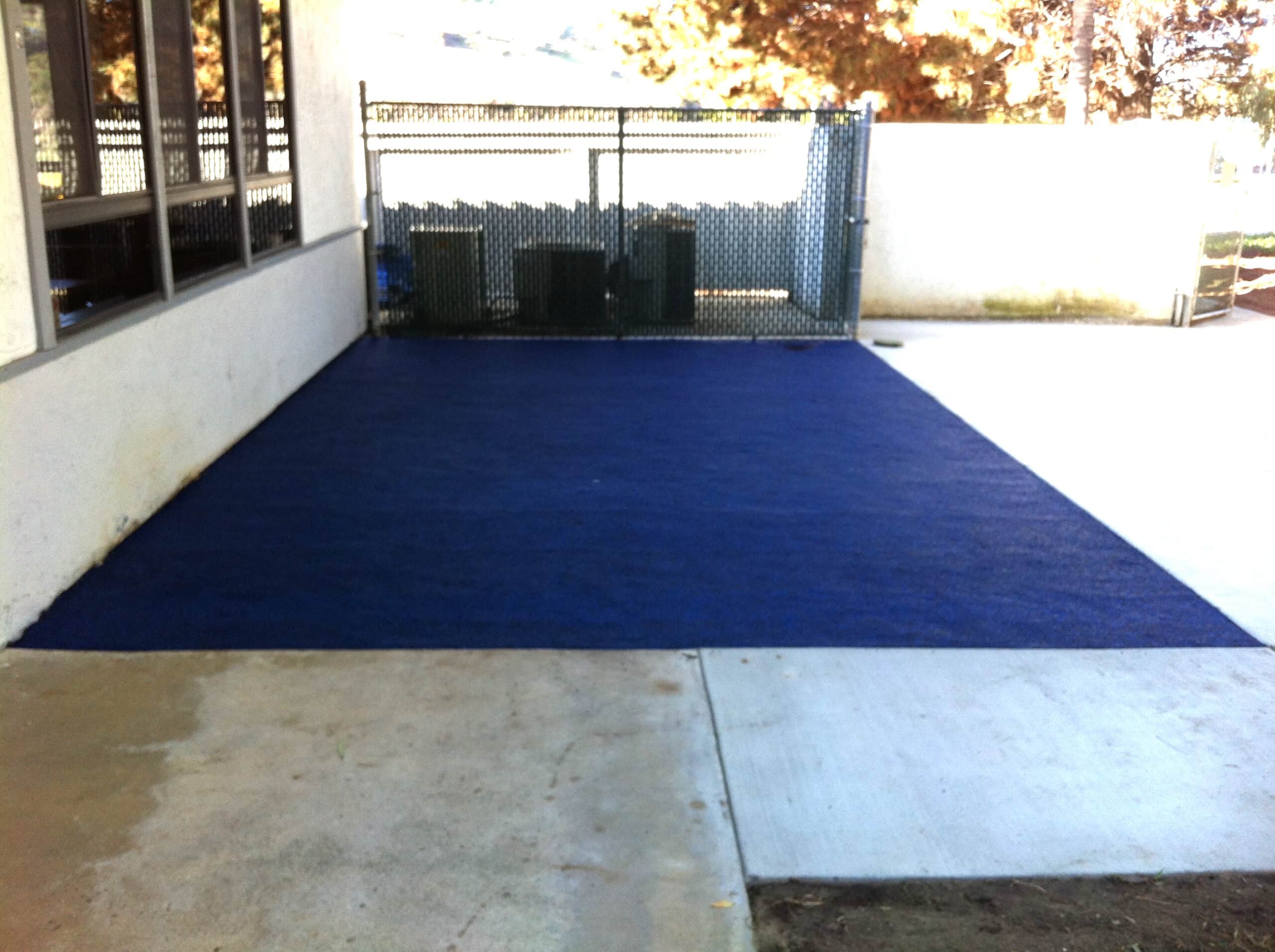
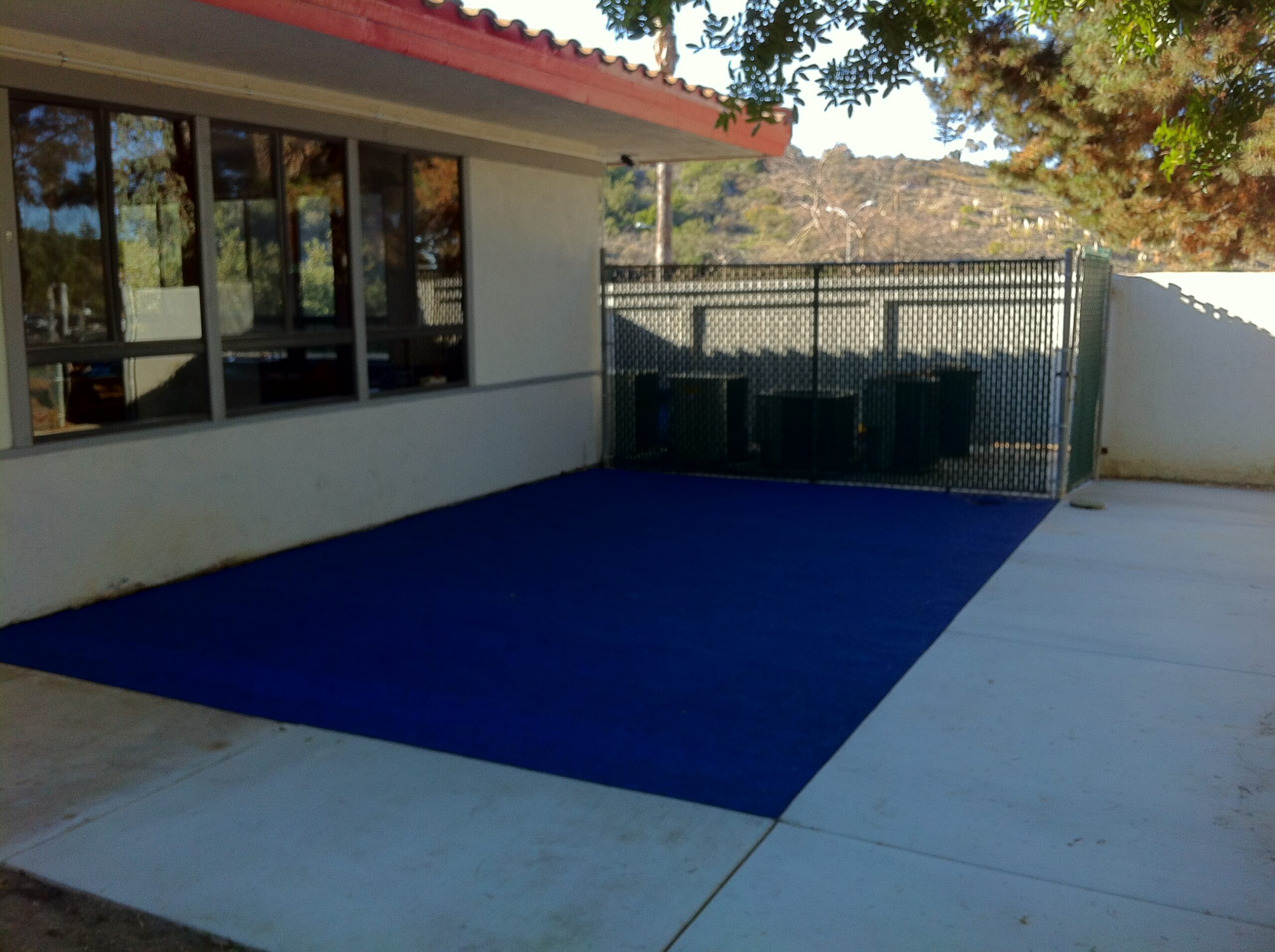
PIP can be installed over existing concrete or asphalt to turn a rooftop, deck or patio into a comfortable activity space.
Corporate wellness
Exercise areas and paths on corporate campuses, and PIP can be combined with synthetic turf in one design.
Senior living & HOAs
Firm, seamless surfaces suit walkers and wheelchairs at senior centers, and shared play areas in HOA communities.
Planning Factors
What should you plan for? Every PIP project uses the same cushion layer and EPDM wear layer, but the base, depth, drainage and design are tailored to the space and how it is used.
Cushion depth only matters where there is play equipment
Asphalt, concrete or compacted stone
Porous PIP lets water pass through; slopes still matter
Inlays where traffic concentrates, like swings and slides
Seamless routes for wheelchairs, walkers and strollers
Logos, games, shapes and blends in 18 EPDM colors

Project Gallery
School play yards, park playgrounds, courtyards and campus fitness areas from our project library.
Related Surfacing Solutions
Go deeper on playground safety, installation and care, or compare other surfaces.
How the two-layer system works, colors, benefits and FAQs.
Fall heights, accessibility and wear zones on playgrounds.
Bases, layers and the installation workflow.
Permeable rubber paving for paths, sidewalks and tree wells.
Synthetic turf that can be combined with PIP.
Shade for play areas, patios and seating.
FAQ
Where poured-in-place rubber works, and what changes from one setting to another.
Talk to a surfacing specialist
Get help choosing, designing and scoping the right surface.
PIP is used under playground equipment, around splash pads, on rooftops, decks and patios, in fitness and exercise areas, and along walkways and entryways at schools, parks, HOAs, senior centers and corporate campuses.
No. It was first developed for playgrounds, but its seamless, soft and slip-resistant surface is now used in many other places where people walk, play or exercise. PIP for playgrounds.
Yes. PIP can be installed over existing concrete or asphalt, which makes it a practical way to add a soft, non-slip activity surface to rooftops, decks and patios. Rooftops, decks & patios.
Yes. PIP can be used in both indoor and outdoor play and activity areas, and it can be shaped to fit almost any space.
Any area with play equipment that children can fall from. There, the cushion layer depth is matched to each component’s critical fall height. Walkways, patios and fitness areas without equipment don’t need fall-height depth.
Yes. PIP can be used with other unitary surfaces such as synthetic turf to create multi-surface play areas and campus spaces. Artificial grass.
Yes. We install rubber splash pad surfacing as one of our PIP applications. Rubber splash pads.
We install poured-in-place rubber throughout San Diego, Orange, Riverside and Los Angeles Counties. See all areas served.
Free Estimates
Tell us about the setting, who uses it and what you want it to look like. We’ll recommend the right system and layout.
Request an Estimate
Our playground surfacing specialists are here to assist you at every stage of the process, from choosing the right product to design and installation.
(888) 902-3777
info@playgroundsafetysurfacing.pro
San Diego, Orange, Riverside & LA Counties
Fields marked * are required.
"*" indicates required fields