Critical fall height
Deeper where equipment is taller
Each play component has a critical fall height. The cushion layer is built deeper under taller equipment instead of using one thickness everywhere.
PIP Playground Surfacing
Poured-in-place rubber gives a playground seamless, impact-absorbing coverage, with cushion depth matched to your equipment’s fall heights, accessible routes for every child and colors that make the space your own. We plan and install PIP playgrounds for schools, parks, childcare centers and HOAs across Southern California.
★★★★★★★★★★ 4.6 out of 5 based on 10 Google reviews

PIP playground · Southern California
Quick Answer
Poured-in-place rubber gives a playground consistent impact protection across the whole play area. Its cushion layer is sized to each play component’s critical fall height, and unlike mulch, sand or loose rubber, it doesn’t shift, scatter or need replenishing, so protection doesn’t thin out where children land most.
It is also seamless and firm enough for wheelchairs, walkers and canes, and its colored wear layer can carry school colors, logos and games. The trade-off is a higher installation cost than loose fill, generally offset by much lower upkeep.
PIP playgrounds at a glance
Playground Safety
Playground safety surfacing is about absorbing impact where falls happen. PIP does that with a cushion layer designed around your equipment.
Critical fall height
Each play component has a critical fall height. The cushion layer is built deeper under taller equipment instead of using one thickness everywhere.
Impact testing
The required depth comes from the surfacing manufacturer’s ASTM F1292 impact test data for each critical fall height. Project specifications and your playground inspector determine any testing required.
Consistent coverage
Loose fill gets kicked out from under swings and slides. PIP stays in place, so protection is even across the whole play area.
Every playground is different. Final depth and layout are specified per project, based on your equipment and site.
Access & Design
Is a PIP playground accessible? PIP has no shifts or seams, so wheelchairs, walkers and canes can reach play equipment. It can meet ADA requirements when installed as a firm, stable, slip-resistant surface with smooth transitions to adjoining paths.
No gaps, seams or loose pieces to catch wheels
Level connections to paths and adjoining surfaces
Match your school, park or brand palette
Hopscotch, paths and shapes built into the surface
Mix colors for a custom look
Follows curves, mounds and themed designs


Swings
& slides
wear first
Wear Zones & Care
Swing bays and slide exits take the most foot traffic and the hardest landings. Planning for those zones, and keeping up with care, keeps the whole surface safe for longer.
Extra wear protection is installed under swing bays and at slide exits.
Sweep or blow off debris, and keep sand off the surface, since it clogs the pores.
Check where PIP meets other surfaces, plus borders and high-wear areas, at least once a year.
Resealing renews the wear layer, restores color and adds UV protection.
Playground Types
The surface adapts to the children who use it and the equipment they play on.
Ages 2–5
Lower equipment, soft colors and simple games for young children, in play yards that see heavy daily use.
Ages 5–12
Taller structures need deeper cushioning, and school colors and games make busy recess spaces your own.
Public & shared
Accessible community playgrounds that don’t need raking or refilling like loose fill.
Playground Gallery
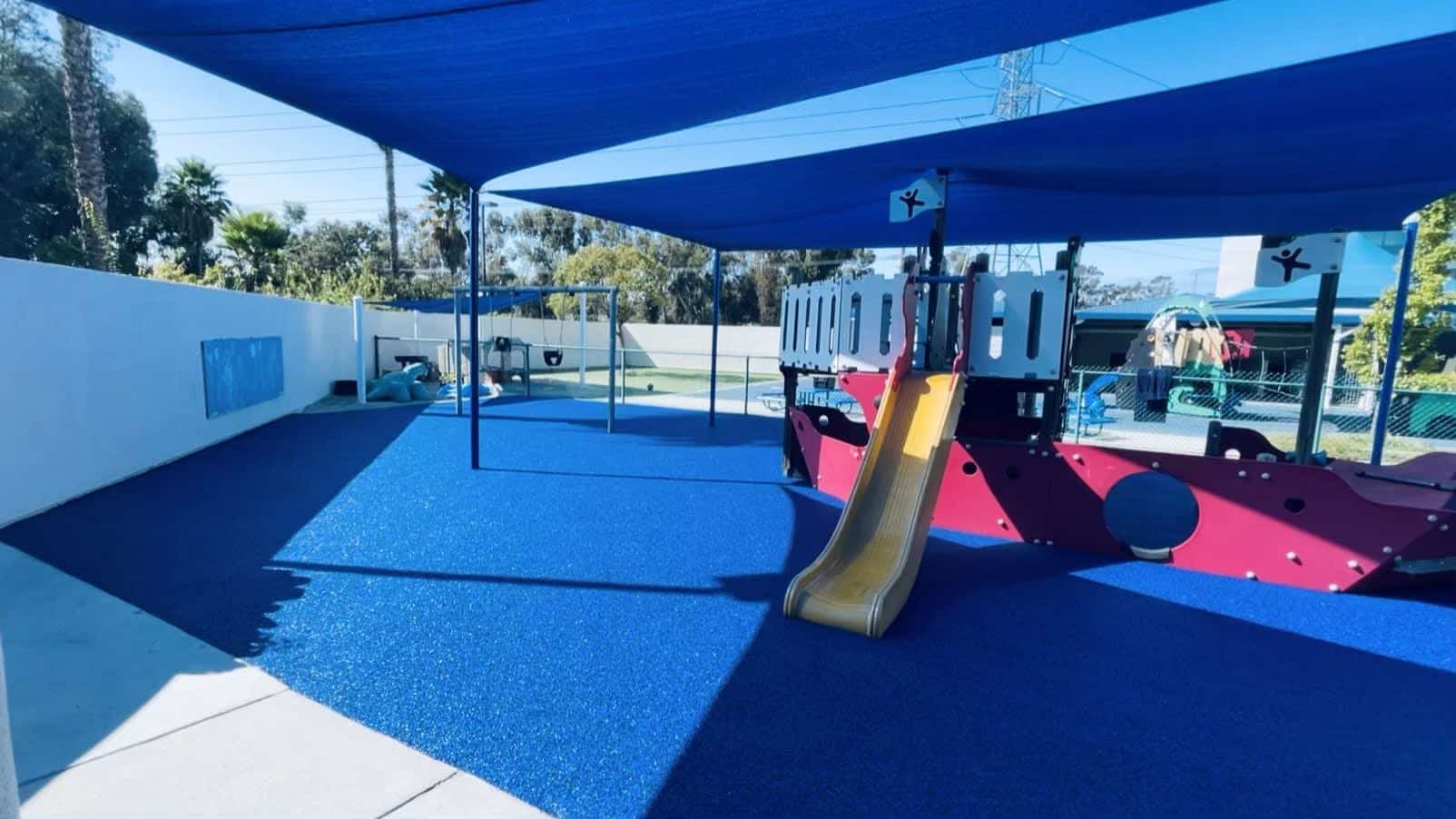
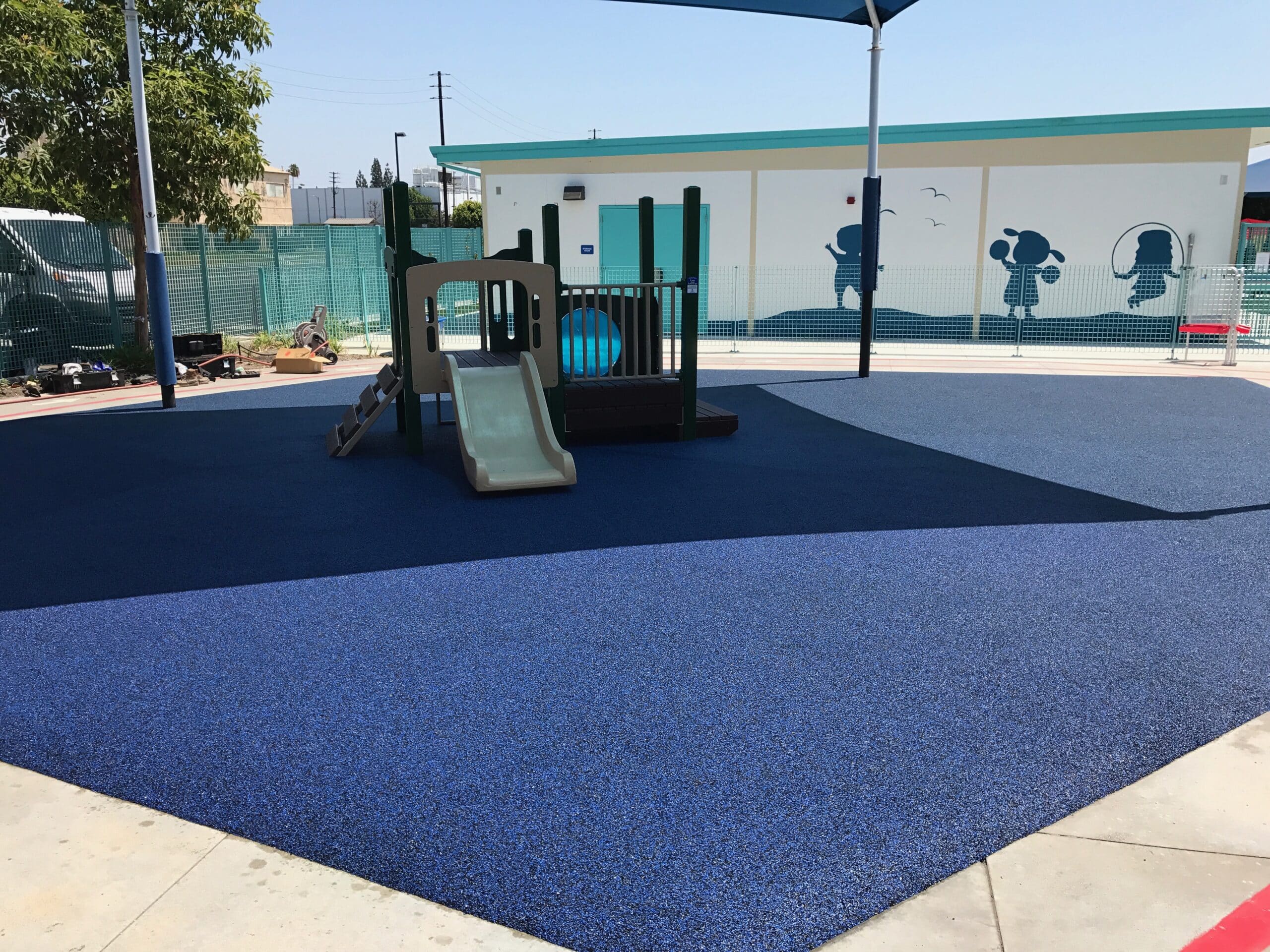
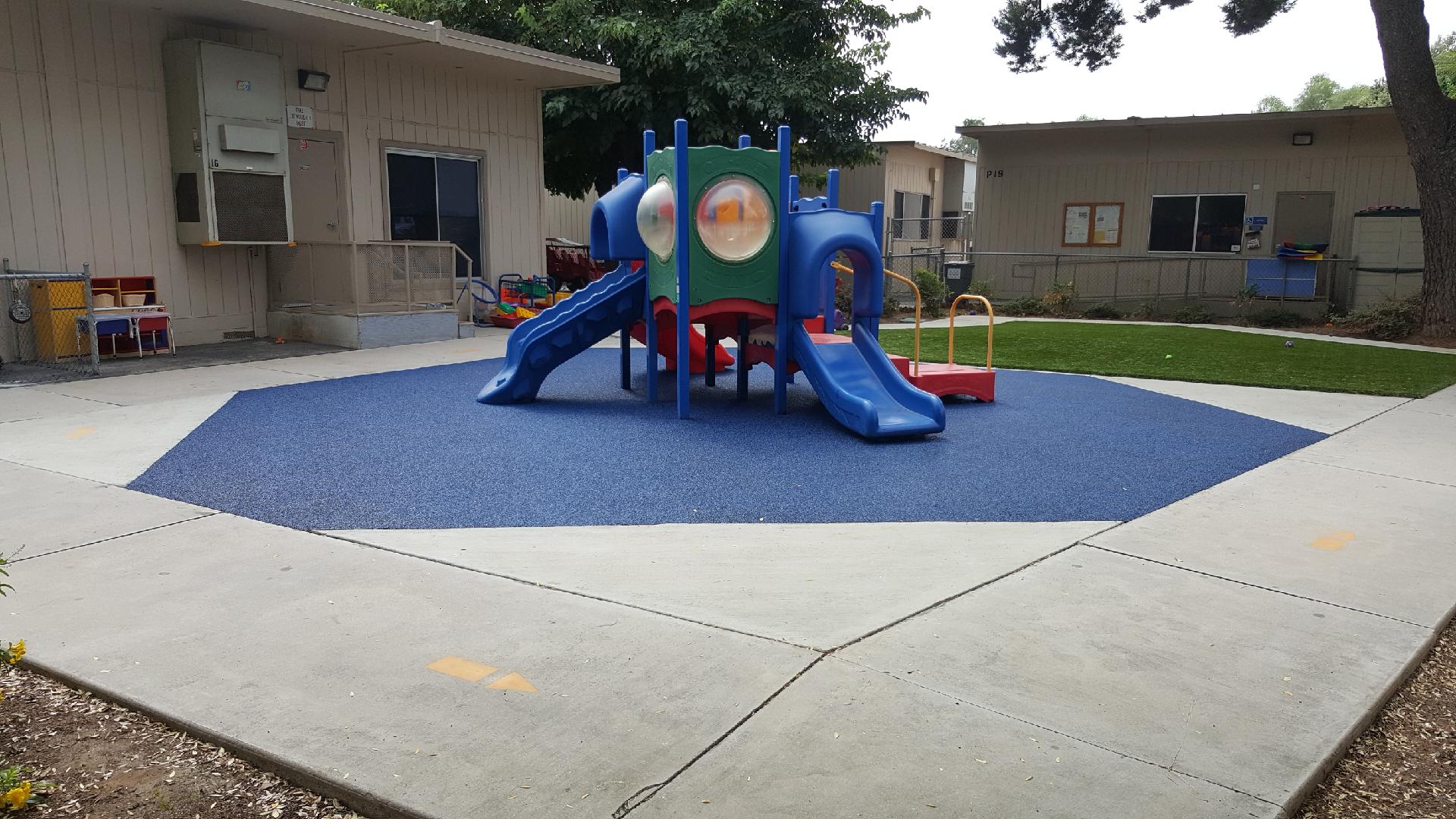
School, park and community playgrounds with poured-in-place rubber, many paired with shade sails.
Related Surfacing Solutions
Plan the full play space, from equipment and shade to installation and care.
How the two-layer system works, colors, benefits and FAQs.
Bases, layers and the installation workflow.
Cleaning, inspection, resealing and repairs.
Other places PIP is used, from rooftops to campuses.
Play structures for different age groups.
Shade sails and canopies for play areas.
FAQ
Safety, accessibility, design and upkeep for poured-in-place rubber playgrounds.
Talk to a surfacing specialist
Get help choosing, designing and scoping the right surface.
PIP provides consistent impact protection across the whole play area, with cushion depth matched to equipment fall heights. It is seamless and accessible, needs no raking or refilling, and can include custom colors, games and logos.
It depends on the critical fall height of each play component. The surfacing manufacturer’s ASTM F1292 test data determines the depth for each fall height, and the cushion layer is adjusted on site. A professional should specify the final depth.
Where a project specifies ASTM requirements, the depth for your equipment is set from the surfacing manufacturer’s ASTM F1292 impact test data, and your inspector confirms the requirements for the site.
PIP has no shifts or seams, which makes it accessible to wheelchairs, walkers and canes. It can meet ADA requirements when installed as a firm, stable, slip-resistant surface with smooth transitions to adjoining paths. ADA compliance for PIP.
Loose fill such as mulch, sand or loose rubber shifts, scatters and must be raked and replenished, which leaves thin spots under swings and slides. PIP stays in place and protects evenly. It costs more to install, but upkeep is much lower.
Wear inlays are installed under swing bays and at slide exits for extra wear protection, and those areas should be checked during routine inspections.
PIP warms up during long exposure to heat and sunshine, but it does not retain heat the way asphalt does. Many of our playgrounds pair PIP with shade structures.
Yes. Because PIP is mixed and applied on site, school colors, logos, games and geometric shapes can be built permanently into the surface. See colors.
Sweep or blow off debris, keep sand off the surface, wash with a hose and mild detergent, inspect at least yearly and reseal the wear layer periodically. PIP maintenance & repair.
We install PIP playgrounds throughout San Diego, Orange, Riverside and Los Angeles Counties. See all areas served.
Free Estimates
Tell us about your equipment, the ages it serves and your design ideas. We’ll specify the depth, layout and colors.
Request an Estimate
Our playground surfacing specialists are here to assist you at every stage of the process, from choosing the right product to design and installation.
(888) 902-3777
info@playgroundsafetysurfacing.pro
San Diego, Orange, Riverside & LA Counties
Fields marked * are required.
"*" indicates required fields