Most requested
Sidewalks, Paths & Trails
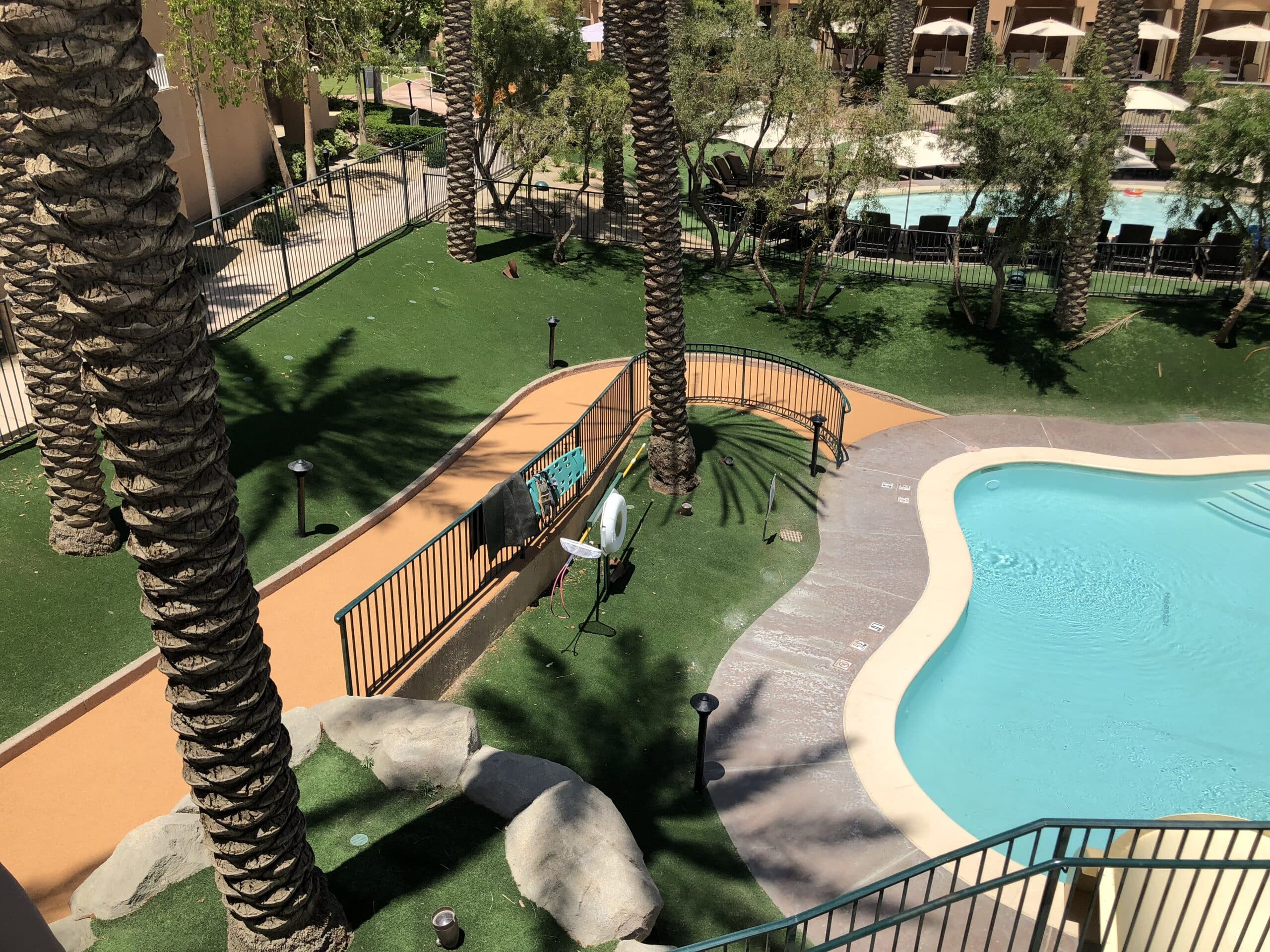
A flexible, permeable alternative to concrete and asphalt for walkways, park trails and campus paths.
Porous Rubber Surfacing
Porous rubber is a flexible, permeable surface made from recycled tire rubber granules bound together and poured in place. Rainwater passes through it instead of running off, which makes it a practical alternative to concrete and asphalt for sidewalks, paths, tree wells, patios and play-area walkways across San Diego, Orange, Riverside and Los Angeles Counties.
★★★★★★★★★★ 4.6 out of 5 based on 10 Google reviews
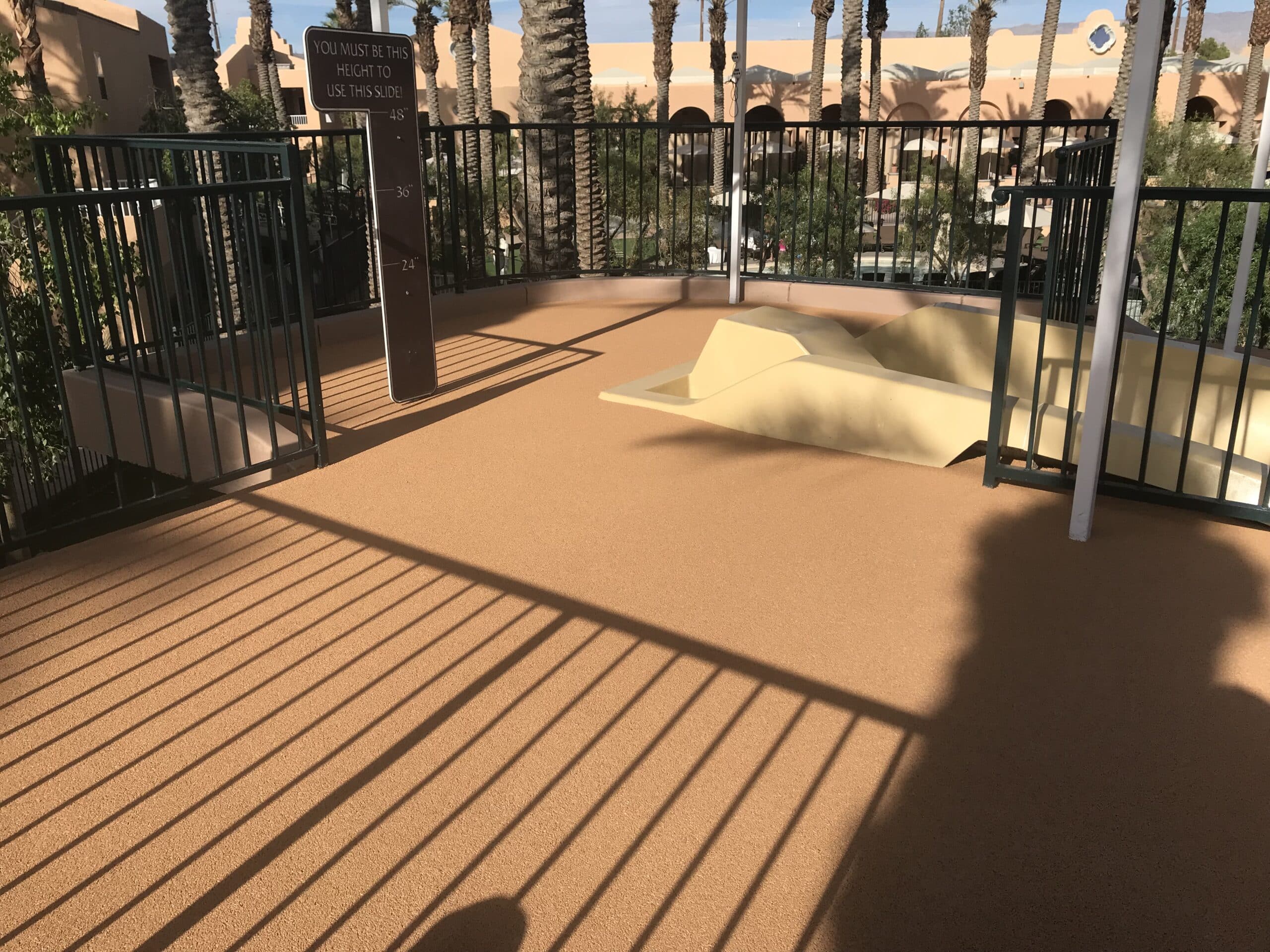
Porous rubber pathway · Southern California
Quick Answer
Porous rubber surfacing is a seamless, flexible paving system made from recycled rubber granules mixed with a binder and troweled in place. The granules leave open spaces between them, so rainwater soaks through the surface instead of pooling or running off. The rubber has some give underfoot, yet stays firm enough for strollers, wheelchairs, bicycles and skateboards.
It is also called pervious rubber pavement, rubber sidewalk or rubber pathway surfacing. Cities, schools, parks and property owners use it as a low-impact alternative to concrete, asphalt and pavers, especially where tree roots, drainage or slip resistance are a concern.
Porous rubber at a glance
How It Works
How does porous rubber drain? Larger recycled rubber granules are bound together with open voids between them. Rain soaks through those voids into the base and subsoil instead of sheeting across the surface, so the surface dries quickly and stormwater runoff is reduced.
Voids between granules let water pass straight through
Over compacted aggregate, water reaches the subsoil and nearby roots
Tolerates small ground movement and root growth
Can be laid on slopes, over mounds and around bends
Add a colored EPDM wear layer for a smoother, colorfast finish
Gives used tires a second life instead of a landfill
System anatomy
Benefits
Porous rubber solves problems that rigid paving can’t: drainage, root damage and hard, slippery walking surfaces.
Rainfall soaks through the surface, reducing runoff and puddles on paths and patios.
Flexes as tree roots grow instead of cracking and heaving like concrete, and lets water and air reach the roots.
A textured, low-slip surface that stays walkable when wet.
More give than concrete or asphalt for walking, jogging and play-area paths.
Seamless paths suitable for strollers, wheelchairs, bicycles and skateboards.
Made mostly from recycled tire rubber, keeping tires out of landfills.
Poured in place, so it follows curves, slopes and mounds without seams.
Damaged spots can be repaired, and worn areas can be resurfaced with fresh porous rubber.
Good to know: porous rubber is a paving and pathway surface. Under play equipment, where children can fall from height, we specify poured-in-place rubber, whose cushion depth is matched to the equipment’s critical fall height.
Applications
Porous rubber is built for surfaces people walk, run and roll on, especially where drainage, tree roots or slip resistance matter.
Most requested
A flexible, permeable alternative to concrete and asphalt for walkways, park trails and campus paths.
Material Options
The right system depends on how the surface will be used and the look you want. All three are poured or troweled in place.
Single layer
Larger recycled crumb-rubber granules create the most open, fastest-draining surface. Pigmented to resemble asphalt or stone in black, brown, brick red, tan, green or gray.
Two layer
A recycled-rubber base topped with colored virgin EPDM. Smaller granules give a smoother surface with fewer voids, more color choices and better colorfastness.
Natural look
Shredded recycled rubber bonded into a porous, natural-looking surface for nature paths and tree wells, in browns, green, tan, brick red or blue, or blends.
Not sure which system fits? We’ll recommend one based on traffic, drainage, appearance and budget.
Compare Surfaces
Both are poured rubber surfaces, but they solve different problems. Neither is better across the board, and many sites use both: porous rubber paths leading to a PIP play area.
| Feature | Poured-in-place rubber | Porous rubber |
|---|---|---|
| Typical use | Safety surfacing under and around playground equipment | Sidewalks, paths, trails, tree wells, patios, jogging paths and school blacktops |
| Construction | Cushion layer of recycled SBR rubber + polyurethane, topped with a colored EPDM wear layer | Recycled rubber granules + binder in a single layer, or a recycled base with an EPDM wear layer |
| Appearance | Smooth, seamless colored finish | Open, textured granular finish; single-layer colors resemble asphalt or stone |
| Drainage | Porous; water passes through and the surface dries quickly | Open grid built for stormwater; over compacted aggregate, water reaches the base and subsoil |
| Design flexibility | 18 EPDM colors, custom blends, logos, games and shapes | Earth-tone palette; an EPDM wear layer adds color; follows slopes, mounds and curves |
| Fall-height cushioning | Cushion depth matched to each play component’s critical fall height | Used as a paving surface; choose PIP where fall heights apply |
Planning a playground? Start with poured-in-place rubber. Planning paths, tree wells or patios? Porous rubber is usually the better fit.
Base & Drainage
The base determines whether the finished surface drains through. Requirements vary by region and soil, so we specify the base for each project.
Best for drainage
Over a compacted crushed aggregate base, the whole system stays porous and rainwater drains through to the subsoil.
Existing pavement
Porous rubber can be installed over concrete or asphalt. The surface then no longer drains through, but it keeps its flexibility, resilience and slip resistance.
Around trees
It can be placed around trees and over roots without damaging them, and it flexes as roots grow instead of cracking.
Installation Process
Porous rubber is mixed and placed on site by a trained crew, so it can follow the exact shape of your paths, wells and patios.
01
We measure the area, check slopes, drainage and tree roots, and recommend a system.
02
A compacted crushed base is built, or existing concrete or asphalt is prepared.
03
Recycled rubber granules are blended with binder in a set ratio on site.
04
The mix is troweled uniformly to the specified thickness, around curves and slopes; two-layer systems add an EPDM wear layer.
05
The surface cures before use, then we walk through it with you and explain simple care.
Project timing varies with base work, weather, scope and cure time. See our process
Keep the
pores
open
Care & Repair
Porous rubber needs little upkeep, but its drainage depends on open pores. Regular cleaning, weed control and early repairs keep it working and looking good.
Leaves, dirt and dust can clog the pores and slow drainage, so remove loose debris regularly.
Vegetation growing through the surface disrupts it and reduces permeability.
For stains, use a mild detergent with a soft brush, then rinse with water.
Look for cracks, tears or areas separating from the base. Repair small damage early; resurface heavily worn areas with fresh porous rubber.
Project Gallery
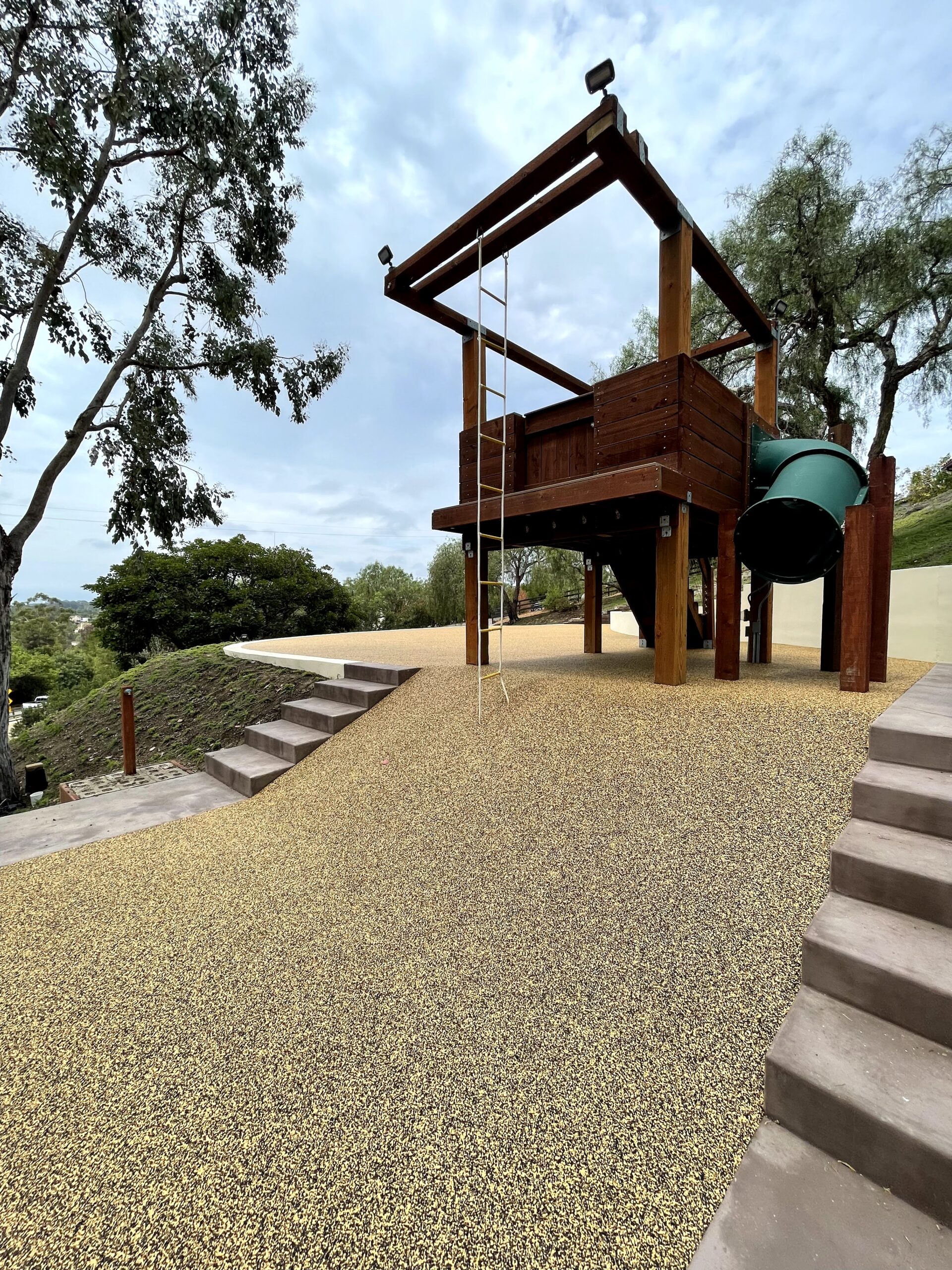
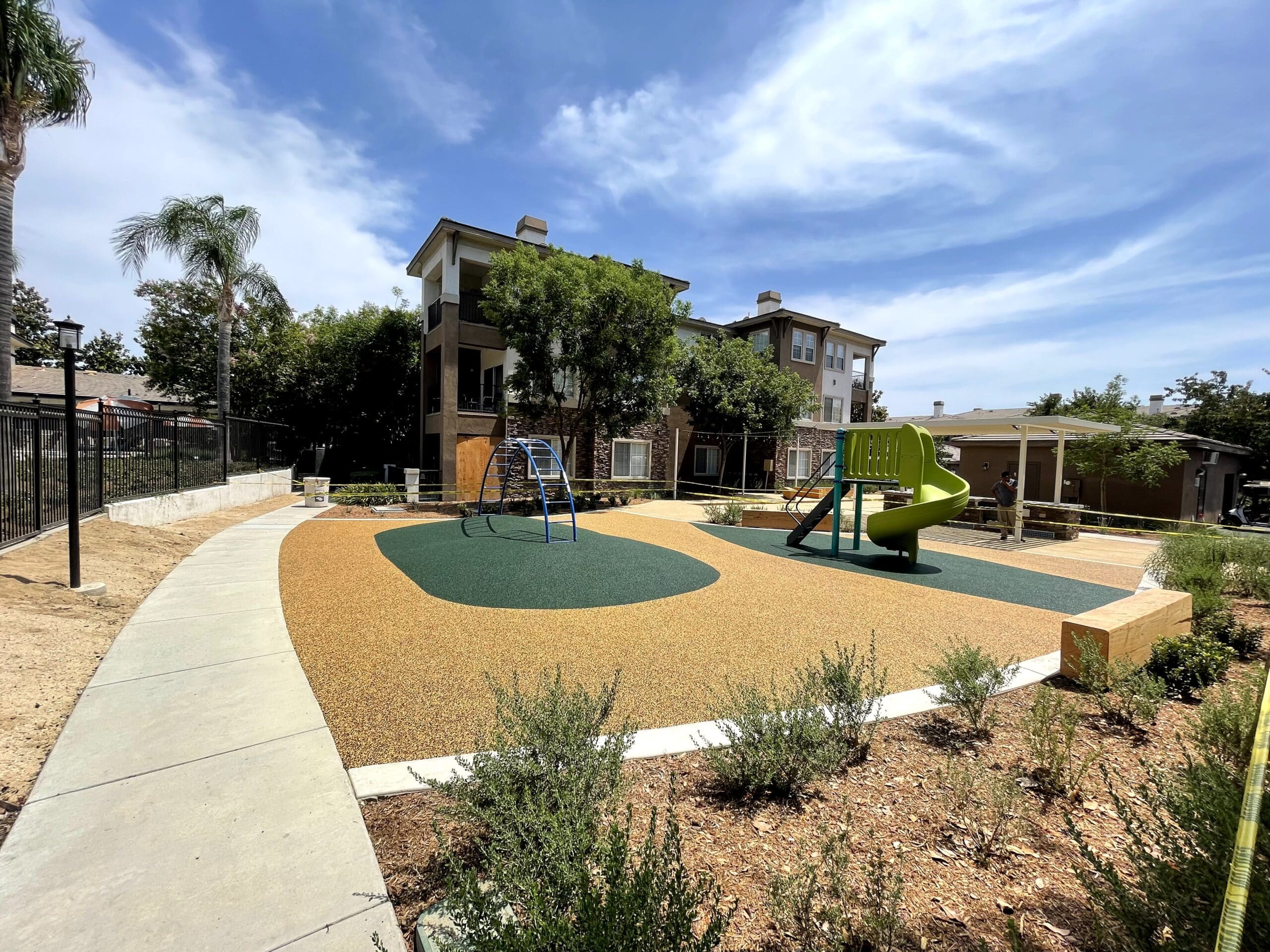
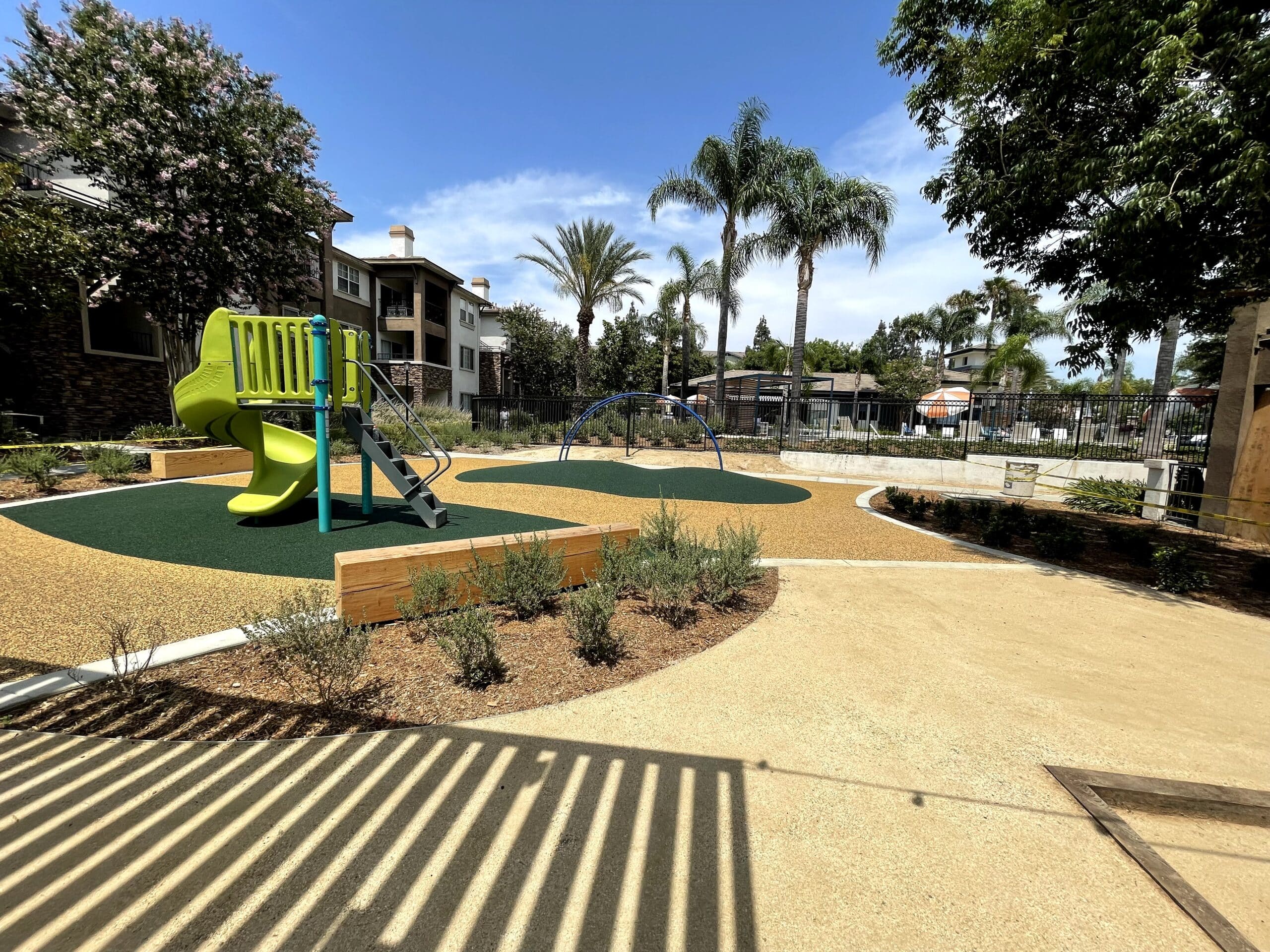
Porous rubber pathways, play-area surfacing, patios, pool surrounds and tree wells from our project library.
Who It’s For
Agencies, schools and property managers choose porous rubber when they need a walkable surface that drains, resists root damage and holds up to daily use.
Working on a streetscape, campus or multi-family project? We can price porous rubber into your bid, coordinate with your schedule and help designers choose systems and colors.
Rubber sidewalks and tree wells for streetscapes.
Trails, paths and jogging loops.
Blacktops, walkways and play-area paths.
Walking and jogging paths for employees.
Pool surrounds, patios and common-area paths.
Rooftops, decks and climbing-wall floors.
A surfacing partner for new builds and renovations.
System, color and drainage input during design.
Service Areas
Playground Safety Surfacing installs porous rubber pathways, tree wells and patios throughout San Diego, Orange, Riverside and Los Angeles Counties.
From the coast to East County.
Parks, schools and HOA communities.
The Inland Empire to the Coachella Valley.
Commercial, school and park projects.
Related Surfacing Solutions
Compare porous rubber with our other surfacing systems, or see how we plan and build projects.
Seamless safety surfacing with cushion depth matched to fall heights.
The system we specify under playground equipment.
Synthetic turf for play areas, schools, dog runs and landscapes.
Shade for play areas, patios and pool surrounds.
How we take projects from site review to final walkthrough.
More surfacing projects from across Southern California.
FAQ
Straight answers about how porous rubber drains, what it needs underneath, where it works and how to care for it.
Talk to a surfacing specialist
Get help choosing, designing and scoping the right surface.
Porous rubber surfacing is a seamless, flexible paving system made from recycled tire rubber granules mixed with a binder and troweled in place. Open spaces between the granules let rainwater drain through. It is also called pervious rubber pavement or rubber sidewalk.
Poured-in-place (PIP) rubber is a playground safety surface: a cushion layer sized to equipment fall heights, topped with a smooth EPDM wear layer. Porous rubber is a paving surface for paths, sidewalks, tree wells and patios, built from larger granules with an open, textured finish. Both are poured on site and both drain. Learn about PIP.
Common uses include sidewalks, walkways, park trails, jogging paths and running tracks, tree wells, patios, courtyards, pool surrounds, rooftops and decks, and school blacktops. It can also handle bicycles, skateboards and light vehicle traffic.
Larger rubber granules are bound together with open voids between them. Rain soaks through those voids into the base below instead of running off, so the surface dries quickly and stormwater runoff is reduced. Keeping the pores clear of debris preserves that drainage.
For full drainage, it is installed over a compacted crushed aggregate base. It can also go over concrete or asphalt; the surface then no longer drains through, but it keeps its flexibility, resilience and slip resistance. Base requirements vary by region and soil, so we specify them per project.
Porous rubber works well for play-area walkways, school blacktops and paths around a playground. Directly under play equipment, where children can fall from height, we specify poured-in-place rubber, whose cushion depth is matched to each component’s critical fall height.
Yes. It forms a seamless, firm surface with no loose material, and it is suited to strollers, wheelchairs, walkers and bicycles. Its texture also provides good traction when wet.
Yes. Rubber tree wells and sidewalks can be placed around trees and over roots without damaging them. The surface flexes as roots grow instead of cracking, and its porosity lets water and air reach the roots. Rubber tree wells.
Single-layer pervious rubber comes in black, brown, brick red, tan, green and gray, pigmented to resemble asphalt or stone. Two-layer systems with an EPDM wear layer offer more colors, and bonded rubber mulch comes in browns, green, tan, brick red and blue. Colors can be blended.
After a site review, the crew prepares a compacted base or the existing pavement. Recycled rubber granules are blended with binder on site and troweled uniformly to the specified thickness, following curves and slopes. Two-layer systems add an EPDM wear layer, and the surface cures before use.
Sweep or blow off leaves and dirt so the pores stay open, remove weeds that grow through, and wash stains with a mild detergent and soft brush. Inspect for cracks, tears or areas separating from the base. Small damage can be repaired, and heavily worn areas can be resurfaced with fresh porous rubber.
We install porous rubber throughout Southern California, including San Diego, Orange, Riverside and Los Angeles Counties. See all areas served.
Free Estimates
Tell us about your paths, tree wells or patios. We’ll recommend the right system, base and colors for your site.
Request an Estimate
Our playground surfacing specialists are here to assist you at every stage of the process, from choosing the right product to design and installation.
(888) 902-3777
info@playgroundsafetysurfacing.pro
San Diego, Orange, Riverside & LA Counties
Fields marked * are required.
"*" indicates required fields