Playground Safety Surfacing

Poured-In-Place Rubber Surfacing

Poured-In-Place Rubber Playground Surfacing

Poured-in-place (PIP) rubber is a seamless, two-layer safety surface that is mixed and installed on site. Playground Safety Surfacing designs and installs PIP for school and public playgrounds, parks, childcare centers, HOAs and commercial properties across San Diego, Orange, Riverside and Los Angeles Counties.

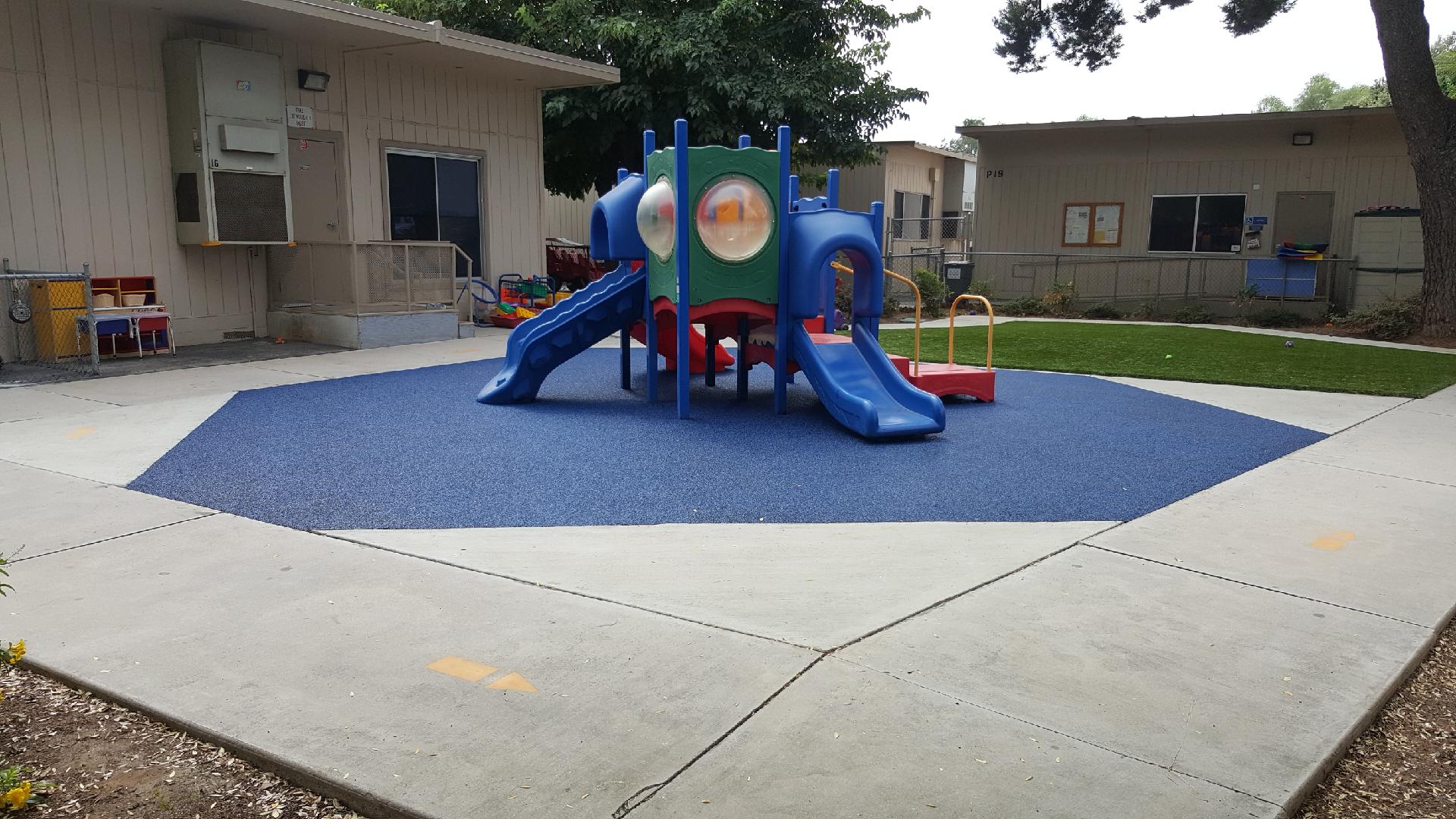
Blue poured-in-place rubber surface around a children's play structure

Poured-in-place rubber · Southern California

Quick Answer

What is poured-in-place rubber surfacing?

Poured-in-place (PIP) rubber is a seamless, two-layer playground safety surface that is mixed and installed on site. A cushioning base of recycled SBR rubber bound with polyurethane absorbs impact, and a colored EPDM rubber wear layer on top provides a durable, slip-resistant finish. Because the cushion depth is matched to the play equipment’s critical fall height, PIP can be designed around a project’s required fall heights while staying firm enough for wheelchairs.

PIP is also called rubberized playground flooring, wet pour rubber or poured rubber flooring. It is used under playground equipment, around splash pads, on rooftops and patios, and anywhere a soft, seamless and accessible surface is needed, indoors or outdoors.

PIP at a glance

System
Two layers: an impact-absorbing cushion base and a colored wear layer
Wear layer
EPDM rubber granules (TPV upgrade available) with aromatic or aliphatic urethane binder
Installed over
Asphalt, concrete or compacted stone
Thickness
Set by the critical fall height of each play area
Drainage
Porous: water drains through and the surface dries quickly
Finish
Seamless, wheelchair accessible, custom colors and graphics

How PIP Is Built

Two layers, mixed and poured on site.

What are the layers of PIP? A prepared base of asphalt, concrete or compacted stone; a cushion layer of recycled SBR rubber bound with polyurethane; and a colored EPDM wear layer troweled smooth on top. Because both rubber layers are mixed and applied on site, the finished surface has no seams.

Prepared base

Asphalt, concrete or compacted stone, after the site is measured for slope and drainage

Cushion layer

Recycled SBR rubber from post-consumer tires, bound with polyurethane

EPDM wear layer

Colored granules troweled smooth; TPV granules are an upgrade option

Porous & quick-drying

Water drains through the system, so it dries fast after rain

Seamless finish

No seams or loose material to shift, scatter or trip on

Wear inlays

Extra protection under swing bays and slide exits

What determines thickness? The critical fall height of each play component. The cushion layer is built deeper where equipment is taller, using the surfacing manufacturer’s ASTM F1292 test data, so depth is specified for your site rather than one-size-fits-all.

Gray poured-in-place rubber surrounding a red, blue and yellow play structure

System anatomy

Wear layerColored EPDM granules (TPV upgrade) + aromatic or aliphatic urethane binder
Cushion (impact) layerRecycled SBR rubber + polyurethane; depth set to critical fall height
Prepared baseAsphalt, concrete or compacted stone
Diagram is illustrative, not to scale.

Benefits

Why choose poured-in-place rubber?

PIP is one of the most popular playground surfaces because it combines impact protection, accessibility and design freedom in a single seamless system.

Impact attenuation

Cushion depth is set on site to your equipment’s fall heights, based on the project specifications.

Consistent coverage

Unlike loose fill, PIP doesn’t shift or scatter, so impact protection stays even across the whole play area.

Accessible routes

A firm, seamless surface gives wheelchairs, walkers and canes a smooth path to play equipment.

Seamless & level

No seams, gaps or loose pieces, which means fewer trip hazards than tiles or loose-fill materials.

Custom colors & graphics

Blend colors or inlay school colors, logos, games and shapes that are permanently part of the surface.

Drains & dries quickly

The porous system lets rainwater pass through, so play can resume soon after the rain stops.

Low maintenance

No raking or replenishing like mulch, sand or loose rubber. Debris sweeps, blows or washes away.

Durable & repairable

Holds up in high-traffic areas, and worn spots can be repaired and the wear layer resealed.

The trade-off: PIP costs more to install than loose-fill options and needs professional installation. That upfront cost is generally offset by lower maintenance over the life of the surface. See cost factors

Applications

Where poured-in-place rubber is used.

PIP is best known under playground equipment, but the same seamless, cushioned surface works for splash pads, rooftops, patios, fitness areas and other high-traffic spaces.

Colors & Designs

Customize colors, blends and graphics.

The EPDM wear layer can be blended into speckled mixes or inlaid with shapes, games, school colors and logos. Explore the colors below, then ask us for physical samples and custom blends.

Design inspiration preview PLAY STRUCTURE

1 · Pattern

2 · Zone

3 · EPDM color

Design inspiration tool. Colors are on-screen approximations of the EPDM colors we offer. Final colors and blends are confirmed from physical samples, and some colors call for an aliphatic binder.

Ask About Custom Colors

What colors are available? Our EPDM colors include Army Green, Beige, Black, Bright Green, Brown, Dark Gray, Eggshell, Gold, Hunter Green, Light Gray, Pearl, Primary Red, Purple, Royal Blue, Sky Blue, Teal, Terra Cotta and Yellow. Colors can be combined into custom blends, and an aliphatic binder is strongly recommended for some colors.

Safety & Standards

How PIP supports playground safety.

PIP protects children by absorbing impact evenly across the whole play area. Its cushion depth is matched to each play component’s critical fall height, with final depth and any testing requirements set by the project specifications and your inspector.

Fall height

Depth matched to critical fall height

Taller equipment needs a deeper cushion. The base-layer depth is set for each play zone on site instead of using one thickness everywhere.

Impact testing

Specified from ASTM F1292 data

The required depth comes from the surfacing manufacturer’s ASTM F1292 impact test data for the fall heights on your site.

Accessibility

Firm, stable and wheelchair friendly

With no seams or loose material, PIP gives wheelchairs, walkers and canes a smooth route. It can meet ADA requirements when installed as a firm, stable, slip-resistant surface with smooth transitions.

Every site is different. Final surfacing depth and layout are specified per project, based on your equipment and site conditions.

Installation Process

How poured-in-place rubber is installed.

PIP installation takes skill and exact mixing ratios, which is why it is installed by a professional crew rather than as a DIY project.

01

Site Evaluation

We measure the area, check slope and drainage, and review existing surfaces and equipment fall heights.

02

Base Preparation

The site is prepared so PIP can be installed over asphalt, concrete or compacted stone.

03

Cushion Layer

Recycled SBR rubber and polyurethane are mixed on site and installed at the depth each play zone requires.

04

Wear Layer

The colored EPDM (or TPV) layer is troweled uniformly over the cushion, including any graphics and inlays.

05

Cure & Walkthrough

The surface cures before use, then we walk through the finished surface and explain simple care.

Project timing varies with base conditions, weather, scope, design complexity and cure time. PIP installation · Our process

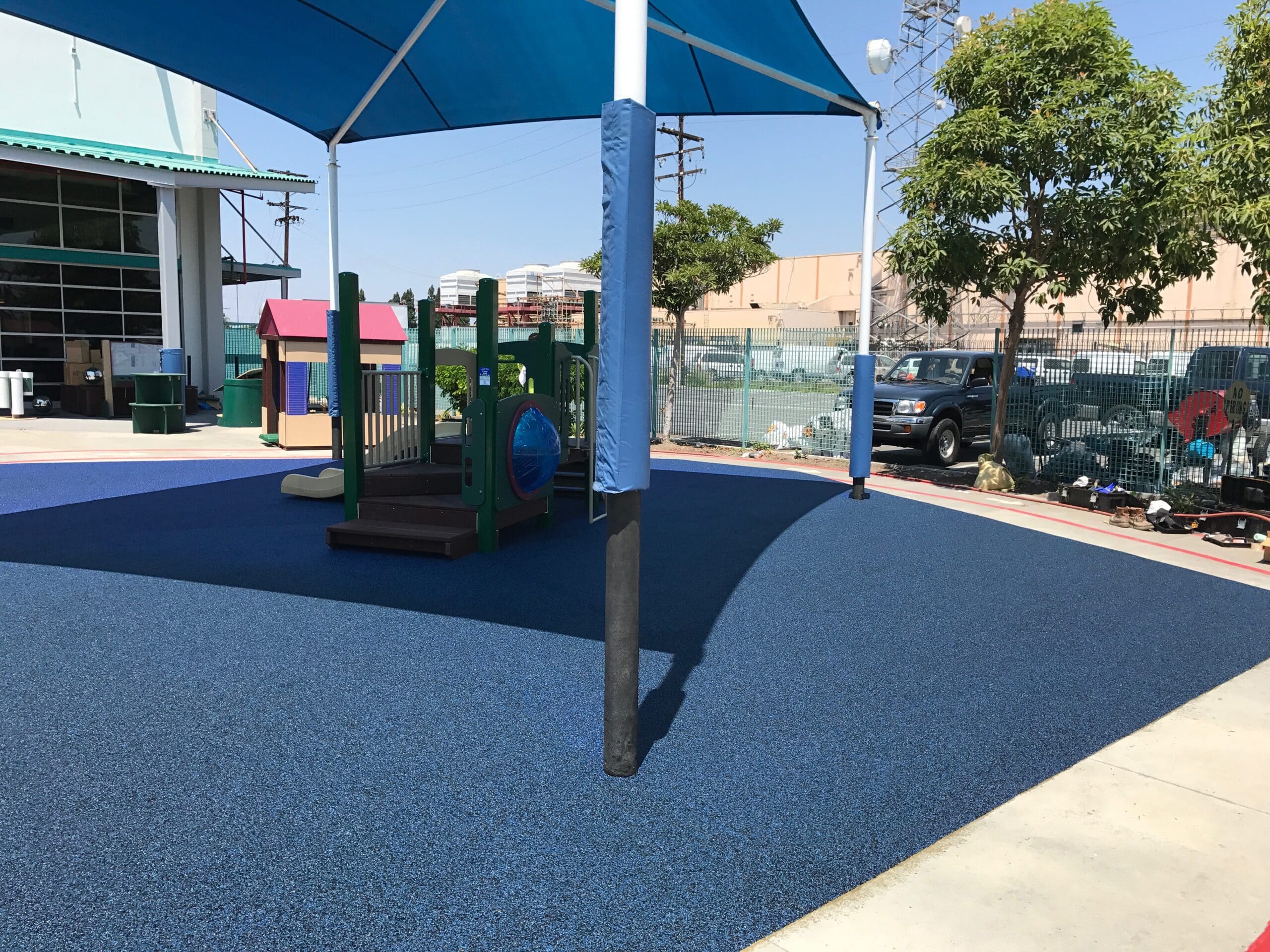
Blue poured-in-place rubber under a shade structure at a playground

Clean,
repair &
reseal

Care & Repair

Low-maintenance, not maintenance-free.

The colored wear layer is roughly 3/8″ to 1/2″ thick. Regular cleaning, early repairs and periodic resealing protect the cushion layer beneath it and restore most of the original color.

Keep it clean

Sweep or blow off debris with a nylon broom or leaf blower. Avoid metal brooms and shovels, which can dislodge the rubber granules.

Wash gently

Use a garden hose and a mild detergent and skip harsh solvents. Don’t spread sand, which clogs the pores and slows drainage.

Inspect & repair early

Check high-wear areas, edges and transitions, and repair worn spots before they spread.

Reseal periodically

Resealing renews the wear layer, restores color and adds UV protection.

Who It’s For

PIP for the people responsible for safer spaces.

Facility managers, public agencies, designers and builders choose poured-in-place rubber when they need a safe, accessible surface that holds up to daily use.

Bidding a school, church, childcare or multi-family project? We can price surfacing into your bid and schedule around your construction timeline. We also help landscape architects plan patterns, fall heights and safety criteria.

Contractors hire us

Parks & Public Works

Community playgrounds and recreation areas for cities and park districts.

Schools & Childcare

School, preschool and daycare play yards in your colors.

HOAs & Residential

Shared play areas and common spaces for communities and homes.

Commercial Properties

Corporate campuses, fitness areas and commercial landscapes.

General Contractors

A surfacing partner for new builds and renovations.

Landscape Architects & Designers

Color, pattern and fall-height input during design.

Senior Centers & Assisted Living

Smooth, accessible outdoor surfaces for residents and visitors.

Recreation Facilities

Splash pads, rooftops and multi-purpose activity areas.

Service Areas

PIP installation across Southern California.

Playground Safety Surfacing installs poured-in-place rubber throughout San Diego, Orange, Riverside and Los Angeles Counties.

San Diego County

From the coast to East County.

Orange County

Parks, schools and HOA communities.

Riverside County

The Inland Empire to the Coachella Valley.

Los Angeles County

Commercial, school and park projects.

FAQ

Poured-in-place rubber questions, answered.

Straight answers about PIP layers, thickness, drainage, colors, installation and care. Need something specific? Our surfacing specialists can help.

Talk to a surfacing specialist

Get help choosing, designing and scoping the right surface.

(888) 902-3777

What is poured-in-place rubber surfacing?

Poured-in-place (PIP) rubber is a seamless, two-layer safety surface that is mixed and installed on site. A cushioning base of recycled SBR rubber absorbs impact, and a colored EPDM wear layer on top provides the finished surface. It is also called rubberized playground flooring, wet pour rubber or poured rubber flooring.

PIP is most common under playground equipment at schools, preschools, daycares, parks and HOA communities. It is also used for splash pads, rooftops, decks and patios, corporate fitness areas, senior centers and other high-traffic recreation spaces, indoors or outdoors. See PIP applications.

PIP has two rubber layers over a prepared base. The cushion layer is recycled SBR rubber bound with polyurethane and provides impact attenuation. The wear layer is colored EPDM rubber granules with an aromatic or aliphatic urethane binder, and TPV granules are an available upgrade. The system is installed over asphalt, concrete or compacted stone.

Thickness is set by the critical fall height of the play equipment. The surfacing manufacturer’s ASTM F1292 test data determines the depth needed for each fall height, and the cushion layer is adjusted on site so every play zone gets the protection it needs. A professional should specify the final depth.

Yes. PIP is porous, so rainwater passes through the surface instead of pooling on top, and it dries quickly after rain. Proper base preparation and installation help prevent pooling, and keeping the surface free of sand and debris preserves its drainage.

PIP has no shifts or seams, which makes it accessible to wheelchairs, walkers and canes. It can meet ADA requirements when it is installed as a stable, firm, slip-resistant surface with smooth transitions to adjoining paths. ADA compliance for PIP.

Our EPDM colors include Royal Blue, Sky Blue, Teal, Bright Green, Hunter Green, Army Green, Yellow, Gold, Terra Cotta, Primary Red, Purple, Brown, Beige, Eggshell, Pearl, Light Gray, Dark Gray and Black. Colors can be blended into custom mixes, and school colors, logos, games and geometric shapes can be built into the surface permanently. An aliphatic binder is strongly recommended for some colors.

After evaluating the site, the crew prepares the base, then mixes and installs the cushion layer at the depth each play zone requires. The colored wear layer is troweled uniformly over it, including any graphics or inlays, and the surface cures before use. Installation demands skill and exact mixing ratios, so it is not recommended as a DIY project. PIP installation.

PIP is low-maintenance but not maintenance-free. Sweep or blow off debris with a nylon broom or leaf blower, wash it with a hose and mild detergent, and avoid metal tools and harsh solvents. Worn spots can be repaired, and periodic resealing restores most of the original color and adds UV protection. PIP maintenance & repair.

Yes. PIP warms up during long exposure to heat and sunshine, but it does not retain heat the way asphalt does. We also install shade structures for sunny play areas.

Cost depends on the size of the area, the condition of the existing surface and base, the thickness your fall heights require, the colors you choose and site preparation. PIP costs more to install than loose fill, but that is generally offset by lower maintenance over the life of the surface. Request a free estimate for project-specific pricing.

We serve Southern California, including San Diego County, Orange County, Riverside County and Los Angeles County. That covers cities such as San Diego, Chula Vista, Carlsbad, Irvine, Anaheim, Temecula, Corona, Los Angeles and Long Beach. See all areas served.

Free Estimates

Ready to plan your PIP surface?

Tell us about your site, equipment and design ideas. We’ll help you choose the right depth, colors and layout for your poured-in-place rubber project.

Request an Estimate

Let’s talk about your poured-in-place project.

Our playground surfacing specialists are here to assist you at every stage of the process, from choosing the right product to design and installation.

  1. 1Share your projectSite type, location and what you have in mind.
  2. 2We follow upA specialist reviews your needs and next steps.
  3. 3Get your estimateA recommended surface system and scope for your site.

Call us

(888) 902-3777

Email

info@playgroundsafetysurfacing.pro

Service area

San Diego, Orange, Riverside & LA Counties

Request my free estimate

Fields marked * are required.

"*" indicates required fields

This field is for validation purposes and should be left unchanged.
Name*