
How Long Does Poured in Place Rubber Last in Orange County, California?
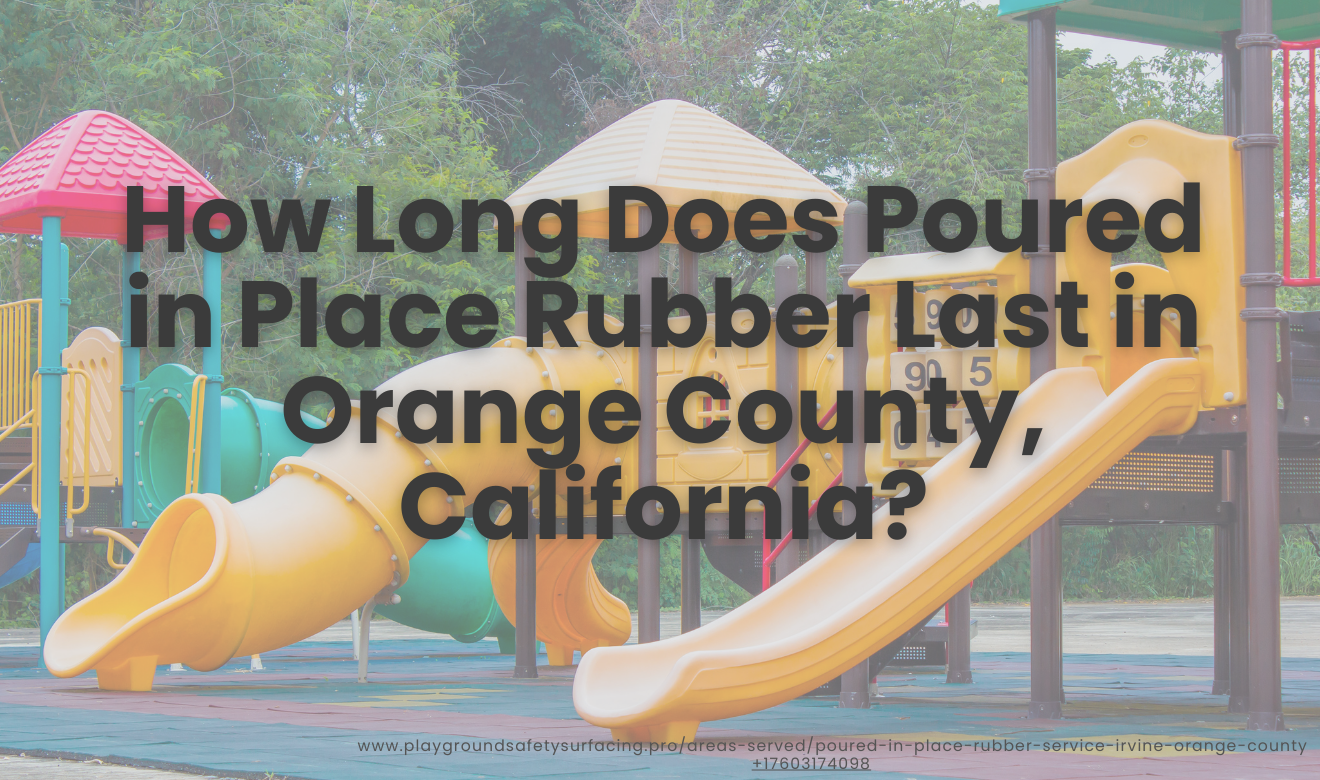
Poured-in-place rubber typically lasts about 8 to 15 years in Orange County, California, depending on how it’s used and how well it’s maintained. For most playgrounds and pool decks, the poured in place rubber lifespan Orange County property owners can expect is closer to 10 to 12 years before noticeable wear calls for repairs or a refresh.
For example, a shaded school playground with steady but not constant foot traffic may stay in good shape for 12+ years. A sunny park play area in inland cities with heavy daily use can show fading, small cracks, or thinning in high-traffic zones in 7 to 10 years. Around pools, areas exposed to chlorine, sunscreen, and frequent water can start to look worn sooner unless they’re cleaned regularly and properly drained.
What Impacts Poured-In-Place Rubber Longevity in Orange County?
While the typical range is 8–15 years, the Poured in place rubber lifespan Orange County sites experience depends on a handful of predictable factors. If you understand them early, you can often prevent premature fading, cracking, or delamination—especially in high-traffic public spaces.
1) UV exposure (coastal vs. inland microclimates)
Orange County sunshine is a major wear factor. UV light slowly breaks down binders and can speed up color fading—particularly on bright colors.
- Coastal areas may see slightly less heat stress but can deal with moisture and salt air.
- Inland cities often experience hotter surface temperatures, which can accelerate oxidation and binder aging.
This is why the Poured in place rubber lifespan Orange County parks see in places like Irvine or Anaheim can differ from the lifespan at a shaded coastal campus with similar usage.
2) Foot traffic, play patterns, and “pinch points”
Not all areas wear evenly. A common reason the Poured in place rubber lifespan Orange County property owners experience feels “short” is because a few concentrated zones fail early:
- Slide exits and swing bays
- Entries/exits to the play area
- Between popular climbers
- Queue lines and supervision spots
Targeted repairs in these spots can extend the overall surface life and delay a full refresh.
3) Drainage and sub-base stability
Poured rubber is only as stable as what it’s installed on. Poor drainage can lead to standing water, freeze-thaw stress (rare but still possible in some nights), and sub-base movement. Over time, that can trigger cracks, edge separation, or soft spots—reducing the Poured in place rubber lifespan Orange County facilities can count on.
4) Chemical exposure (pools, splash pads, and cleaning agents)
Chlorine, sunscreen oils, and frequent wet/dry cycles can discolor surfaces and gradually weaken binders—especially if water sits on the surface or if harsh degreasers are used.
If your site includes water features, planning for routine rinsing, correct slope, and compatible cleaning products can make a noticeable difference in Poured in place rubber lifespan Orange County pool decks and splash pads.
How Long Does Poured Rubber Last by Application?
Below is a practical planning range based on typical usage patterns in Southern California. It’s not a guarantee, but it’s helpful for budgeting and scheduling inspections. In general, Poured in place rubber lifespan Orange County projects hit the higher end when they’re installed on a stable base, protected from constant sun, and maintained consistently.
| Application | Typical wear drivers | Planning lifespan range |
|---|---|---|
| School playground (moderate use, some shade) | Foot traffic, drop zones, UV | 10–13 years |
| City park playground (heavy daily use) | High traffic, scooters/strollers, heat | 8–11 years |
| HOA/community play area (lighter use) | UV exposure, occasional cleaning | 11–15 years |
| Pool deck / splash zone | Chlorine, sunscreen, water, cleaning chemicals | 7–10 years |
Use these ranges as a starting point for lifecycle planning. When stakeholders ask what the Poured in place rubber lifespan Orange County budget should assume, most facilities land around 10–12 years before a topcoat refresh or localized rehabilitation becomes cost-effective.
Early Warning Signs Your Surface Is Nearing End-of-Life
Many sites don’t need full replacement when the first issues appear. The key is recognizing the difference between cosmetic wear and structural problems that shorten Poured in place rubber lifespan Orange County installations.
Cosmetic wear (often fixable with refresh strategies)
- Color fading or chalky appearance in sunny zones
- Minor surface abrasion in traffic lanes
- Small “freckling” or light granule loss
Functional wear (typically calls for repair planning)
- Cracks that widen, branch, or repeat in the same area
- Seams separating around edges, drains, or borders
- Thinning in fall zones where impact attenuation matters
- Soft spots or bubbling (can indicate base or moisture issues)
If your goal is to maximize Poured in place rubber lifespan Orange County sites achieve, a scheduled inspection once or twice per year (and after major storms or events) can catch issues while they’re still localized.
Maintenance That Extends Lifespan (and What to Avoid)
Maintenance is one of the biggest controllable variables in Poured in place rubber lifespan Orange County performance. Even basic routines can add years—especially at schools, HOAs, and municipal parks.
Best-practice upkeep habits
- Dry debris removal weekly: blowing off sand and dirt reduces abrasion.
- Gentle washing monthly or as needed: low-pressure rinse, mild detergent, soft bristle scrub in dirty zones.
- Prompt stain management: address gum, spills, sunscreen build-up before it bonds to the surface.
- Drainage checks: clear drains and confirm water isn’t ponding after irrigation cycles.
What commonly shortens service life
- High-pressure washing too close to the surface (can dislodge granules)
- Harsh solvents/degreasers not compatible with rubber binders
- Metal snow shovels or sharp scraping tools (rare locally, but scraping happens with maintenance crews)
- Dragging heavy equipment or pallets across the surface
If you need a deeper checklist for ongoing care, it’s worth reviewing a dedicated PIP Maintenance resource so cleaning routines match the material system. This kind of planning is often what separates a “good” outcome from an excellent Poured in place rubber lifespan Orange County result.
Installation Choices That Influence Lifespan the Most
Two playgrounds can look identical on day one and age very differently by year five. The reason is usually what you can’t see at a glance: base preparation, material ratios, and thickness planning for the site’s use case.
Base and prep work
- Stable substrate: asphalt or concrete must be properly cured, clean, and sound.
- Moisture management: trapped moisture can contribute to bond issues.
- Proper slope: helps avoid ponding that can reduce Poured in place rubber lifespan Orange County in pool-adjacent or irrigated zones.
Thickness and fall-height requirements
For playgrounds, rubber surfacing is typically designed to meet impact attenuation performance needs based on equipment fall height. In the U.S., these concepts are commonly referenced alongside guidance connected to playground surfacing standards and testing practices. When thickness is value-engineered too aggressively, high-impact zones can thin faster and shorten the practical Poured in place rubber lifespan Orange County facilities expect.
Material quality and mix consistency
Consistency matters. Variations in mixing, binder ratios, or cure conditions can lead to:
- Premature cracking
- Granule loss
- Soft curing in shaded or damp zones
When stakeholders focus only on upfront cost, they can unintentionally reduce Poured in place rubber lifespan Orange County results. A helpful related read on long-term value is why cheap surfacing costs more long term, which aligns with what many facility managers see after a few years of use.
Repair vs. Resurface vs. Replace: What Usually Makes Sense?
If you’re planning budgets for a school district, HOA, or public works department, it helps to think in phases. Many surfaces don’t “fail” all at once; instead, the Poured in place rubber lifespan Orange County timeline is shaped by timely interventions.
When repairs are typically enough
- Small cracks limited to a few areas
- Localized seam separation
- Minor vandalism damage (cuts/gouges)
When resurfacing or a topcoat refresh is the smarter move
- Widespread fading and surface dryness
- Multiple thin areas but base is still stable
- Desire to update color patterns or graphics without full demo
When replacement becomes more likely
- Repeated failures in the same zones despite repairs
- Sub-base movement, chronic drainage issues, or widespread delamination
- Surface no longer performs well in critical fall zones
Choosing the right strategy can significantly change the total lifecycle cost—and can stretch the practical Poured in place rubber lifespan Orange County property owners achieve without compromising safety or appearance.
Real-World Expectations for Orange County Schedules and Budgets
Most organizations benefit from planning around an inspection-and-refresh cycle rather than waiting for obvious failure. A reasonable planning approach for Poured in place rubber lifespan Orange County asset management looks like this:
- Year 1–3: Warranty period care, light cleaning routines, monitor drainage
- Year 4–7: Increased cleaning frequency, address high-traffic thinning early, spot repairs
- Year 8–12: Consider refresh/resurface planning based on wear and use intensity
- Year 12–15: Evaluate replacement in heavy-use zones or full area if performance has dropped
This approach aligns with what many facility teams report: the Poured in place rubber lifespan Orange County environments deliver is often strongest when there’s a maintenance plan and a refresh budget line item rather than “fix it when it fails.”
Design Add-Ons That Can Add Years (Especially in Full Sun)
If your site is fully exposed, adding shade can be one of the most effective ways to slow UV degradation and heat stress. Lower surface temperatures often translate to slower binder aging—meaning better Poured in place rubber lifespan Orange County outcomes over time.
Shade planning benefits
- Reduces fading and heat-related surface stress
- Improves comfort for kids and supervising adults
- Can reduce the cleaning burden by limiting sticky residue “baking” into the surface
For high-exposure playgrounds and pool-adjacent decks, integrating Shade Structures into the site plan is often a practical way to protect the surface investment.
What to Ask Before You Commit to a New Surface
If you’re replacing an older area or planning a new build, these questions help you align expectations with performance—especially if Poured in place rubber lifespan Orange County is a key decision factor for your stakeholders.
- What is the real daily user load? (school recess waves vs. occasional HOA use)
- Where are the highest wear zones? (swings, slides, entries, supervision paths)
- How is drainage handled? (slope, drain locations, irrigation overspray)
- What cleaning is realistic? (in-house staff vs. contracted maintenance)
- Is sun exposure extreme? (consider shade planning to extend Poured in place rubber lifespan Orange County)
Built to Last Starts with the Right Plan
The most reliable way to improve Poured in place rubber lifespan Orange County properties see is to treat the surface like an asset with a lifecycle: install it correctly, manage water, reduce UV stress where possible, and fix small issues before they spread.
In practice, that means combining three things:
- Sound design choices (thickness, drainage, wear-zone planning)
- Quality installation standards (base prep and consistent material application)
- Ongoing care (routine cleaning and scheduled inspections)
When those elements are in place, the Poured in place rubber lifespan Orange County facilities can expect tends to stay in the 10–12 year range—or longer in shaded, moderate-use environments—without sacrificing safety, appearance, or long-term value.
Frequently Asked Questions
Want Your Poured-In-Place Rubber to Hit the 10–12 Year Sweet Spot?
If you’re planning a new install or trying to stretch the life of an existing surface, the difference usually comes down to the basics done right: smart drainage, proper thickness, wear-zone planning, and maintenance that doesn’t accidentally chew up the top layer. That’s exactly what we help Orange County property owners solve every day—so you’re not guessing, patching the same spots over and over, or replacing sooner than you should.
Orange County Poured in Place Rubber Pros LLC can take a quick look at your site, identify the high-traffic “pinch points,” and recommend the most cost-effective next step—repair, refresh, or replacement—based on real-world Orange County conditions.
Related Posts

Benefits of Poured in Place Rubber Surfaces for Playgrounds in San Diego, California
Poured-in-place rubber is one of the best playground surfacing options in San Diego because it…

Benefits of Poured in Place Rubber Playgrounds in San Diego, California
Poured-in-place rubber playground surfaces are a smart choice in San Diego because they combine safety,…
Leave a Reply