
Maximizing the Lifespan of Poured in Place Rubber Surfaces in San Diego, California
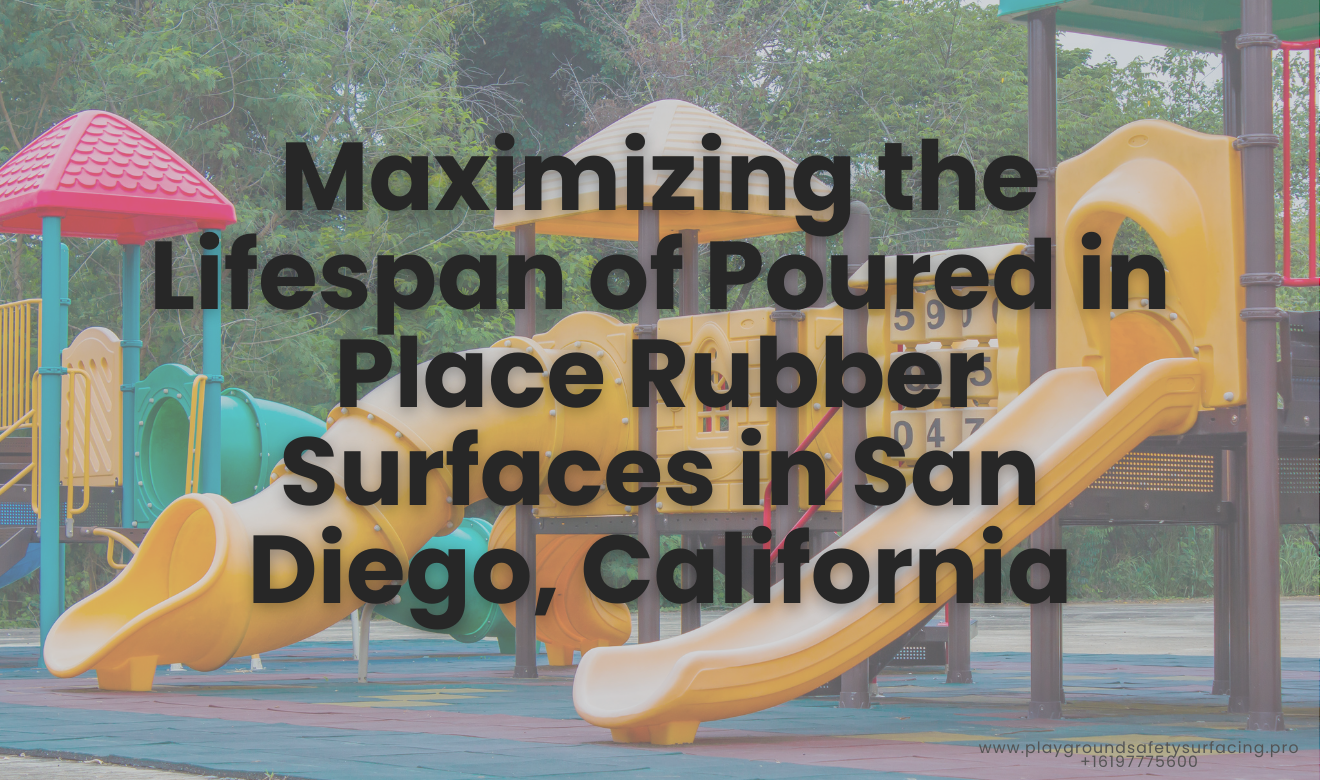
Poured in place rubber can last 8–15+ years in San Diego, depending on how it’s installed, used, and maintained. If you’re asking about poured in place rubber lifespan San Diego, the biggest factors are UV exposure, coastal salt air, drainage, and daily wear from foot traffic.
For example, a shaded playground in a residential courtyard that gets rinsed weekly and stays dry between cleanings can look great for well over a decade. But a school yard in full sun with heavy lunch-recess traffic, clogged drains that leave puddles, and occasional dragging of benches can start showing cracking, fading, or seam issues much sooner. The good news is that small habits—like keeping drains clear, promptly fixing cuts, and doing seasonal deep cleaning—can add years to the surface.
What Is the Typical Poured in Place Rubber Lifespan in San Diego?
In most real-world installations, poured in place rubber lifespan San Diego averages 8–15+ years. The wide range comes down to how well the surface is built (base, thickness, binder ratios, and edges), and how hard the site is on the material (sun, salt air, standing water, sand, and traffic patterns).
As a quick rule of thumb for poured in place rubber lifespan San Diego:
- 8–10 years: heavy use + full sun + drainage issues + minimal maintenance
- 10–12 years: moderate use + decent drainage + routine cleaning
- 12–15+ years: good design + good drainage + proactive repairs + periodic deep cleaning
San Diego Conditions That Most Affect Longevity
If you’re researching poured in place rubber lifespan San Diego, these local conditions matter more than most people expect.
1) UV Exposure (Sun, Heat, and Color Fade)
San Diego’s sunlight is one of the biggest drivers of top-layer aging. UV breaks down binders over time, which can lead to:
- Color fading (especially bright blues, reds, and greens)
- Surface becoming slightly more brittle
- Small cracks starting at high-stress points (edges, transitions, and under swings)
How to extend poured in place rubber lifespan San Diego in full sun: choose UV-stable aliphatic topcoats where appropriate, use smart color selection, and add shade where possible.
2) Coastal Salt Air (Binder and Metal Edge Effects)
Near the coast, salt can accelerate corrosion on metal edging and can contribute to faster wear if the area is constantly damp. While rubber itself isn’t “rusting,” the system performance depends on edges and transitions staying tight and stable.
For coastal sites, poured in place rubber lifespan San Diego is often best when installers use robust perimeter detailing and owners rinse periodically to reduce salt buildup.
3) Drainage and Standing Water (The Quiet Lifespan Killer)
If water regularly puddles, the surface sees more stress—especially along seams, patched spots, and low points. Over time, you can see:
- Localized delamination (top layer loosening)
- Premature cracking at “soft” areas
- Algae/mildew staining and slippery conditions
When people ask what shortens poured in place rubber lifespan San Diego the fastest, poor drainage is usually in the top two.
4) Sand, Grit, and Debris (Hidden Abrasion)
In beach-adjacent neighborhoods and windy areas, fine sand acts like sandpaper under shoes and strollers. That abrasion slowly wears the wear-course (top layer), which can reduce poured in place rubber lifespan San Diego even when everything else is done right.
Installation Choices That Determine How Long PIP Rubber Lasts
The difference between a surface that looks good at year 12 and one that struggles at year 7 often comes from installation details. For poured in place rubber lifespan San Diego, focus on the following build decisions.
Base Construction: Asphalt vs. Concrete vs. Stabilized Sub-Base
A stable, properly sloped base helps prevent reflective cracking and water issues. A quality base supports:
- Correct slope to drains (so water doesn’t sit)
- Uniform support (so “soft spots” don’t develop)
- Edge stability (so perimeter doesn’t peel or curl)
Thickness and Impact Attenuation (Safety + Durability)
Poured in place rubber is often installed in a two-layer system (cushion + wear layer). Correct thickness is primarily a safety requirement, but it also impacts durability: underbuilt sections can compress faster in high traffic areas, reducing poured in place rubber lifespan San Diego.
Binder Quality and Mix Ratios
Binders vary in performance. Proper ratios and thorough mixing are essential to avoid crumb loss, surface weakening, or premature cracking. In practical terms: good binder choices and workmanship are “invisible” on day one—but they show up years later in poured in place rubber lifespan San Diego.
Seams, Edges, and Transitions (Where Failures Start)
Most early issues appear at edges, around equipment footings, and at transitions to concrete, turf, or ramps. Good perimeter detailing is one of the highest-ROI ways to improve poured in place rubber lifespan San Diego.
Wear Patterns by Site Type (San Diego Examples)
Use type changes everything. Here’s how poured in place rubber lifespan San Diego typically behaves by environment.
| Site type | Typical wear stressors | Expected lifespan range (well-built) |
|---|---|---|
| Public parks / municipal spaces | High daily traffic, limited control of misuse, debris | 8–12 years |
| Schools (K–8) / lunch recess yards | Peak loads, dragging objects, concentrated paths | 8–11 years |
| Preschools / daycare / churches | Moderate use, frequent cleaning, smaller footprints | 10–15+ years |
| HOAs / residential courtyards | Lower traffic, better supervision, easier maintenance | 12–15+ years |
These ranges assume drainage is correct and repairs are handled early—two major drivers of poured in place rubber lifespan San Diego.
Early Warning Signs Your Surface Is Aging (and What They Mean)
If you want to protect poured in place rubber lifespan San Diego, the goal is to spot small problems before they become replacements.
Cosmetic Aging (Usually Normal)
- Light fading in exposed areas
- Slight texture smoothing in walk lanes
- Minor staining from organic debris
Structural/Performance Issues (Act Quickly)
- Cracks that grow after rain (often drainage or base movement)
- Edges lifting or curling (bond failure, water intrusion, or perimeter instability)
- “Spongy” spots (base issues or delamination)
- Seam separation (thermal movement, poor seam treatment, or water undermining)
Fast patching and correcting the cause can materially extend poured in place rubber lifespan San Diego.
Maintenance That Adds Years (Simple, High-Impact Habits)
Maintenance is where owners gain or lose the most value. The best maintenance plans are consistent and realistic.
Weekly / Biweekly (Especially for Schools and Public Sites)
- Blow off sand, leaves, and grit (abrasion control)
- Rinse high-soil zones to prevent buildup
- Check drains and scuppers for clogs
Monthly / Quarterly
- Spot-clean spills (food, drinks, gum) before staining sets
- Inspect edges, seams, and swing zones
- Look for puddling after irrigation cycles or rain
Seasonal / Annual Deep Cleaning
- Low-pressure wash with appropriate cleaners (avoid harsh solvents)
- Remove organic growth in shaded or damp corners
- Schedule a professional inspection for heavy-use sites
For step-by-step upkeep, follow a dedicated PIP Maintenance plan—consistent care is one of the most reliable ways to improve poured in place rubber lifespan San Diego.
How Repairs and Resurfacing Fit Into Long-Term Lifespan
Many owners assume the only “end” is full replacement. In reality, smart repairs can extend poured in place rubber lifespan San Diego significantly.
Common Repair Types
- Cut and patch: for vandalism, tears, or localized delamination
- Seam repair: re-bonding and sealing problem transitions
- High-wear overlays: reinforcing swing exits, slide run-outs, and main travel paths
When Resurfacing Might Make Sense
If the base and cushion layer are stable but the wear layer is tired, resurfacing can restore appearance and traction without rebuilding everything. It’s often the move that pushes poured in place rubber lifespan San Diego toward the “15+ year” side of the range.
What Standards and Safety Guidance Say (Why It Matters for Lifespan)
Playground surfacing decisions are about both safety and durability. If you’re comparing options while thinking about poured in place rubber lifespan San Diego, it helps to understand how playground surfacing is evaluated and why maintenance and impact performance are part of the discussion. A helpful overview is this guide to playground surfacing, which summarizes common materials and safety considerations.
Cost vs. Lifespan: How to Avoid “False Savings”
When budgets get tight, it’s tempting to choose the lowest bid. But shortcuts often show up as cracking, pooling, seam problems, and early repairs—exactly what reduces poured in place rubber lifespan San Diego.
If you’re weighing bids and materials, it’s worth reading why cheap surfacing costs more long term. The same idea applies to poured systems: quality base prep, correct drainage, and experienced crews typically cost less over the life of the surface.
Design Upgrades That Help Poured in Place Rubber Last Longer in San Diego
Sometimes the best way to improve poured in place rubber lifespan San Diego is to reduce the stress on the surface—especially heat and UV exposure.
Add Shade to Reduce UV and Heat Cycling
Shade can slow color fading and reduce thermal expansion/contraction stress at seams and edges. If you’re planning improvements, consider integrating Shade Structures above high-sun play zones.
Improve Drainage at the Source
- Regrade surrounding hardscape to keep runoff from flowing onto rubber
- Adjust irrigation heads to avoid overspray
- Keep drains accessible and on a cleaning schedule
These upgrades routinely pay back by extending poured in place rubber lifespan San Diego and reducing slip-risk and staining.
Planning Timeline: What to Expect Over 15 Years
Here’s a practical lifecycle view for poured in place rubber lifespan San Diego when installed correctly and maintained.
- Years 0–2: surface looks and performs like new; establish cleaning habits early
- Years 3–6: minor fading in sun; high-traffic lanes begin smoothing; small repairs may appear
- Years 7–10: wear becomes noticeable in swing/slide zones; targeted patching and deep cleaning matter more
- Years 10–15+: resurfacing or strategic overlays may extend life if base/drainage are solid
This is why poured in place rubber lifespan San Diego isn’t a single number—it’s a performance curve influenced by care and site stressors.
Built to Last: The Real Secret Is the System, Not Just the Surface
The most accurate way to think about poured in place rubber lifespan San Diego is that you’re buying a system: base + slope/drainage + cushion + wear layer + edges + maintenance plan. When those parts work together, 10–15+ years is realistic—even in coastal and high-sun locations.
For long-term performance, prioritize:
- Experienced installation crews and correct layer thickness
- Drainage that prevents puddles and постоян dampness
- Routine cleaning to remove sand/grit
- Prompt repairs before water gets underneath
In practice, that’s what consistently protects poured in place rubber lifespan San Diego and keeps the surface safer, cleaner, and more cost-effective over time.
Industry credibility note: Best practices for poured-in-place systems align with established playground safety and surfacing performance expectations (impact attenuation, drainage planning, and routine inspection/maintenance). Choosing qualified installers, documenting maintenance, and addressing drainage/edge issues early are the same risk-management steps used across municipal parks, school districts, and commercial campuses to maximize poured in place rubber lifespan San Diego.
Frequently Asked Questions
Want Your Poured-in-Place Rubber to Actually Hit 10–15+ Years in San Diego?
If you’re planning a new install, dealing with fading, cracks, seam issues, or just trying to get the most life out of your surface, it all comes down to the details: UV-smart materials, coastal-ready edging, proper drainage, correct thickness, and a maintenance plan that’s easy to stick with. Playground Safety Surfacing helps San Diego property managers, schools, HOAs, and municipalities build (and maintain) poured-in-place rubber systems that hold up—so you’re not paying twice for “cheap” decisions later.
Related Posts

Top Benefits of Poured in Place Rubber Playgrounds in Orange County, California
Poured-in-place rubber playground surfacing is one of the best choices in Orange County, California because…

Benefits of Poured in Place Rubber Surfaces for Playgrounds in San Diego, California
Poured-in-place rubber is one of the best playground surfacing options in San Diego because it…
Leave a Reply