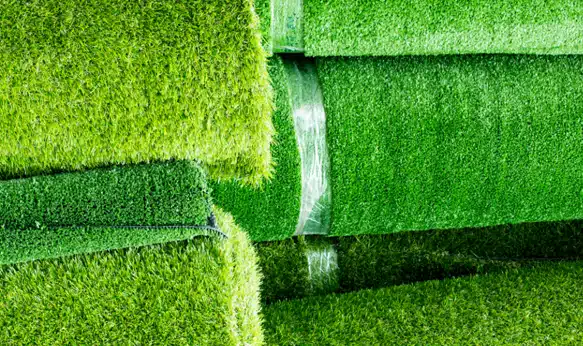
Artificial grass can be a practical part of a San Diego home renovation when you want a green, usable surface without a lawn that needs mowing and regular watering. It works best when it is planned together with the rest of the project: the base, drainage, edges and transitions to patios or paths matter as much as the turf product itself.
- Decide where it earns its place: small lawns, play areas, dog areas, side yards and pool surrounds are common uses; heavily shaded or poorly draining spots need more planning.
- Plan the base and drainage first: a compacted, properly graded base lets water move through and away, and keeps the surface from dipping or holding water.
- Low-maintenance is not no-maintenance: expect occasional brushing, rinsing and debris removal, especially where pets use the area.
Many renovations change how a yard is used: a new patio, a pool, a play area for children or space for a dog. Artificial grass is one option for the parts of the yard that should stay green and soft underfoot. This guide covers where it tends to work well, what to decide before work starts, and how it fits alongside the other surfaces in a renovation.
Where artificial grass works in a home renovation
- Backyard lawns: a green play and gathering space that doesn’t need mowing or irrigation to stay green. See residential artificial grass.
- Dog areas: dogs can’t dig muddy holes in it, and a free-draining base makes cleanup easier. See artificial grass for dog runs.
- Pool surrounds: a soft surface beside the decking with no grass clippings to blow into the water. See artificial grass around pools.
- Side yards and narrow strips: spaces where natural grass is hard to establish or awkward to mow.
- Patios and decks: turf can soften part of an outdoor living area, provided water can drain off the surface underneath. See deck and patio turf.
- Play areas: turf can be installed over a shock-absorbing pad, but under play equipment the surfacing has to suit the equipment’s fall height.
What to decide before the renovation starts
How the space will be used
Children’s play, pets, entertaining and putting practice put different demands on the surface. Pile height, density and infill are chosen to suit the use, so tell your installer how the area will actually be used rather than choosing a product by appearance alone.
Drainage and grading
Artificial grass is laid over a compacted aggregate base. That base has to be graded so water drains through and away from the house, patios and walls. Low spots that hold water in a natural lawn will hold water under turf too unless they are corrected first.
Edges and transitions
Where turf meets concrete, pavers, planting beds or a pool deck, it needs a secure border so it stays flat and doesn’t lift. Planning these transitions with the hardscape avoids awkward gaps and trip edges later.
Sun and shade
Like other synthetic surfaces, artificial grass can get warm in direct afternoon sun. If the area will be used on hot days, think about placement, nearby trees or a shade structure over the space.
Existing lawn and irrigation
Existing grass, roots and sprinkler lines inside the turf area are usually removed or capped, and irrigation for surrounding planting beds is adjusted so it doesn’t spray across the new surface.
When artificial grass is installed during a renovation
Turf is usually one of the last surfaces to go in, after demolition, grading, utilities, hardscape and heavy equipment work are finished, so construction traffic doesn’t damage the base or the turf. Our guide to when to install artificial grass in a renovation walks through that sequence step by step.
Artificial grass compared with other surfaces
Turf isn’t the right answer for every part of a yard. Under play equipment with a meaningful fall height, poured-in-place rubber gives a seamless, firm surface whose thickness can be matched to the equipment. For paths and the ground around trees, porous rubber lets water through while staying firm underfoot. Many renovations combine surfaces: turf for the lawn, rubber under the play set, and concrete or pavers for the patio.
Caring for artificial grass after the renovation
- Remove leaves and debris regularly so they don’t break down on the surface.
- Brush busy areas now and then to keep the fibers upright.
- Pick up pet waste promptly and rinse pet areas.
- Check edges and seams from time to time, especially next to hardscape.
Frequently Asked Questions
Is artificial grass a good choice for a home renovation in San Diego?
Does artificial grass need maintenance?
When should artificial grass be installed during a renovation?
Can artificial grass go under a play set?
How much does artificial grass cost for a renovation?
Which areas does Playground Safety Surfacing serve?
Get in touch
Playground Safety Surfacing installs artificial grass, poured-in-place rubber, porous rubber surfaces and shade structures for homes and other properties across San Diego, Orange, Riverside and Los Angeles counties. If your renovation includes any of these surfaces, send us photos or a site plan and we’ll prepare a free estimate.
Read about our five-step process, call (888) 902-3777, or contact us.