Key Takeaways
PIP playground installation Orange County projects run smoother when permitting, layout, base preparation, drainage, and fall-height thickness requirements are confirmed before the surfacing crew mobilizes. Because timelines and approvals can vary by jurisdiction and site type, clarifying required submittals and inspection hold points early helps avoid re-submittals, schedule slips, and change orders.
- Permitting and submittals vary by site: Requirements can differ for city parks, unincorporated county areas, schools, HOAs, and private sites—especially when new concrete, drainage, or accessible routes are part of the scope—so confirm which agency is reviewing and what drawings/inspections they expect before bidding.
- Base preparation and drainage drive performance: Early PIP problems are most often caused by base instability, poor drainage, or weak edge detailing rather than the rubber itself, so verify positive slope, water exit paths, and base condition (proof/verification) before surfacing placement.
- Safety compliance depends on accurate thickness and layout: The system must be installed to manufacturer specifications with thickness matched to each play event’s critical fall height and with required fall/use zones and accessible transitions, so ask how thickness locations will be determined and documented and how edges/terminals will be detailed.
PIP playground installation Orange County projects typically require careful coordination of site prep, permitting, and safety compliance before equipment can be set and surfacing installed. In Orange County, timelines and approvals can vary by jurisdiction and project type, so confirming local permit requirements early is a key step in avoiding delays and change orders.
A proper installation plan should account for accessible routes, drainage, concrete footings, and impact-attenuating surfacing that meets current ASTM performance standards and CPSC public playground safety guidance. Contractor qualifications matter because layout accuracy, anchoring methods, and fall-zone clearances directly affect long-term durability, warranty validity, and day-to-day user safety.
This guide breaks down common requirements, realistic cost drivers (labor, excavation, surfacing, and inspections), and a practical checklist for comparing installers—so you can evaluate bids, verify experience, and plan a compliant build from design through final walkthrough.
What PIP Playground Installation Involves in Orange County
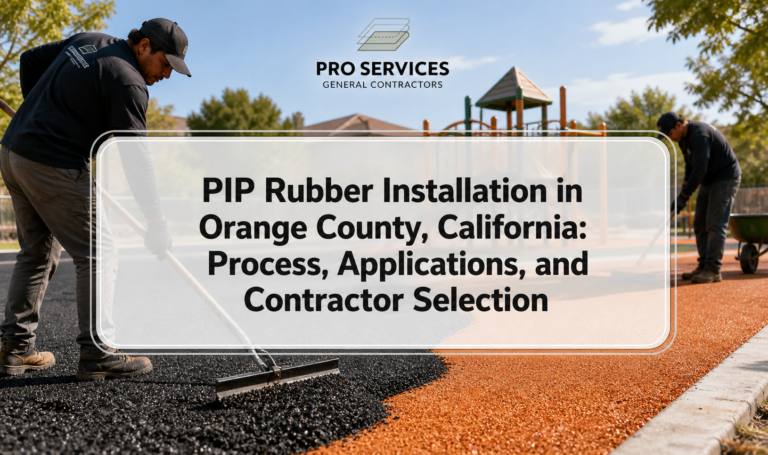
PIP playground installation Orange County projects typically include site preparation, sub-base work, concrete and equipment anchoring, and the placement of a poured-in-place (PIP) rubber surface designed to meet the play area’s fall-height and accessibility needs. The goal is a seamless, durable surface with proper drainage and compliant use zones around each play event.
While the exact sequence varies by site conditions and jurisdiction, most builds follow a similar path: confirm the approved layout, prepare and proof-roll the base, install equipment footings (or verify existing anchors), then install the PIP system in layers. It’s also common to coordinate inspections at key milestones—especially when new concrete, drainage, or accessible routes are part of the scope.
- Planning: review play equipment cut sheets, fall heights, and required use zones before staking anything in the field.
- Permitting: confirm which department is reviewing (Building, Public Works, Parks, or a combination) and what drawings they expect.
- Construction: build the base and drainage so the surface performs long-term, not just at opening.
- Closeout: verify thickness locations, transitions, edge restraint, and punch-list repairs before final acceptance.
Permitting and Jurisdiction: What to Confirm Early
Permitting can be straightforward or complex depending on whether the project is in a city park, a school, an HOA common area, or a private commercial site. Early confirmation of jurisdictional requirements helps prevent schedule slips caused by re-submittals or added inspections.
Orange County projects may involve city plan check, county requirements (for unincorporated areas), school district processes, or special conditions for coastal or environmentally sensitive zones. Even when the scope “seems minor,” adding new concrete pads, modifying drainage, or altering accessible paths can trigger plan review.
Common submittals to anticipate
Most agencies want enough documentation to confirm safety clearances, accessibility, and construction details that affect drainage and durability.
- Site plan showing play area boundaries, accessible routes, and nearby slopes/obstructions
- Equipment layout with fall heights, use zones, and surfacing extents
- Details for sub-base section, edge restraint, and transitions to adjacent paving/turf
- Drainage approach (even if it’s “sheet flow” with positive slope)
- Product data sheets for surfacing system and adhesives/binders (as requested)
If your project is tied to public procurement or prevailing wage requirements, clarify documentation and reporting obligations before bidding. Those requirements can affect contractor availability and bid structure more than the materials do.
Safety and Performance Standards That Shape the Build
PIP surfacing and playground layouts are typically designed around recognized safety guidance and performance standards. In practice, that means matching the surfacing system thickness to fall height, maintaining required fall zones, and building an accessible route that works in real-world conditions (not just on paper).
The key point for owners is that “rubber surface” isn’t automatically compliant; the system must be installed to the manufacturer’s specifications and appropriate thickness for the equipment’s critical fall height. When projects fail early, it’s often because of base issues, drainage problems, or poor edge detailing—not because the material itself was “bad.”
- Fall protection: thickness varies by fall height and system testing; confirm how thickness is determined and documented.
- Accessibility: confirm routes, slopes, transitions, and openings at borders/edges.
- Layout accuracy: surfacing edges should align with fall zones and use zones; mistakes can be costly to correct after curing.
- Drainage: standing water accelerates wear and can lead to delamination or freeze/thaw issues in colder climates (less common locally, but ponding still matters).
If you need a plain-language overview of playground surfacing types and how they differ, this reference on playground surfacing is a helpful starting point—then validate details against manufacturer specs and local reviewer requirements.
Base Preparation and Drainage: The Hidden Make-or-Break Factors
The best-looking PIP surface can still fail if the base and drainage are wrong. A stable, well-draining base reduces cracking, low spots, and edge separation, and it helps the surface maintain consistent impact performance.
Orange County sites often involve compacted aggregate bases, asphalt bases, or concrete slabs depending on existing conditions and project goals. Each base type comes with tradeoffs in cost, drainage behavior, and how repairs are handled years later.
Typical base options under PIP rubber
Base selection is usually driven by drainage conditions, budget, and whether the site must remain permeable.
- Concrete slab: stable and durable; requires thoughtful drainage design and control joints; not permeable.
- Asphalt base: common for PIP; provides a smooth plane; drainage still depends on slope and collection points.
- Compacted aggregate base: can support permeable concepts but must be engineered correctly; surface uniformity is critical.
Drainage checks that prevent callbacks
Small drainage mistakes can become big maintenance problems once the play area is open daily.
- Confirm positive slope away from equipment posts and toward intended drainage points.
- Identify “bowls” created by adjacent curbs, grade breaks, or planter edges.
- Detail how water exits the area (sheet flow, area drains, trench drains) and who maintains it.
- Require base proof/verification before surfacing placement to catch soft spots early.
Step-by-Step: A Realistic Installation Sequence
A clear sequence helps owners compare bids “apples to apples” and ensures subcontractors don’t work at cross purposes. The most efficient projects lock the layout and base details before the surfacing crew mobilizes.
Below is a typical sequence for PIP playground installation Orange County scopes, recognizing that weather, inspections, and material lead times can adjust the order.
- Preconstruction meeting: review drawings, staging, access routes, protection of nearby landscaping, and inspection hold points.
- Demolition (if needed): remove existing surfacing/base and dispose per local requirements.
- Rough grading and drainage: establish elevations, slopes, and drainage paths.
- Base installation: place and compact base or install asphalt/concrete per spec.
- Equipment footings/anchors: set footings, verify alignment, and protect anchor points until surfacing.
- Edge restraint and forms: install curbs/headers or edge details that prevent spreading and cracking.
- PIP surfacing install: place base layer and wear/top layer; detail transitions and terminations.
- Cure and protection: restrict access until cured; prevent contamination from dust, irrigation, or other trades.
- Final walkthrough: verify seams, edges, drainage, and punch-list items before opening.
Cost Drivers: What Actually Changes Your Bid
PIP installation costs vary widely because the surface is only one part of the project. Excavation, base replacement, drainage fixes, concrete work, and access constraints often drive cost more than the color pattern you choose.
Instead of expecting a universal square-foot number, it’s more reliable to compare line items and assumptions between bids. Owners should pay close attention to what is excluded—especially base repair allowances, demolition quantities, and edge restraint details.
- Demolition and disposal: existing rubber removal, asphalt/demo, hauling, and disposal fees.
- Base correction: undercutting soft soil, importing aggregate, compaction requirements.
- Drainage improvements: added inlets, trench drains, pipe tie-ins, or regrading.
- Access and staging: restricted equipment access (gates, stairs, rooftops) increases labor and handling.
- Design complexity: graphics, multiple colors, and tight curves increase labor time and waste.
- Schedule constraints: night work, school calendar windows, or phased openings.
When evaluating cost, it can help to read about lifecycle thinking—especially how short-term savings can create bigger repairs later. See why cheap surfacing costs more long-term for practical decision factors to consider when comparing options.
Comparison Table: What to Verify Before You Approve an Installation Plan
This reference table highlights common decision points that affect compliance, performance, and long-term maintenance. Use it as a pre-bid checklist so your installer quotes the same scope you expect to receive.
| Installation Factor | What to Specify / Confirm | Orange County Project Considerations |
|---|---|---|
| Permitting scope | Which agency reviews, what drawings are required, and what inspections are needed | Requirements can differ by city vs. unincorporated county, schools, and public works standards |
| Base type & condition | Concrete/asphalt/aggregate, compaction expectations, and any base repair allowances | Many delays come from discovering unsuitable base after demo; clarify who owns remediation decisions |
| Drainage approach | Positive slope, drain locations, and how water exits the play area | Irrigation overspray and planter edges can create ponding; require verification before surfacing placement |
| Thickness documentation | How thickness is determined for fall height and how locations are verified | Ask for a plan showing max fall height by play event and how transitions are handled at borders |
| Edges & transitions | Edge restraint type, trip-free transitions to walks/curbs, and terminations at turf/planters | Trip hazards and edge lifting are common punch-list items; details should be drawn, not improvised |
How to Compare Installers: A Practical Bid Checklist
The “right” installer is the one who can execute the layout precisely, build the base correctly, and document what was installed. Comparing bids is easier when you request the same proof points from each contractor.
Rather than focusing only on square footage, ask about process control: how they confirm elevations, protect work during cure, and coordinate with the equipment installer and inspectors.
Questions that quickly reveal experience
These questions help distinguish between a contractor who installs PIP occasionally and one who has repeatable procedures.
- How will you verify and document slopes and drainage before pouring?
- What base condition do you assume, and what happens if the base is unsuitable?
- How do you coordinate surfacing thickness to the equipment’s fall heights?
- What edge restraint detail is included, and where are transitions located?
- What is your plan for protecting the surface during cure (fencing, signage, schedule sequencing)?
- What maintenance steps do you recommend to keep seams, edges, and pores performing?
Bid scope items that should be written down
Many disputes come from missing scope language. If it matters to performance, it should be in the proposal.
- Demolition limits and disposal responsibility
- Base repair allowances (or unit pricing for undercut/import)
- Drainage components and tie-in points
- Color layout, graphics, and pattern boundaries
- Protection and access control during cure
- Closeout deliverables (product data, care guidance, and any requested inspection documentation)
Choosing the Right Surface System for the Site
Poured-in-place rubber is popular because it can be seamless, accessible, and customizable, but it isn’t the only option for every site. The best choice depends on drainage needs, expected traffic, shading, and maintenance capacity.
If your project specifically calls for a seamless rubber system, reviewing the system description and typical applications can help you align design and expectations before bidding. For more detail on system basics and options, see Poured In Place Rubber.
- PIP rubber: seamless, accessible, customizable; sensitive to base quality and installation conditions.
- Porous rubber surfaces: may be considered for certain multi-purpose or pedestrian applications where permeability is a priority.
- Artificial grass systems: can work for specific play or landscape contexts, but should be designed intentionally for drainage, infill containment, and transitions.
Mixing systems can also be effective—such as using rubber at high-impact zones and another finish for adjacent plaza areas—if transitions are detailed carefully to avoid trip edges and water traps.
Maintenance Planning: Protecting the Investment After Opening Day
Maintenance planning is part of installation because cleaning access, drainage upkeep, and repair procedures affect how long a surface stays safe and presentable. Even high-quality PIP surfaces benefit from routine inspection and prompt small repairs before water intrusion spreads.
At turnover, owners should request clear care instructions and confirm who to call for repairs that preserve the original system integrity. If you manage multiple sites, standardizing inspection and cleaning routines can reduce long-term variability in performance.
- Routine inspections: look for edge lifting, surface cuts, seam separation, and ponding after irrigation cycles.
- Cleaning: remove debris that can clog pores and hold moisture; address stains early to avoid aggressive cleaning later.
- Drainage upkeep: keep drains, scuppers, and adjacent landscape edges functioning as intended.
- Repairs: address small failures early; delayed patching can expand into larger removals.
For owners building a long-term care plan, it helps to review common upkeep steps and what to watch for seasonally. See PIP maintenance for maintenance considerations that can be incorporated into facilities schedules.
Final Walkthrough: A Punch List That Prioritizes Safety and Longevity
A structured final walkthrough helps ensure the play area opens safely and stays that way. The best punch lists focus on drainage, edges, transitions, and the accuracy of fall zones—not just cosmetic touch-ups.
Before acceptance, walk the site after watering/irrigation (or after a rain event if timing allows) to see where water actually goes. Also inspect transitions in the way a child or caregiver experiences them: turning corners, moving mobility devices, and approaching equipment entry points.
- Drainage test: check for ponding in low points, especially at borders and around posts.
- Edge review: confirm edges are tight, bonded, and protected by proper restraint where specified.
- Trip hazards: verify smooth transitions to walks/curbs and consistent surface plane.
- Coverage: confirm surfacing extents match the intended use zones around equipment.
- Site cleanup: remove debris and ensure cure protection is removed only when safe.
When these items are verified before opening, owners reduce the odds of early repairs, warranty disputes, and operational headaches—especially in high-traffic Orange County parks, schools, and HOA amenities.
Frequently Asked Questions
Get a Clear Plan for Your Orange County PIP Playground Installation
If you’re planning poured-in-place rubber surfacing, the next step is making sure your layout, base preparation, drainage, and fall-height thickness requirements are aligned before work begins. A quick conversation can help you confirm what to include in bid scopes, which details typically trigger re-submittals, and how to document key items for a smoother inspection and closeout.
Professional input is especially helpful when you’re comparing installers or dealing with unknown base conditions—because small assumptions about slopes, edges, and transitions can lead to avoidable change orders and early wear.