
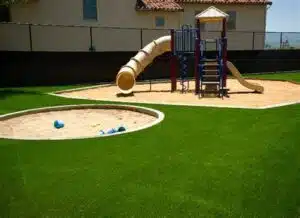
Installing synthetic turf around trees in a playground can be an aesthetically pleasing yet functional choice, but it requires careful planning and execution to ensure that the trees remain healthy, and the turf is installed correctly. Below, we explore the step-by-step process of installing playground synthetic turf around trees, along with some considerations and tips to keep in mind.
Planning the Space Around the Trunk
Select a synthetic turf that complements the natural surroundings and is suitable for playground use. Look for products specifically designed for playgrounds, as they are made to withstand heavy foot traffic and rough play.
Before cutting anything, decide how much open ground to leave around the trunk. Running turf right up to the bark is not recommended; an open ring of soil or mulch around the base gives the trunk flare and surface roots room and keeps the tree easy to water. The right size for that ring depends on the tree, so it is worth asking an arborist about mature or valuable trees.
Preparing the Ground Without Damaging Roots
Remove any grass, weeds, and other debris from the area around the tree. Level the ground if necessary to provide an even surface.
Avoid damaging tree roots during installation. If large roots are visible near the surface, consult with an arborist to ensure that your actions will not harm the tree.
Near the tree, work by hand rather than with machinery where you can, and avoid cutting through larger roots just to reach the planned base depth; it is usually better to adjust the finished level or keep the turf further back. Heavy compaction over the root area can make it harder for water and air to reach the roots, so keep base work around the tree as light as the installation allows.
Protecting the Trunk and Managing Water
Install a protective barrier around the tree trunk to protect it from abrasion and other potential damages. This will allow the tree to breathe and grow without obstruction.
If the area is prone to waterlogging, a proper drainage system will prevent water accumulation, protecting both the tree and the turf.
Shape the finished grade so water drains away from the opening instead of collecting against the trunk or running under the turf edge.
Cutting and Edging the Turf Around the Tree
Cut the synthetic turf to fit the area around the tree, allowing for an expansion gap between the turf and the protective barrier around the tree.
Use specialized adhesives and stakes to secure the turf to the ground, ensuring that it sits neatly around the opening while keeping the expansion gap.
Finish the edge around the opening with a secure border or edge restraint so the turf cannot lift where people walk past the tree. Trunks and surface roots keep growing, so check the opening from time to time and trim the turf back rather than letting it press against the bark.
Infill, Leaf Debris and Ongoing Care
Spread an infill material, such as sand or rubber crumbs, over the turf. This helps to stabilize the turf and provide cushioning.
Trees drop leaves, seed pods, twigs and fruit, so turf under a canopy usually needs clearing more often than open areas. A leaf blower or stiff brush works well; keep the open ring around the trunk free of infill and turf scraps, and check the edge after storms or heavy leaf fall.
Regular maintenance, including cleaning and checking for wear and tear, ensures the synthetic turf remains in good condition.
FAQs
Can Synthetic Turf Harm The Tree?
If installed incorrectly, synthetic turf can restrict the tree’s access to water and nutrients or cause mechanical damage. It’s essential to follow proper installation methods and consult an arborist if needed.
Is Special Maintenance Required For Synthetic Turf Around Trees?
While regular maintenance is needed for all synthetic turf, you may need to pay extra attention to the area around the tree to ensure that debris and water do not accumulate, and the protective barrier remains intact.
Can Synthetic Turf Be Installed Around Young Trees?
Yes, synthetic turf can be installed around young trees, but extra caution should be taken to allow room for growth and to prevent any potential damage to the fragile young tree.
To talk with a professional, dial (888) 902-3777 for Playground Safety Surfacing.
Conclusion
Get in touch with Playground Safety Surfacing at (888) 902-3777.


