
San Diego Poured-in-Place Rubber Playground Surfacing: How California’s New Education Power Shift Could Speed Up School Safety Upgrades
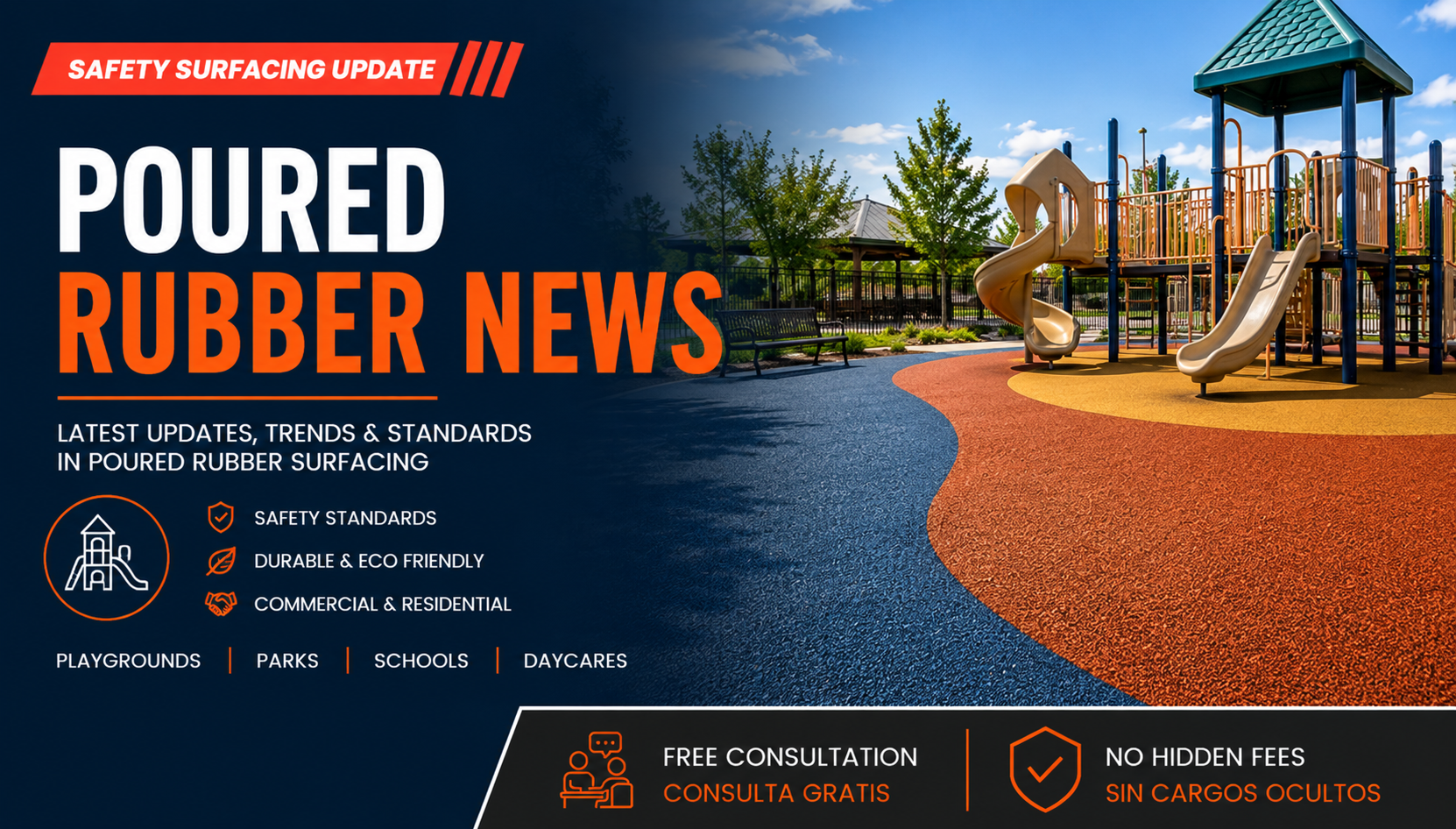
California just changed who truly runs public education—and the shift could ripple into how school districts prioritize campus safety, facility upgrades, and playground modernization across San Diego County and the rest of the state. A new law signed this month restructures education governance so the governor gains stronger control over the California Department of Education, while the elected superintendent’s role becomes more public-facing and advocacy-driven.
For families, school leaders, and contractors in San Diego, these changes matter because governance affects funding priorities, compliance expectations, and how quickly districts can move on capital improvements—especially projects tied to student well-being, like safer playground surfaces.
California’s Education Power Shift Could Influence School Safety Investments
A long-discussed overhaul of California’s education leadership structure is now law, and it was driven in part by two San Diego County Assemblymembers. While the debate has focused on democratic process and political control, a quieter impact may show up in day-to-day district operations: how campuses plan, approve, and fund safety-related facility improvements, including playground surfacing and fall-protection upgrades.
Who is driving the change in Sacramento?
The legislation was crafted by Assemblymembers David Alvarez and Darshana Patel, both Democrats representing San Diego County. Patel chairs the Assembly Education Committee, and Alvarez chairs the Assembly Budget Subcommittee on Education Finance. Patel has described their working relationship as unusually close—down to sitting next to each other on the Assembly floor—creating consistent coordination between education policy and education funding discussions.
What changed in California education governance?
The new law creates an education commissioner role who will be appointed by the governor and confirmed by the California Senate. That commissioner will oversee the California Department of Education. The elected state superintendent of public instruction remains a constitutional office, but the position shifts toward a “visionary” and advocacy-centered role rather than direct operational control of the department.
The law also adjusts board participation: the superintendent will serve on the State Board of Education and on the board of the state’s community college system, in addition to its university systems—keeping the office visible in statewide education discussions even as executive control consolidates elsewhere.
Where and when did this happen?
The overhaul was signed into law this month in California, after policy momentum built through 2025 and 2026. A report from the think tank Policy Analysis for California Education (PACE) released in December supported restructuring, while Gov. Gavin Newsom pushed for more direct control of education policy as the proposal advanced.
Why now—and why does it matter for San Diego schools?
Alvarez has pointed to timing: both Gov. Newsom and the current superintendent are term-limited, so both upcoming races are open, reducing the appearance that the overhaul targets specific personalities. Supporters argue student outcomes show the “status quo is not working.” Opponents argue the move sidelines voters and was advanced through a budget trailer bill process that they say lacked transparency.
In San Diego County—where districts range from large urban systems to smaller suburban and rural ones—any state-level governance consolidation can change how quickly safety priorities translate into funded projects. When Sacramento policy leadership becomes more centralized, districts often see shifts in compliance guidance, procurement expectations, and the pace at which new standards are promoted statewide.
What opponents are warning about
California’s largest teachers union, the California Teachers Association (CTA), opposed the overhaul. CTA President David Goldberg said the process did not meaningfully include educator, parent, or student voices and warned the commissioner’s first year could be dominated by bureaucracy—especially because the bill requires the commissioner to develop findings and recommendations for a second phase of consolidation and streamlining by October 2027.
Two superintendent candidates also criticized the approach: Richard Barrera, who leads the San Diego Unified School District board, and Sonja Shaw, who leads the board of a Riverside County district. Both said they would still run even with the role’s reduced authority. Barrera emphasized concerns about process transparency but framed the superintendent as primarily an organizer/advocate. Shaw called the change an attack on the state constitution and voter intent, noting similar ideas were rejected by voters in prior decades.
How this connects to playground safety and poured-in-place rubber surfacing
When state leadership changes, districts often re-evaluate what “student-first” looks like in measurable, defensible terms. One of the clearest, least controversial ways to demonstrate student-centered investment is campus safety infrastructure—especially playground fall protection and ADA-friendly access.
That’s where poured-in-place rubber surfacing becomes highly relevant for San Diego schools. Poured-in-place rubber is a seamless, impact-attenuating playground surface designed to help reduce injury risk from falls, support accessibility, and withstand heavy use—key priorities when districts face scrutiny around student safety outcomes and maintenance efficiency.
For administrators and facilities teams, the practical question becomes: will the new governance model push clearer statewide expectations for safety upgrades, inspections, and risk mitigation? If so, districts may accelerate projects that are easy to justify to boards, parents, and oversight bodies—like replacing aging wood chips or uneven surfaces with compliant, durable poured-in-place rubber systems.
San Diego districts may see faster “safety-first” facility decision-making
Because Alvarez is positioned in education finance and Patel in education policy, the overhaul also signals a tighter coupling between policy direction and budget strategy. In San Diego, that could influence how quickly grants, modernization dollars, and capital planning frameworks prioritize safety improvements versus discretionary programs.
Whether you’re in San Diego, Chula Vista, National City, or elsewhere in San Diego County, safer playground surfacing is a visible, community-valued improvement. It also supports risk reduction: fewer trip hazards, more consistent drainage planning, improved accessibility, and a cleaner, more maintainable surface compared to loose-fill materials.
Actionable takeaways for schools and organizations planning playground upgrades
- Audit current playground surfaces for fall-risk zones, edge separation, drainage issues, and ADA accessibility gaps before the next budget cycle.
- Document safety and maintenance problems with photos and logs—this helps justify capital improvement requests to boards and stakeholders.
- Prioritize long-life, low-maintenance solutions like poured-in-place rubber where high traffic and accessibility needs are present.
- Align project timing with procurement windows and district board calendars to avoid delays—especially if state guidance shifts under the new commissioner model.
- Don’t wait for an incident: proactive resurfacing is typically faster and less disruptive than reacting after an injury or complaint.
Frequently Asked Questions
Next steps for safer playgrounds in San Diego
If your school, HOA, park, or childcare site in San Diego is rethinking safety improvements, poured-in-place rubber surfacing can be a practical, long-term upgrade that aligns with student well-being goals and facility accountability.
To explore options for poured-in-place rubber surfacing, connect with Playground Safety Surfacing for guidance on planning, materials, and installation considerations.
Credits: This article is a commentary-based rewrite for informational purposes, based on this source.
Related Posts
San Juan Capistrano, CA Playground Safety Surfacing: As Caspers Wilderness Park Trends, Why Poured-In-Place Rubber Helps Prevent Fall Injuries
Families across Southern California are rediscovering Ronald W. Caspers Wilderness Park as a scenic, kid-friendly…
San Diego, CA Kids Free in October Expands to Tijuana—Why Poured-in-Place Rubber Playground Safety Surfacing Matters for Busy Family Venues
Families across San Diego, CA are getting a bigger, more affordable reason to explore museums…
Leave a Reply