
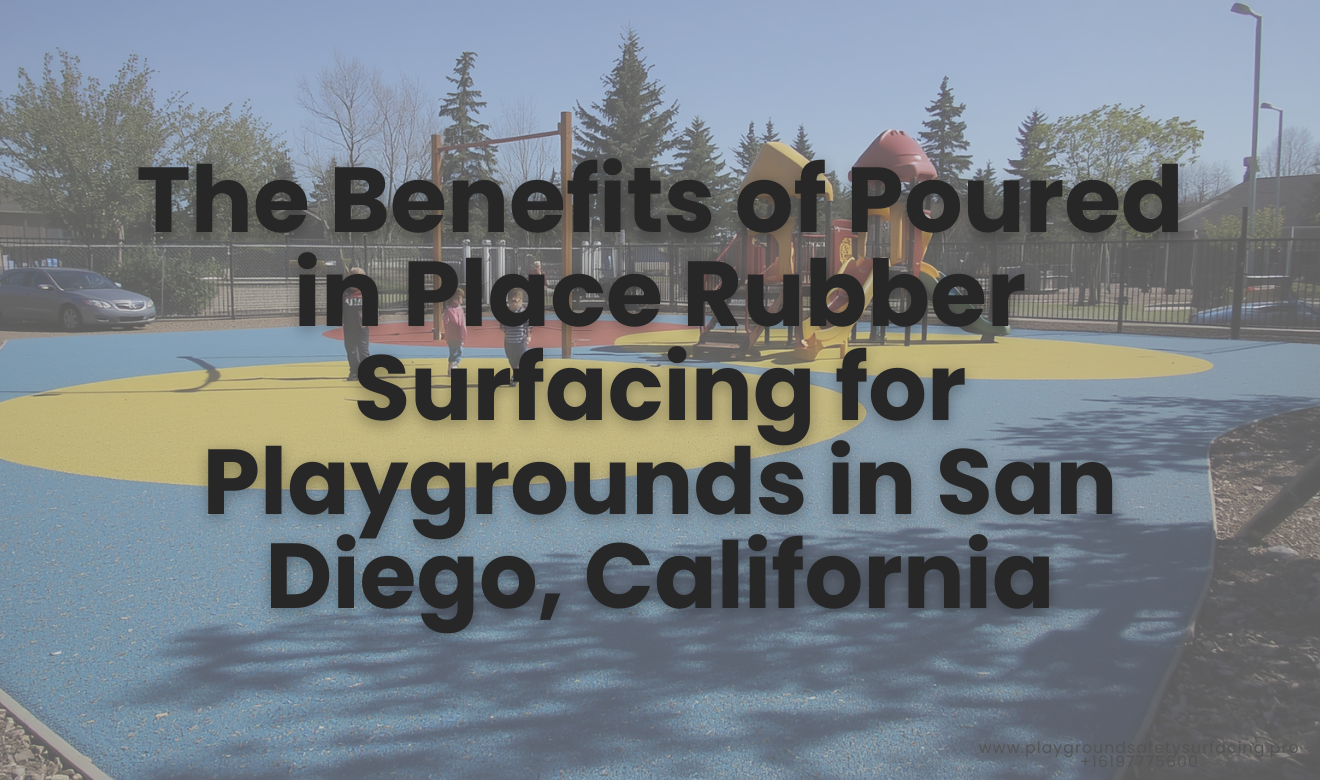
The Benefits of Poured in Place Rubber Surfacing for Playgrounds in San Diego, California
Executive Summary
Commercial poured in place rubber (PIP) surfacing is a top playground choice in San Diego because it combines engineered fall protection, ADA-friendly accessibility, and long-term durability in a seamless, low-maintenance system. Its performance depends on correct thickness design, base preparation, drainage planning, and professional installation.
Key Takeaways
- Seamless Safety and Fall Protection: A continuous surface reduces trip hazards and provides more consistent impact absorption than loose-fill materials, especially in high-use landing zones.
- Two-Layer System Built for Performance: PIP typically uses a cushioned impact layer for shock absorption and an EPDM wear course for traction, UV stability, and color/design flexibility.
- Thickness Must Match Fall Height: PIP is not “one thickness fits all”—higher-risk equipment areas (swings, climbers, slide exits) often require thicker builds to meet safety goals.
- Installation Quality Drives Longevity: Base condition, drainage, edges/transitions, and curing conditions are critical—poor prep is a common root cause of premature failures.
- Lower Day-to-Day Maintenance with Targeted Repairs: Routine cleaning and inspections are straightforward, and localized damage can often be repaired without replacing the entire surface.
Poured in place rubber surfacing is one of the best choices for playgrounds in San Diego because it delivers safer fall protection, long-term durability, and easy maintenance in a single, seamless surface. Commercial poured in place rubber San Diego projects often focus on reducing injuries, improving accessibility, and holding up to heavy daily use.
For example, under swings and slides, the cushioned rubber layer helps absorb impact where kids land the hardest. On busy school playgrounds and public parks, the seamless finish prevents tripping hazards that can happen with loose fill like wood chips. It also makes it easier for wheelchairs, strollers, and walkers to move smoothly across the play area.
In San Diego’s sunny, coastal conditions, poured in place rubber can handle heat, occasional rain, and constant foot traffic without shifting or washing away. If a section ever gets damaged, repairs can be targeted to that spot instead of replacing the entire playground surface.
What Is Commercial Poured In Place Rubber San Diego Surfacing?
Commercial poured in place rubber San Diego surfacing (often called “PIP rubber”) is a two-layer, troweled rubber system installed directly on a prepared base to create a seamless, cushioned playground surface.
Most commercial poured in place rubber San Diego installations include:
- Base layer (impact layer): thicker cushion made from rubber granules bound with polyurethane to absorb falls.
- Top layer (wear course): a denser EPDM rubber layer for traction, UV stability, and color/design options.
Because it’s seamless, commercial poured in place rubber San Diego projects are commonly specified where accessibility, safety compliance, and cleanability are priorities.
Why Commercial Poured In Place Rubber San Diego Is a Top Choice for Safety and Accessibility
Playgrounds are one of the most common places for childhood injuries, and falls are the leading cause of playground injuries. The U.S. Centers for Disease Control and Prevention (CDC) notes that emergency departments treat more than 200,000 children (14 and under) each year for playground-related injuries, and falls are a major contributor.
Commercial poured in place rubber San Diego surfacing helps address this risk by combining consistent impact absorption with stable footing—without the shifting and displacement you get with loose-fill products.
Key safety benefits (quick scan)
- Consistent fall protection in high-use zones like swings, slides, climbers, and track rides.
- Seamless surface reduces trip hazards caused by ruts, kicked-out material, or uneven borders.
- Slip-resistant traction when properly installed and maintained.
- Clear sightlines (no loose fill piles) that can hide debris or create uneven landing spots.
Accessibility advantages that matter in public spaces
Commercial poured in place rubber San Diego surfacing is widely used because it supports more inclusive play. A smooth, continuous surface can make a meaningful difference for:
- wheelchair users
- children using walkers or mobility devices
- caregivers pushing strollers
- maintenance teams moving carts or equipment
For background on the broader category of playground surfacing types and why impact attenuation matters, see playground surfacing.
How Commercial Poured In Place Rubber San Diego Is Designed for Fall Height (and Why It’s Not “One Thickness Fits All”)
The most important design detail in commercial poured in place rubber San Diego installations is that thickness is typically engineered to the equipment fall height—not just aesthetic preference.
Here’s how planning usually works:
- Identify fall height by equipment type (slides, climbers, swings often differ).
- Map high-impact zones (like swing bays and slide exits) where extra protection may be needed.
- Confirm performance expectations with the project’s safety goals and inspection requirements.
- Install consistent thickness so the surface performs as intended across the full use zone.
In practical terms: commercial poured in place rubber San Diego playgrounds often use thicker builds under high-fall equipment and standard builds in circulation or low-risk zones—helping balance safety and budget.
How the Installation Process Works (From Base Prep to Wear Layer)
Commercial poured in place rubber San Diego performance depends heavily on installation quality. A seamless surface can only stay seamless if the base, drainage, materials, and cure conditions are right.
Typical installation stages
- Site prep & demolition (if replacing an old surface).
- Base evaluation (often asphalt or concrete; sometimes engineered aggregate depending on design).
- Drainage planning (especially important near irrigation, slopes, and low points).
- Mix and install impact layer (rubber + binder, troweled to specified thickness).
- Install EPDM wear course (color layer, traction, UV resistance).
- Cure time (timing varies by temperature, humidity, and system design).
- Final walkthrough (seams, edges, transitions, trip points, adhesion, and finish quality).
If you want a detailed view of steps and what to expect during scheduling, staging, and curing, review the PIP process.
Cost: What Impacts Pricing for Commercial Poured In Place Rubber San Diego?
Commercial poured in place rubber San Diego pricing varies because it’s not a single “product”—it’s a built system. The biggest cost drivers are usually thickness (safety performance), base condition, site layout complexity, and design work.
Main cost factors (featured-snippet friendly)
- Square footage (larger areas typically reduce per-foot mobilization impact).
- Required thickness based on equipment fall height.
- Base condition (cracks, slope issues, drainage corrections, or demolition needs).
- Edge transitions to concrete, curbs, borders, ramps, or turf.
- Design complexity (logos, patterns, multiple colors, game striping).
- Access constraints (tight gates, rooftop staging, limited laydown areas).
- Schedule constraints (school breaks, park closures, phased construction).
For decision-makers comparing “cheap now” versus “lower risk later,” it’s worth reading why cheap surfacing costs more long term—the lifecycle perspective applies directly to commercial poured in place rubber San Diego projects where repairs, closures, and liability exposure matter.
What Maintenance Looks Like in Real Life (and How to Extend Surface Life)
One reason commercial poured in place rubber San Diego surfaces stay popular is that maintenance is straightforward compared with loose-fill systems that require constant raking, topping off, and displacement control.
Simple maintenance checklist
- Weekly / routine: blow off sand, leaves, and debris; remove trash; spot clean spills.
- Monthly: inspect high-wear zones (swings, slide exits, spinner areas) for early signs of abrasion.
- Seasonally: gentle wash as needed; confirm drains and nearby irrigation aren’t flooding edges.
- After storms or heavy use: check edges, transitions, and any spot that holds water.
San Diego’s coastal air and wind-blown grit can act like sandpaper over time in high-traffic zones—so proactive cleaning and inspections can materially extend the wear course life in commercial poured in place rubber San Diego installations.
For a step-by-step upkeep approach, see PIP maintenance.
Commercial Poured In Place Rubber San Diego vs. Other Playground Surfacing Options
If you’re evaluating surface types for a school, city park, HOA, or corporate campus, compare them on safety consistency, accessibility, maintenance, and how they behave in real use—not just the initial install.
| Surface type | Strengths | Common challenges |
|---|---|---|
| Commercial poured in place rubber San Diego | Seamless, accessible, targeted repairs, consistent underfoot | Quality depends on base prep and install; wear in extreme high-traffic zones |
| Engineered wood fiber (EWF) | Lower upfront cost; natural look | Displacement, ruts, ongoing raking/top-off, accessibility can degrade |
| Rubber mulch (loose fill) | Doesn’t rot; good drainage | Migration/scatter; needs containment; accessibility varies by condition |
| Synthetic turf (play areas) | Clean appearance; can be accessible; multipurpose look | Infill management, heat considerations, seam repairs depending on system |
In many high-use applications, commercial poured in place rubber San Diego surfaces win because they reduce daily maintenance labor and provide dependable access across the whole play zone.
Where Commercial Poured In Place Rubber San Diego Works Best (Use Cases That Get the Most Value)
Commercial poured in place rubber San Diego is especially effective when the site has heavy foot traffic, requires smooth access, and needs a professional look that holds up.
High-value applications
- Schools and preschools: predictable fall protection and fewer trip hazards during recess.
- City parks and public works projects: durable surfaces that support inclusive access and simpler upkeep.
- HOAs and multifamily communities: clean, quiet, attractive play areas near residences.
- Corporate campuses: modern finishes for outdoor amenity spaces and childcare areas.
- Senior activity spaces: cushioned walking and activity zones where comfort matters.
If your project is specifically a school or park play area, you can explore options and typical build approaches through PIP playgrounds.
How to Choose a System That Holds Up in San Diego’s Coastal Climate
San Diego conditions bring a mix of sun exposure, salt air in coastal neighborhoods, occasional heavy rain events, and daily sand/dust. Commercial poured in place rubber San Diego installations last longer when the system is planned around these realities.
Selection tips that reduce long-term issues
- Prioritize UV-stable wear layers and colors designed for outdoor exposure.
- Design drainage from day one so water doesn’t pond at edges or under equipment exits.
- Plan for high-wear reinforcement areas (swing bays are the most common example).
- Use smart color layouts to visually mask normal dust and traffic patterns in busy parks.
Well-designed commercial poured in place rubber San Diego projects don’t just look good on opening day—they keep their safety and usability longer because the surface is built for the site, not just the square footage.
Real-World Results: What Operators Notice After Switching to Commercial Poured In Place Rubber San Diego
Across schools, parks, and multi-family properties, the biggest “day-to-day” improvements usually fall into three categories: fewer trip-related complaints, fewer surface-related closures after weather, and less time spent re-leveling or replenishing surfacing.
Example outcomes commonly reported by facility teams
- More predictable inspections: the surface doesn’t hide low spots under displaced loose fill.
- Simpler cleanup: debris can be blown or swept off instead of raked out.
- Better circulation: wheelchairs and strollers move through play zones without bogging down.
That operational consistency is a major reason commercial poured in place rubber San Diego is frequently selected for public-facing, high-accountability sites.
What to Look For in a Spec, Bid, or Scope of Work
If you’re reviewing proposals for commercial poured in place rubber San Diego, the bid should clearly explain the performance intent, build thickness, base requirements, and how repairs will be handled if needed.
Scope items that should be clearly stated
- Surface thickness by zone (especially under swings and higher fall-height equipment)
- Base preparation plan (repairs, leveling, drainage corrections)
- Edge and transition details (curbs, ramps, concrete walks, ADA routes)
- Material description (impact layer + wear course composition)
- Cure time and reopening plan (so facilities can schedule around closures)
- Repair approach for localized damage and high-wear zones
Clarity here is what protects the long-term performance of commercial poured in place rubber San Diego installations—especially at busy public sites.
Built for Play, Engineered for Trust
Commercial poured in place rubber San Diego surfacing performs best when it’s treated as a safety system—not just a finishing layer. When thickness is matched to fall height, the base is properly prepared, and maintenance is planned, you get a surface that supports safer landings, inclusive access, and predictable operations.
For peace of mind, decision-makers typically look for installers and project teams who can demonstrate:
- Documented experience in playground safety surfacing (especially PIP rubber systems)
- Understanding of impact-attenuation design and high-wear zone planning
- Proven base prep and drainage execution (the most common root cause of failures)
- Maintenance guidance tailored to high-traffic San Diego environments
That’s how commercial poured in place rubber San Diego projects stay safer, cleaner, and more reliable for the long run—and why so many schools, parks, and commercial properties keep specifying it.
Frequently Asked Questions
Ready to Upgrade to Safer, Seamless Playground Surfacing in San Diego?
If you’re planning a new build or replacing a high-maintenance surface, poured-in-place rubber is one of the smartest long-term moves you can make for safety, accessibility, and day-to-day durability. At Playground Safety Surfacing, we help you choose the right system thickness for fall height, plan for high-wear zones, and install a clean, seamless surface that holds up to San Diego sun, coastal conditions, and heavy use—without the constant raking and topping off. Get in touch to discuss your site, timeline, and design ideas.
Related Posts

The Ultimate Guide to Choosing Playground Surfacing in San Diego, California
Executive Summary Compliant playground surfacing in San Diego County means selecting and installing a surfacing…

Expert Guide to the Best Playground Surfacing Options in Orange County, California
Executive Summary Playground surfacing in Orange County should be selected and specified based on verified…
Leave a Reply