
Benefits of Poured in Place Rubber for Schools in Orange County, California
Executive Summary
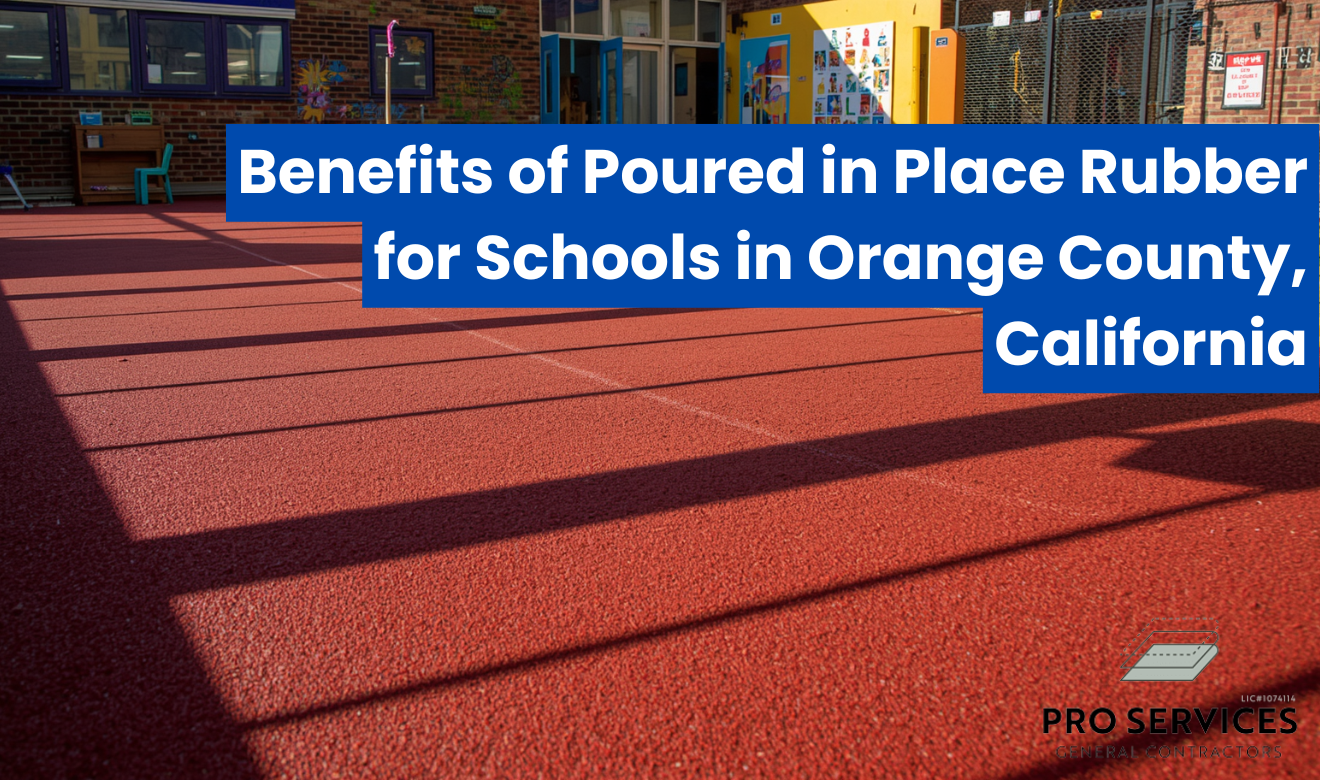
Poured-in-place (PIP) rubber is a durable, seamless playground safety surface that Orange County schools use to improve fall protection, traction, accessibility, and day-to-day maintenance outcomes. When properly designed (by zone thickness) and installed (with correct base prep and drainage), it delivers more consistent performance than loose-fill options under heavy campus use.
Key Takeaways
- Seamless, two-layer safety system: PIP rubber is installed on-site with an impact-absorbing base layer and a denser wear layer that improves traction, durability, and cleanability.
- Safety improves through zoned thickness: Schools can specify thicker rubber under swings, slides, and climbers for better fall protection while using firmer builds in run paths and queue areas for stability and wear resistance.
- Operational advantages over loose fill: Unlike wood fiber or sand, PIP doesn’t migrate, rut, or track as easily, reducing cleanup labor and maintaining more consistent fall protection depth.
- Cost depends on scope and site conditions: Pricing varies primarily with square footage, required impact attenuation, sub-base repairs/drainage needs, access constraints, and design complexity (colors/graphics).
- Performance is installation- and maintenance-dependent: Long-term results hinge on sub-base preparation, drainage, edge/transition detailing, and routine inspections plus fast repair of small tears or lifted edges.
Poured in place rubber for schools Orange County is a smart choice because it creates a safer, more durable play surface that holds up to daily recess, PE classes, and heavy foot traffic. It cushions falls under climbing structures, reduces slipping in high-use walkways, and stays comfortable for kids moving between games and equipment. For example, a playground can use thicker rubber under slides and swings for extra impact protection, while surrounding areas can use a slightly firmer layer for running and lining up. It also works well for TK–5 play zones, outdoor classrooms, and fitness circuits because it’s seamless, easy to clean, and doesn’t scatter like loose-fill materials.
What Is Poured-in-Place Rubber and Why Schools Use It
Poured in place rubber for schools Orange County is a two-layer, seamless playground safety surface that’s mixed and installed on-site. Most systems include:
- Base (impact) layer: thicker, more resilient rubber designed to help absorb falls.
- Top (wear) layer: denser, colored rubber that resists abrasion, improves traction, and makes cleanup easier.
Schools choose poured in place rubber for schools Orange County because it’s designed for daily campus use—recess rotations, PE, after-school programs, and repeated sweeping/washing—without the migration problems of loose-fill surfacing.
For context on how surfaces are categorized and evaluated, it helps to understand the broader category of playground surfacing and why impact attenuation is a core safety consideration.
How Poured in Place Rubber Improves Playground Safety
Poured in place rubber for schools Orange County is popular for safety because it can be engineered for fall protection in specific zones—especially under climbers, slides, and swings—while still staying stable and slip-resistant in circulation paths.
Key safety benefits schools care about
- Targeted impact protection: thickness can be increased under higher-risk equipment.
- Traction and stability: a continuous surface reduces trip hazards caused by shifting fill or exposed edges.
- Predictable transitions: clean transitions around curbs, ramps, and gates support safer movement.
- Better supervision: staff can see hazards, spills, and debris faster than in loose fill.
What credible data says about injuries
Falls are consistently the leading cause of playground injuries. The U.S. Centers for Disease Control and Prevention (CDC) notes that emergency departments treat more than 200,000 children (ages 14 and under) each year for playground-related injuries, and falls are the most common cause. A safer surface can’t prevent every injury, but it can reduce the severity of fall-related impacts when correctly specified for equipment height and maintained.
How Thickness and Design Are Determined for School Campuses
One reason poured in place rubber for schools Orange County performs well is that it’s not “one thickness everywhere.” A smart layout matches the surface build-up to how children actually use the space.
Common school zoning approach
- Under swings and slides: thicker impact layer for higher fall risk and repeated landing impact.
- Climbing structures: increased thickness in the primary fall zone.
- Open play and running lanes: slightly firmer build can support sprinting, games, and lining up.
- Outdoor classrooms: stable, comfortable surface for seats, tables, and rolling carts.
Design details that make a difference
- Drainage planning: slope and drainage routes reduce standing water and extend surface life.
- Edge containment: proper borders prevent separation and protect corners from curling.
- Color and pattern: game striping, activity circles, and boundaries support PE and recess organization.
When schools plan poured in place rubber for schools Orange County, the best results come from coordinating surfacing design with equipment layout, supervision sightlines, and student traffic patterns.
What Poured-in-Place Rubber Costs in Orange County Schools
Costs for poured in place rubber for schools Orange County vary widely based on site conditions and performance requirements. The biggest cost drivers are:
- Total square footage (larger projects may reduce per-square-foot costs)
- Required impact attenuation (thicker systems cost more)
- Sub-base condition (repairs, grading, drainage corrections)
- Access constraints (tight campuses, limited staging areas)
- Design complexity (multi-color graphics, striping, patterns)
Budgeting tip that prevents “cheap now, expensive later”
If you’re comparing options for poured in place rubber for schools Orange County, look beyond the initial price and ask what’s included: sub-base prep, drainage, edge details, and warranty scope. Cutting corners in prep work is a common reason surfaces fail early. This principle mirrors what many facility managers see across playground surfacing choices—why low-bid materials and shortcuts can raise lifecycle costs: Why cheap surfacing costs more long-term.
Why Poured-in-Place Rubber Beats Loose Fill for School Operations
Loose-fill materials can work, but they often create day-to-day operational problems for schools: migration, raking labor, uneven depth, and displaced material outside the play area. Poured in place rubber for schools Orange County is often selected because it’s stable and consistent under heavy student use.
| School need | Loose fill (engineered wood fiber/sand) | Poured in place rubber |
|---|---|---|
| Consistent fall protection depth | Depth changes with kicking, running, and wind | Uniform, designed thickness by zone |
| Daily cleanup time | Tracks into classrooms and walkways | Easier to blow off/sweep and rinse |
| Trip hazards over time | Ruts and low spots develop | Seamless surface reduces ruts |
| Accessibility and mobility | Challenging for many mobility devices | Firm, continuous pathway potential |
For campuses balancing safety, supervision, and maintenance staffing, poured in place rubber for schools Orange County can be the more predictable option year after year.
How Installation Works (and What Schools Should Ask Before Approving a Bid)
Poured in place rubber for schools Orange County is only as good as the base, drainage, and installation quality. Before approving a project, schools should ask for clarity on:
- Sub-base requirements: What base is being installed (or repaired) and how it will be verified for slope and compaction.
- Weather and cure schedule: How long the area must remain closed to foot traffic.
- Edge and transition details: How the surface terminates at concrete, turf, curbs, and play equipment footings.
- Layer thickness by zone: A simple plan showing where thickness changes occur.
- Quality controls: Mixing, troweling, and seam management approach.
Schools that want a clearer overview of what a complete surfacing scope can include can review the service page for Poured In Place Rubber to understand typical project components and applications.
What Maintenance Looks Like for a Busy Elementary School
Poured in place rubber for schools Orange County is considered “low maintenance,” not “no maintenance.” The goal is to keep the surface clean, draining, and free of sharp debris that can accelerate wear.
Simple routine that fits school operations
- Daily/weekly: blow off leaves, remove sticks, and spot-clean spills (especially near lunch tables).
- Monthly: inspect high-wear areas (swing bays, slide exits, and tight turn zones).
- Seasonally: rinse to reduce dust buildup and check drainage after storms.
- As needed: repair cuts, vandalism damage, or lifted edges quickly to prevent spreading.
Real-world example of a “small issue becoming a big repair”
A common campus scenario: a minor tear near a slide exit is left through a full semester. Daily scuffing and water intrusion can enlarge the damaged area, leading to a larger patch and more downtime. Schools using poured in place rubber for schools Orange County typically get the best lifecycle by treating repairs like roof leaks—address early, document, and recheck.
Why Orange County Climate and Campus Use Patterns Matter
Poured in place rubber for schools Orange County needs to handle UV exposure, temperature swings, and constant use. Orange County campuses also often deal with:
- High sun exposure: color selection and UV-resistant binders can help reduce premature fading and surface degradation.
- Dust and debris: wind-blown grit increases abrasion in busy run paths.
- Year-round outdoor use: fewer “off-season” months means wear accumulates faster than in colder climates.
That’s why specifying poured in place rubber for schools Orange County should include realistic planning for cleaning frequency, shaded areas (where moisture can linger), and the heaviest traffic routes between blacktop, turf, and play structures.
How Schools Use Poured-in-Place Rubber Beyond the Playground
Many districts start with a playground and then expand poured in place rubber for schools Orange County into other areas once they see the day-to-day benefits.
High-value campus applications
- TK–K kinder yards: softer landings and clear boundaries for age-separated play.
- Outdoor fitness circuits: comfortable footing for stations and stretching zones.
- Outdoor classrooms: quiet, stable surface that’s easier on chairs and rolling carts.
- Walkways near play areas: slip-resistant transitions where kids queue and run.
In these settings, poured in place rubber for schools Orange County helps schools create continuity—fewer material transitions, fewer maintenance “surprises,” and a cleaner campus perimeter around active zones.
What to Look for in Specs: Safety, Performance, and Documentation
If you’re writing or reviewing a scope for poured in place rubber for schools Orange County, focus on specs that protect students and budgets.
Spec checklist (easy to copy into a project plan)
- Defined thickness by area (especially under equipment fall zones)
- Sub-base preparation requirements (slope, compaction, drainage)
- Slip resistance and wear expectations for high-traffic run paths
- Cleaning and maintenance guidance aligned with school staffing
- Repairability plan (how patches will be matched and blended)
Strong documentation is part of doing poured in place rubber for schools Orange County the right way: it reduces change orders, sets expectations, and makes long-term maintenance more predictable.
Built for Recess: The Trust Markers That Matter
Choosing poured in place rubber for schools Orange County is ultimately a risk-management decision: reduce injury severity where possible, improve accessibility and supervision, and lower maintenance chaos over the school year.
When evaluating any installer or project plan, prioritize teams that can demonstrate:
- Proven experience on K–12 campuses with active scheduling constraints
- Knowledge of playground safety standards and fall-zone planning
- Clear written specs for thickness, base prep, drainage, and transitions
- A documented maintenance and repair approach that fits real school operations
Done correctly, poured in place rubber for schools Orange County becomes a long-term campus asset: safer landings, cleaner play zones, and a surface that stays consistent from the first bell to the last recess of the year.
Frequently Asked Questions
Make Your Next Recess Safer (and Easier to Maintain)
If you’re ready to upgrade your campus with poured-in-place rubber that’s built for daily wear, smarter fall-zone protection, and cleaner, more predictable maintenance, Orange County Poured in Place Rubber Pros LLC can help you plan the right thickness, drainage, edges, and layout for your school—so you get a surface that performs now and holds up for years.
Related Posts

Expert Guide to Choosing the Best Rubber Playground Surface in San Diego, California
Executive Summary A rubber playground surface in San Diego is “safe” and durable only when…

The Ultimate Guide to Choosing Rubber Playground Surfaces in Orange County, California
A rubber playground surface in Orange County should be selected and accepted based on documented,…
Leave a Reply