
Benefits of Poured in Place Rubber for Schools in Orange County, California
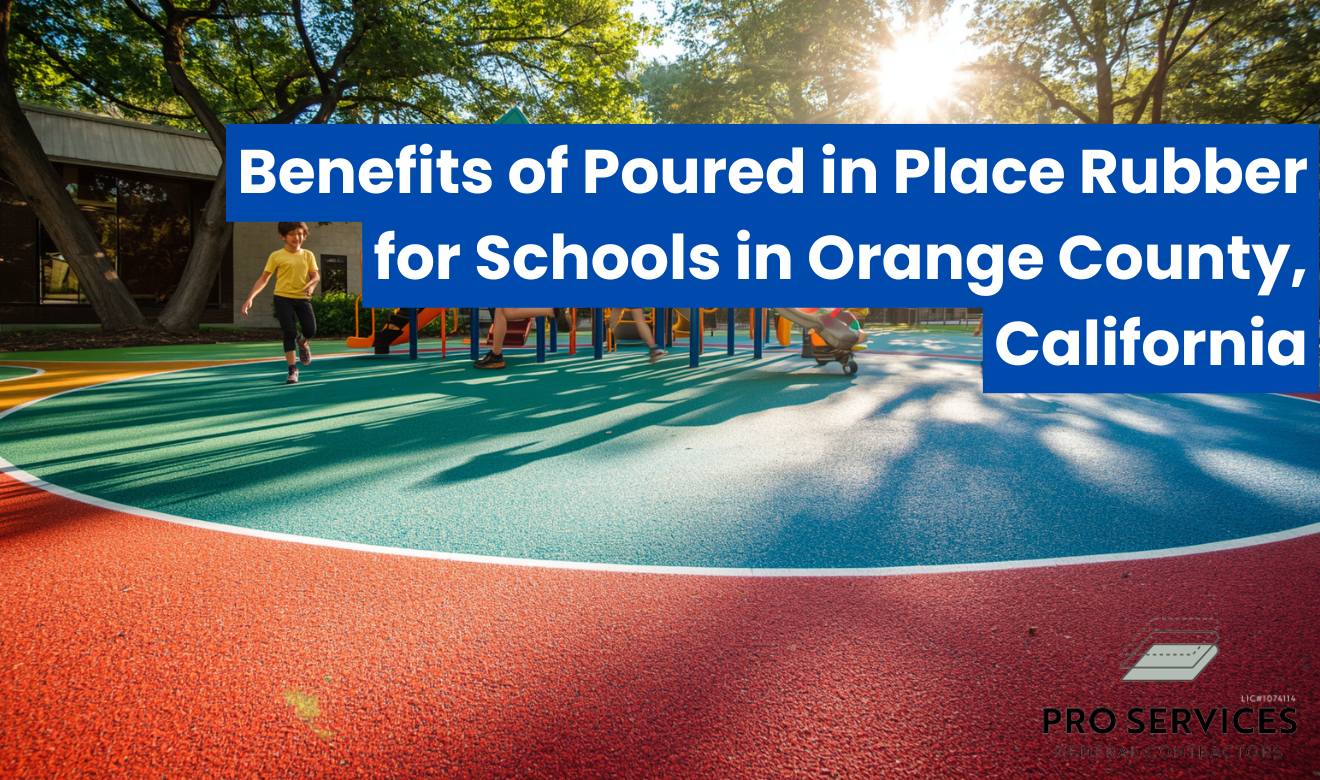
Executive Summary
Schools choose poured in place rubber Orange County because it delivers a safer, more consistent playground surface that supports accessibility while reducing ongoing maintenance compared with loose-fill options. Its long-term performance is strongest when projects are correctly specified for fall height, base prep, drainage, and UV exposure.
Key Takeaways
- Seamless, stable safety surfacing: Poured-in-place rubber stays level and doesn’t migrate like mulch or sand, helping prevent trip hazards and uneven landing zones in high-wear areas.
- Impact protection matched to real fall zones: The two-layer system (cushion base + wear layer) is designed to meet fall-height needs, reducing “hard spots” that can develop when loose fill shifts or compacts.
- Built for Orange County sun and rain: UV exposure and occasional heavy rainfall make binder quality, drainage planning, and color/shade strategy important for comfort and longevity.
- Lower day-to-day maintenance for school staff: Custodial teams can sweep and hose the surface without raking, topping-off, or frequent depth corrections required by loose-fill systems.
- Stronger accessibility and campus usability: A smooth, continuous surface improves mobility for wheelchairs, walkers, and strollers and supports inclusive routes from entry points to equipment and play zones.
Schools choose poured in place rubber Orange County because it delivers safer play areas, lower maintenance, and long-term durability in a climate that gets strong sun and occasional heavy rain. Unlike loose-fill mulch or sand that shifts and leaves bare spots, poured in place rubber stays even under swings and slides, helping reduce trip hazards and improving impact absorption where kids land most often. It also makes daily upkeep simpler—custodians can sweep debris off the surface after lunch recess, and staff can hose down sticky spills near snack areas without raking or refilling material. For campuses focused on accessibility, the smooth, continuous surface supports wheelchairs, walkers, and strollers from the playground edge to the equipment, so students can move more independently during PE and recess.
What Is Poured In Place Rubber, and Why Do Schools Use It?
Poured in place (PIP) rubber is a two-layer, troweled-on safety surface made from rubber granules bound with polyurethane. Most systems use:
- Base layer (cushion): thicker layer for impact attenuation
- Top layer (wear layer): tighter, more durable layer for traction, color, and daily use
Schools choose poured in place rubber Orange County because it creates a seamless, unitary surface that doesn’t migrate like loose fill. That stability matters most under high-wear zones (slide exits, swing bays, climbers) where bare spots and uneven landings can develop quickly.
For administrators comparing options, it helps to understand how playground surfacing choices differ by safety performance, accessibility, and maintenance demands—especially on busy campuses with multiple recess rotations.
How Poured In Place Rubber Improves Safety Where Kids Actually Fall
Falls are the leading cause of playground injuries. The U.S. Centers for Disease Control and Prevention (CDC) notes that emergency departments treat more than 200,000 children (ages 14 and under) each year for playground-related injuries, and falls are the most common cause.
Schools choose poured in place rubber Orange County to reduce injury risk by pairing a consistent walking surface with engineered impact absorption. In practical terms, that means fewer “surprise” hard spots that can occur when loose fill shifts or compacts.
What safety specs schools typically look for
- Impact attenuation matched to fall height (the surface thickness is designed around the tallest equipment)
- Slip resistance for running lanes and turning zones
- Edge transitions that reduce trip points between concrete and the play area
- Drainage performance so the play area reopens faster after rain
Schools choose poured in place rubber Orange County because it’s easier to keep the surface performing as designed when the layer thickness is consistent and the material stays in place season after season.
Why Orange County Weather Makes Material Choice Matter
Orange County’s climate is one of the biggest reasons schools choose poured in place rubber Orange County. Campuses plan for:
- High UV exposure that can fade, dry, and weaken some materials over time
- Hot surface temperatures during peak sun hours (especially on darker colors)
- Occasional heavy rainfall that tests drainage and sub-base stability
A properly installed PIP system is designed to resist UV degradation better than many loose-fill options and can be built with drainage considerations so puddling doesn’t linger. Pairing surfacing decisions with shade planning is common for heat management—many schools add coverage using shade structures to improve comfort and extend playtime during warmer months.
How Installation Works (and What Schools Should Ask Before Approving a Project)
Schools choose poured in place rubber Orange County partly because the build process can be scheduled around school breaks and phased to keep parts of a playground open. A high-level install typically includes:
- Site prep: demolition (if replacing), grading, and base correction
- Sub-base work: stable aggregate base and/or asphalt or concrete base depending on design
- Mix and pour: rubber granules mixed with binder and troweled to thickness
- Wear layer: finer granules installed for durability and traction
- Cure time: surface hardens before reopening
Bid-check questions that prevent common problems
- What base type is specified, and how will drainage be handled?
- How will thickness be verified for the required fall heights?
- What UV-stable binder is specified (and what warranty is offered)?
- How are seams, edges, and transitions detailed to avoid lifting?
- What is the cure timeline and weather limitation plan?
If you’re planning a campus project timeline, details matter as much as material choice. For a deeper look at scope and sequencing, see Poured In Place Rubber Installation.
Cost: What Affects Pricing for School Playgrounds?
Pricing for PIP rubber varies widely because school projects aren’t “one-size-fits-all.” Schools choose poured in place rubber Orange County even when upfront costs are higher because predictable performance and lower corrective maintenance can improve long-term value.
Main cost drivers (quick, decision-useful list)
- Square footage: larger areas can reduce per-square-foot mobilization costs
- Required thickness: higher fall-height equipment typically requires thicker systems
- Base condition: repairs to asphalt/concrete or drainage improvements add cost
- Design complexity: logos, games, patterns, and multiple colors increase labor
- Accessibility details: ramps, flush transitions, and edging requirements
- Demo and disposal: removal of old surfacing can be significant
Budget teams often miss how “cheap now” choices can expand maintenance and replacement expenses later. A helpful perspective is covered here: why cheap surfacing costs more long term.
What Maintenance Looks Like for School Staff
Schools choose poured in place rubber Orange County because daily and weekly upkeep is straightforward—no raking, no topping-off, and fewer recurring spot repairs from material displacement.
Simple maintenance plan (featured-snippet friendly)
- Daily/weekly: blow or sweep debris, especially near lunch areas
- As needed: hose off sticky spills and spot-clean with mild detergent
- Monthly: inspect high-wear zones (swing bays, slide exits) for early damage
- Seasonal: verify drainage paths and clear surrounding landscape runoff routes
Schools choose poured in place rubber Orange County because consistency is easier to maintain than constantly reshaping loose-fill depths. If your team needs a structured checklist and cleaning do’s/don’ts, reference PIP Maintenance.
Accessibility: Why Administrators and Parents Ask for PIP
Accessibility is one of the most cited reasons schools choose poured in place rubber Orange County. A continuous surface supports mobility devices and reduces rolling resistance compared with many loose-fill materials. It also helps staff move equipment (cones, balls, PE carts) efficiently.
Where accessibility benefits show up immediately
- Routes from gates to play equipment stay smooth and stable
- Fewer soft spots that bog down wheelchairs or walkers
- Clear striping and color contrast can help with wayfinding and supervision
- Less tracked-in debris to classrooms compared with mulch
Schools choose poured in place rubber Orange County not just for compliance goals, but because inclusive access changes how students participate during recess and adapted PE.
Poured In Place Rubber vs. Loose Fill vs. Turf: A Quick Comparison
Schools choose poured in place rubber Orange County when they want a stable, accessible surface with predictable maintenance. Here’s a decision-oriented snapshot:
| Surface type | Strength for schools | Typical tradeoff |
|---|---|---|
| Poured in place rubber | Seamless, accessible, doesn’t shift; strong for high-traffic zones | Higher upfront cost; requires qualified installation and base prep |
| Engineered wood fiber / mulch | Lower initial cost; common for basic play areas | Displaces/compacts; needs raking and replenishment; accessibility can be challenging |
| Sand | Low material cost; easy to level in small areas | Tracks easily; inconsistent depth; can hide debris; accessibility limitations |
| Synthetic turf (playground system) | Natural look; can be cooler with shade; good multi-use aesthetics | Infill management and sanitation planning matter; performance depends on full system design |
This comparison is exactly why schools choose poured in place rubber Orange County for main play structures, while sometimes using turf or other systems for adjacent multi-use zones.
Where PIP Rubber Works Best on a School Campus
Schools choose poured in place rubber Orange County most often for high-use play environments, but it’s also effective beyond traditional playground footprints.
Common school applications
- Main playground under equipment: swings, slides, climbers
- Inclusive play routes: smooth travel from entrances to play zones
- PE skill areas: hopscotch, agility ladders, and marked games
- Courtyards and learning gardens: quieter spaces with safe footing
- Water play zones: when designed specifically for splash areas
If the project includes spray features or high-splash areas, schools often specify systems built for wet environments, such as Rubber Splash Pads.
Real-World Signals of Quality (and Early Warning Signs)
Schools choose poured in place rubber Orange County for longevity, but performance depends on good design and correct installation. Use these field cues during walkthroughs.
Good signs during and after install
- Clean, well-defined edges with smooth transitions
- Consistent color and texture across the field
- Firm feel underfoot without “spongy pockets”
- Drainage working as intended after rinse testing
Red flags to address immediately
- Low spots holding water beyond normal dry time
- Cracking at edges or around posts
- Separation at seams or lifting near borders
- Premature wear in swing bays (often signals thickness or base issues)
Schools choose poured in place rubber Orange County because these issues are preventable when sub-base, thickness, and curing conditions are handled correctly—and when the surface is inspected on a routine schedule.
Why Schools Choose Poured In Place Rubber Orange County for Long-Term Planning
From a facilities perspective, schools choose poured in place rubber Orange County because it supports predictable operations: fewer emergency work orders, fewer mid-year closures to refill loose fill, and better day-to-day supervision (clear sightlines, consistent footing).
It also aligns with common district goals:
- Risk reduction: more consistent impact protection in fall zones
- Operational efficiency: simpler cleaning and fewer material replenishment cycles
- Inclusive access: easier movement for students using mobility devices
- Campus pride: custom colors and game striping that holds up to traffic
That combination is a major reason schools choose poured in place rubber Orange County when updating aging playgrounds or standardizing surfacing across multiple sites.
“Ready for Recess” Starts with Better Specs
Schools choose poured in place rubber Orange County when they want a safer, accessible surface that stays consistent under heavy daily use. The smartest projects start with clear equipment fall heights, correct thickness design, a stable base with drainage planning, and a maintenance routine that custodial teams can realistically follow.
For decision-makers, the most reliable way to protect the investment is to work with crews experienced in unitary safety surfacing—teams that understand sub-base requirements, mixing and trowel techniques, weather-related curing constraints, and post-install inspection practices. Schools choose poured in place rubber Orange County because, when those details are handled by qualified professionals, the result is a surface that performs for years with fewer surprises.
Frequently Asked Questions
Make Recess Safer (and Maintenance Easier) with Poured-In-Place Rubber Done Right
If you’re comparing surfacing options for a school campus in Orange County, don’t just pick what looks good—choose what holds up to daily traffic, stays accessible, and performs where kids actually fall. Orange County Poured in Place Rubber Pros LLC helps schools plan, spec, and install poured-in-place rubber systems built for UV, drainage, and long-term durability—so you get a clean, seamless surface that keeps students safer and keeps your crew out of constant refill-and-repair mode.
Related Posts

Expert Guide to Choosing the Best Rubber Playground Surface in San Diego, California
Executive Summary A rubber playground surface in San Diego is “safe” and durable only when…

The Ultimate Guide to Choosing Rubber Playground Surfaces in Orange County, California
A rubber playground surface in Orange County should be selected and accepted based on documented,…
Leave a Reply