
The Benefits of Using Poured in Place Rubber for School Playgrounds in San Diego, California
Executive Summary
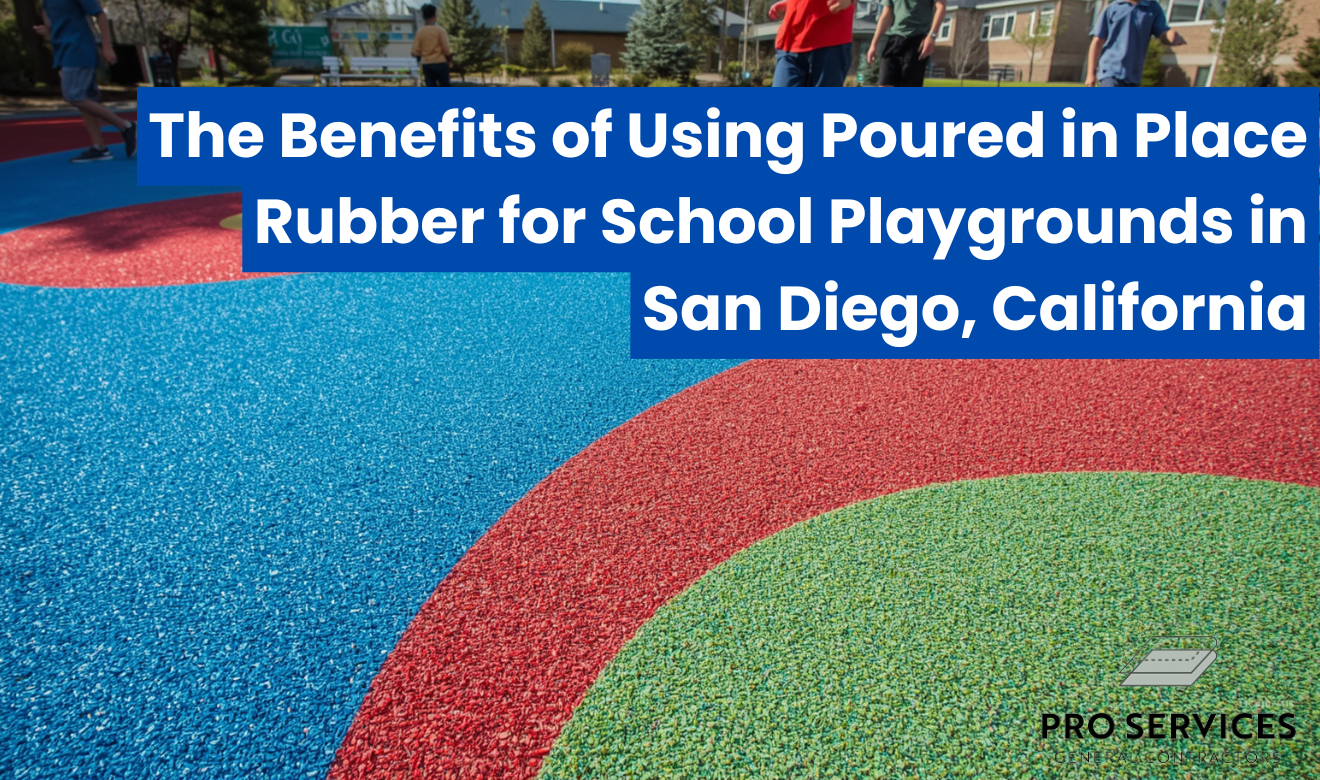
San Diego schools choose poured-in-place (PIP) rubber because it delivers a safer, more consistent playground surface that supports accessibility, drains well in coastal weather, and reduces day-to-day maintenance compared with loose-fill options. When properly specified and installed, it also enables durable color zoning and game markings that improve supervision and usability.
Key Takeaways
- Safer fall protection with consistent performance: PIP rubber is engineered for shock absorption (often designed around ASTM F1292) and maintains more uniform cushioning in fall zones than surfaces that shift or rut.
- Improved accessibility and smoother mobility: A firm, seamless surface is typically easier for wheelchairs, walkers, and strollers to navigate than mulch or sand, especially when transitions are installed flush.
- Lower daily maintenance and faster post-rain usability: Schools reduce labor tied to raking, redistributing, and replenishing loose-fill, and students can often return to play sooner after wet conditions.
- Installation quality and drainage planning determine results: Long-term performance depends on correct base prep, proper thickness by fall height, edge detailing, and drainage that prevents ponding and premature wear.
- Cost varies by safety thickness and site conditions—not just square footage: Pricing is driven by required depth, sub-base and drainage fixes, layout complexity, and graphics, with many campuses choosing PIP for lifecycle value and reduced downtime.
Schools choose poured in place rubber San Diego because it delivers safer landings, all-weather play, and a clean, long-lasting surface that works well for busy campuses. It cushions falls under slides and climbing walls, helps reduce scraped knees on running paths, and stays more accessible for wheelchairs and strollers than loose-fill options. After a rainy morning near the coast, students can often get back on the playground faster because there’s no mulch to rake back into place or sand to dry out. It also supports colorful game layouts—like hopscotch, numbers, and safety zones—so the surface doubles as a learning and play tool.
What is poured-in-place rubber, and why does it fit San Diego schools?
Schools choose poured in place rubber San Diego because it’s a seamless, shock-absorbing playground surface made by mixing rubber granules with a binder and troweling it into a smooth, continuous layer. Unlike loose-fill (mulch or sand), it doesn’t shift underfoot, doesn’t scatter into classrooms, and doesn’t create low spots that turn into trip hazards.
Most systems are installed as a two-layer build:
- Base layer (SBR rubber): thicker “cushion” layer that helps meet fall-height safety needs.
- Top wear layer (often EPDM): UV-stable color layer designed for durability and easy cleaning.
San Diego’s coastal conditions matter. UV exposure, salt air, and occasional heavy rain can be tough on outdoor finishes—so schools often prefer surfaces that drain well, clean easily, and don’t require daily raking. That practical reality is a big reason schools choose poured in place rubber San Diego for high-traffic campuses.
How does poured-in-place rubber improve playground safety?
Schools choose poured in place rubber San Diego for safety because it’s engineered to cushion falls and provide stable footing. For playground surfacing in the U.S., impact safety is commonly evaluated using criteria such as ASTM F1292 (impact attenuation), which is used to help reduce the severity of head injuries from falls.
Key safety advantages schools typically want:
- Consistent shock absorption where it’s needed most (under slides, climbers, and overhead equipment).
- Better trip-resistance than loose-fill that can develop ruts or migrate away from play zones.
- Improved traction compared with many hardscape surfaces when children run, pivot, and stop quickly.
- Clear safety striping and color zoning (separating circulation paths from play areas).
If you’re comparing surface types, this overview of playground surfacing helps clarify why schools weigh impact performance, drainage, maintenance, and accessibility—not just upfront price.
Why accessibility is a major reason schools choose poured in place rubber San Diego
A core reason schools choose poured in place rubber San Diego is that it’s easier to navigate than loose-fill for many users. Wheelchairs, walkers, strollers, and mobility aids generally move more smoothly over a firm, continuous surface than over mulch or sand that can shift and create resistance.
Accessibility-related benefits schools often prioritize:
- Fewer “stuck points” at transitions and entrances when the surface is installed flush to adjacent concrete.
- More inclusive play when routes connect activity panels, swings, and ramps.
- Cleaner routes back to classrooms (less debris carried on shoes and wheels).
Practical tip: ask the installer to plan smooth transitions (no lips or abrupt edges) at gates, ramps, and perimeter sidewalks so accessibility improvements actually work day to day.
How the installation process works (and what schools should ask for)
Schools choose poured in place rubber San Diego when they want predictable performance—so the process matters as much as the material. A quality install typically follows a defined sequence: site prep, base preparation, mixing, troweling, curing, then final detailing.
Typical steps for a poured-in-place campus project
- Site evaluation: drainage, slopes, existing concrete/asphalt condition, and play equipment layout.
- Sub-base prep: compacted aggregate or prepared asphalt/concrete to support the rubber system.
- Forming and edging: defines thickness and keeps lines clean for graphics and color zones.
- Base layer installation: cushion layer placed to the planned thickness for fall-height needs.
- Wear layer installation: top EPDM layer applied for durability, UV stability, and color.
- Cure time: protects the surface until it reaches usable strength (schedule around school use).
- Detail work: striping, games, numbers, safety zones, and transitions.
Questions that prevent expensive surprises
- What standards will the finished surface be designed to meet (ex: ASTM F1292)?
- How will drainage be handled so water doesn’t pond near slide exits?
- What thickness is planned under each piece of equipment based on fall height?
- What is the cure-time plan to keep kids off the surface until it’s ready?
- How are edges terminated to reduce peeling risk (especially at high-traffic gates)?
If your campus is planning a new build or replacement, start with a dedicated overview of Poured In Place Rubber Installation San Diego to align schedule, site prep, and performance expectations early. That clarity is one more reason schools choose poured in place rubber San Diego over surfaces that are harder to control or maintain.
What does poured-in-place rubber cost in San Diego?
Cost is a top search intent—and it’s also where schools can get misled by “per-square-foot” averages that ignore safety thickness, site prep, drainage fixes, and design work. In practice, schools choose poured in place rubber San Diego when they want to reduce long-term maintenance labor (raking, top-offs, containment) and keep surfaces consistent over time.
What drives price the most?
- Required thickness (especially in fall zones under elevated equipment).
- Sub-base condition (cracked asphalt, poor drainage, or settling increases prep work).
- Total area and layout complexity (curves, tight spaces, and multiple colors take longer).
- Graphics and games (hopscotch, lanes, letters, mascots, custom logos).
- Access constraints (limited equipment access, tight gates, multi-phase scheduling).
A quick comparison table for decision meetings
| Surface type | What schools like | Common tradeoffs |
|---|---|---|
| Poured-in-place rubber | Seamless, accessible, lower daily upkeep, strong design flexibility | Higher upfront cost; requires skilled install and proper base |
| Engineered wood fiber (mulch) | Lower initial spend; easy to spot-repair | Needs raking/top-offs; accessibility challenges; migrates out of place |
| Sand | Soft feel; drains in some conditions | Tracks everywhere; accessibility issues; can hard-pack or wash out |
| Synthetic turf with pad | Natural look; multi-use fields and play areas | Heat management and infill maintenance; must be designed for fall zones |
If your district is weighing “lowest bid” vs. lifecycle value, this long-term perspective is worth reading: why cheap surfacing costs more long term. It mirrors what many facility teams learn the hard way: maintenance time, closures, and repairs can erase a seemingly cheaper upfront choice—another reason schools choose poured in place rubber San Diego.
How long does poured-in-place rubber last on a school campus?
Schools choose poured in place rubber San Diego because longevity is usually strong when (1) the base is stable and drains correctly, and (2) the wear layer is thick enough for traffic. The surface is not “set it and forget it,” but it generally avoids the daily redistribution and frequent top-offs common with loose-fill.
What most often shortens service life:
- Ponding water from poor slopes or clogged drains.
- Edge lifting where students pivot, line up, or where equipment access concentrates traffic.
- Harsh cleaning chemicals that can degrade binders over time.
- Dragging furniture or sharp-edged equipment across the surface during events.
Real-world campus pattern: elementary schools with tightly scheduled recess blocks tend to see the fastest wear in “launch/landing” zones—slide exits, swing bays, and the main route from doors to play areas. Planning thicker wear zones or reinforcing high-traffic paths is one reason schools choose poured in place rubber San Diego after dealing with chronic bare spots in loose-fill.
How to maintain poured-in-place rubber (simple routines that keep it looking new)
Maintenance is straightforward, and that’s a major reason schools choose poured in place rubber San Diego. The goal is to keep it clean, draining, and free of damage that can spread.
Weekly / monthly basics
- Blow off debris (leaves, sand, snack crumbs) so it doesn’t grind into the wear layer.
- Spot clean spills with mild soap and water; rinse thoroughly.
- Check drains and edges after storms for ponding, clogs, or early lifting.
Seasonal checks (especially before peak outdoor months)
- Inspect high-impact zones under swings and slide exits for early wear.
- Review seams and transitions at concrete borders and ramps.
- Schedule small repairs early—minor patching is easier than letting water intrusion expand the problem.
Operationally, the reduced daily labor is a big reason schools choose poured in place rubber San Diego for busy campuses where custodial time is limited.
Why design features (colors, games, and safety zones) matter more than people think
Many schools first focus on fall protection, then realize the surface can also support supervision and learning—another reason schools choose poured in place rubber San Diego.
High-value design add-ons schools actually use:
- Color-coded zones to separate toddlers from older students, or active play from quiet play.
- Number lines, letters, and shapes for learning through movement.
- Four-square and hopscotch to reduce conflicts and organize recess play.
- Walkway lanes that guide foot traffic away from swing arcs and slide exits.
On campuses with limited yard space, these markings help staff manage flow and reduce collisions—one more practical reason schools choose poured in place rubber San Diego instead of surfaces that don’t support crisp, lasting graphics.
How schools choose the right spec: thickness, drainage, and location planning
To get the safety and durability you’re paying for, the spec must match your equipment and student use patterns. Schools choose poured in place rubber San Diego most successfully when they plan the project like a system—not just a material swap.
Spec checklist for planning meetings
- Map fall zones under each play structure and confirm fall-height requirements.
- Confirm slope and drainage so water exits the play area quickly.
- Plan reinforced traffic routes from doors to play zones (where wear is highest).
- Decide where porous vs. non-porous is needed based on drainage goals and site constraints.
- Coordinate shade where possible to improve comfort and reduce surface heat.
When districts follow this approach, schools choose poured in place rubber San Diego with fewer change orders, fewer closures, and a smoother long-term maintenance plan.
Smart Next Steps for a Safer, Cleaner Campus Surface
If you’re evaluating surfacing options for a renovation or a new playground, focus on three decision points: safety performance, accessibility, and maintenance reality. Those are the consistent drivers behind why schools choose poured in place rubber San Diego—especially on high-traffic campuses where downtime is costly and supervision needs are high.
To move from “research” to a confident scope, use this short action list:
- Document equipment fall heights and the busiest student routes.
- Walk the site after rain to identify ponding and drainage paths.
- Decide where graphics and color zoning will improve supervision and student flow.
- Request a plan that references recognized testing and specifications (commonly ASTM F1292 for impact attenuation).
In the playground surfacing industry, credibility comes from doing the fundamentals well: correct base prep, correct thickness, correct drainage, and documented maintenance practices. When those pieces are in place, it’s easy to see why schools choose poured in place rubber San Diego for reliable day-to-day use and long-term value.
Frequently Asked Questions
Ready to Upgrade Your Campus with Poured-In-Place Rubber?
If you’re exploring poured in place rubber in San Diego for safer landings, cleaner play areas, and better accessibility, now’s the time to get clear answers on thickness, drainage, and the right wear layer for your equipment and traffic zones. Playground Safety Surfacing can help you define a smart scope, avoid costly surprises, and create a surface that holds up to real school-day use—complete with color zoning and game layouts that make recess safer and easier to supervise.
Related Posts

Expert Guide to Choosing the Best Rubber Playground Surface in San Diego, California
Executive Summary A rubber playground surface in San Diego is “safe” and durable only when…

The Ultimate Guide to Choosing Rubber Playground Surfaces in Orange County, California
A rubber playground surface in Orange County should be selected and accepted based on documented,…
Leave a Reply