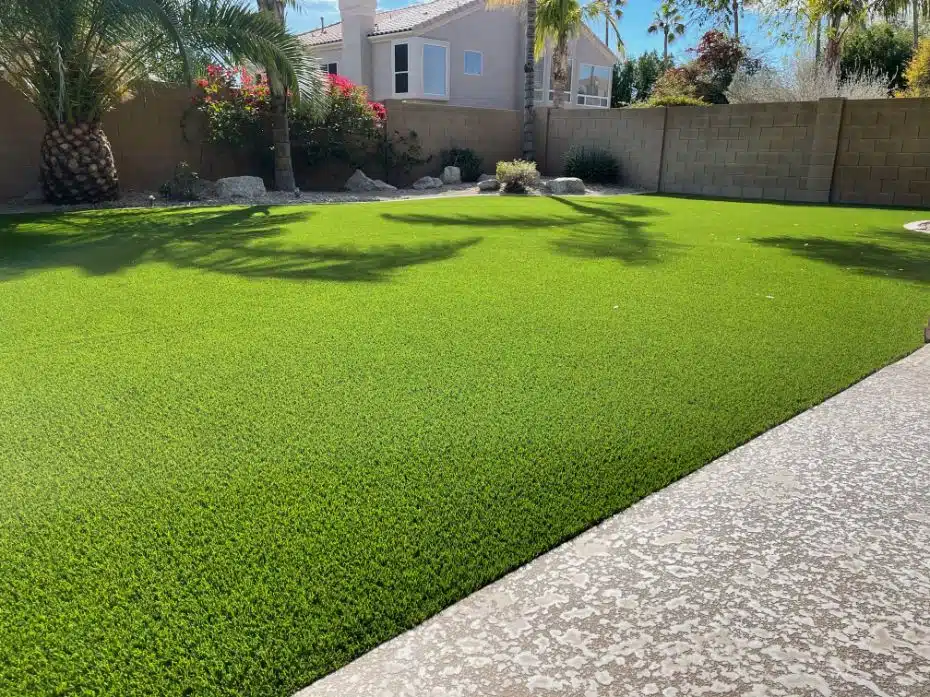
For San Diego homes and properties, three practical benefits of artificial grass stand out: a green surface that doesn’t need mowing or regular watering, an easier surface for areas dogs use, and usable ground cover in places where natural grass struggles, such as pool surrounds, decks and narrow side yards. Each benefit comes with planning points worth knowing before you choose it.
- Green without mowing or irrigation: the turf stays green on its own, though it still needs occasional cleaning and brushing.
- Pet areas stay usable: no mud or dug-up patches, as long as the base drains well and waste is cleaned up promptly.
- Ground cover where grass won’t grow well: pool surrounds, decks, rooftops and side yards, each with its own drainage and edge details.
Artificial grass is a manufactured surface of synthetic fibers attached to a backing, installed over a compacted, free-draining base. It is used in yards, play areas, dog runs, commercial landscapes and sports surfaces. Below are three benefits property owners most often ask about, followed by the trade-offs to weigh before deciding.
1. A green lawn without mowing or regular watering
Keeping a natural lawn green takes regular irrigation, mowing, edging and feeding. Artificial grass stays green without any of these, which makes it practical for yards that are hard to keep watered, for owners who don’t want lawn upkeep, and for properties where a tidy appearance matters all year.
It still needs some care: leaves and debris should be cleared, busy areas brushed so the fibers stay upright, and the surface rinsed now and then. Learn more on our residential artificial grass and lawn and garden pages.
2. Easier areas for dogs
Dogs can’t dig holes or wear muddy tracks into artificial grass, so a dog run or pet corner stays usable after rain and heavy play. Paws come inside cleaner, and the area doesn’t need reseeding after it has been worn down.
The details matter: the turf and base need to drain freely, solid waste should be picked up promptly, and pet areas should be rinsed regularly to keep odors down. Our dog run artificial grass page covers commercial and residential pet areas, and our dog run installation guide walks through the steps.
3. Ground cover where natural grass struggles
Some parts of a property are poor places for a natural lawn:
- Pool surrounds: turf gives a soft surface next to the decking without clippings blowing into the water. See artificial grass around pools.
- Decks, patios and rooftops: where soil and irrigation aren’t practical, turf can add a green surface once load, drainage and attachment have been checked. See rooftop artificial grass and deck and patio turf.
- Side yards and narrow strips: spaces that are awkward to mow or water evenly.
What to weigh before choosing artificial grass
- Sun exposure: like other synthetic surfaces, turf can get warm in direct afternoon sun; placement or a shade structure can help where the area is used on hot days.
- Drainage: the base has to be graded and compacted so water passes through and away from buildings and hardscape.
- Use: pets, children’s play, putting practice and general lawn use call for different products and infill.
- Play equipment: under equipment with a fall height, the surfacing has to suit that height; poured-in-place rubber is often used there instead.
- Materials: ask what the turf and any infill are made of so you can choose a product that suits how the area will be used.
Rain and rinse water drain through small holes in the backing, so the surface dries quickly instead of holding puddles.
Quality artificial grass is made with UV inhibitors, which help the fibers keep their color in strong sun.
Other ways artificial grass is used
Beyond lawns and pet areas, artificial grass is used for backyard putting greens, playgrounds, schools and commercial properties. If you are fitting turf into a larger project, see whether artificial grass is right for your home renovation.
Frequently Asked Questions
What are the main benefits of artificial grass?
Is artificial grass good for dogs?
Does artificial grass need regular care?
Can artificial grass be installed on a rooftop or deck?
How long does artificial grass last?
Which areas does Playground Safety Surfacing serve?
Get in touch
Playground Safety Surfacing installs artificial grass, poured-in-place rubber, porous rubber surfaces and shade structures across San Diego, Orange, Riverside and Los Angeles counties. Tell us how the area will be used and send a few photos, and we’ll recommend a surface and prepare a free estimate.
Read about our five-step process, call (888) 902-3777, or contact us.


