
Understanding Poured in Place Rubber Playground Safety Standards in San Diego, California
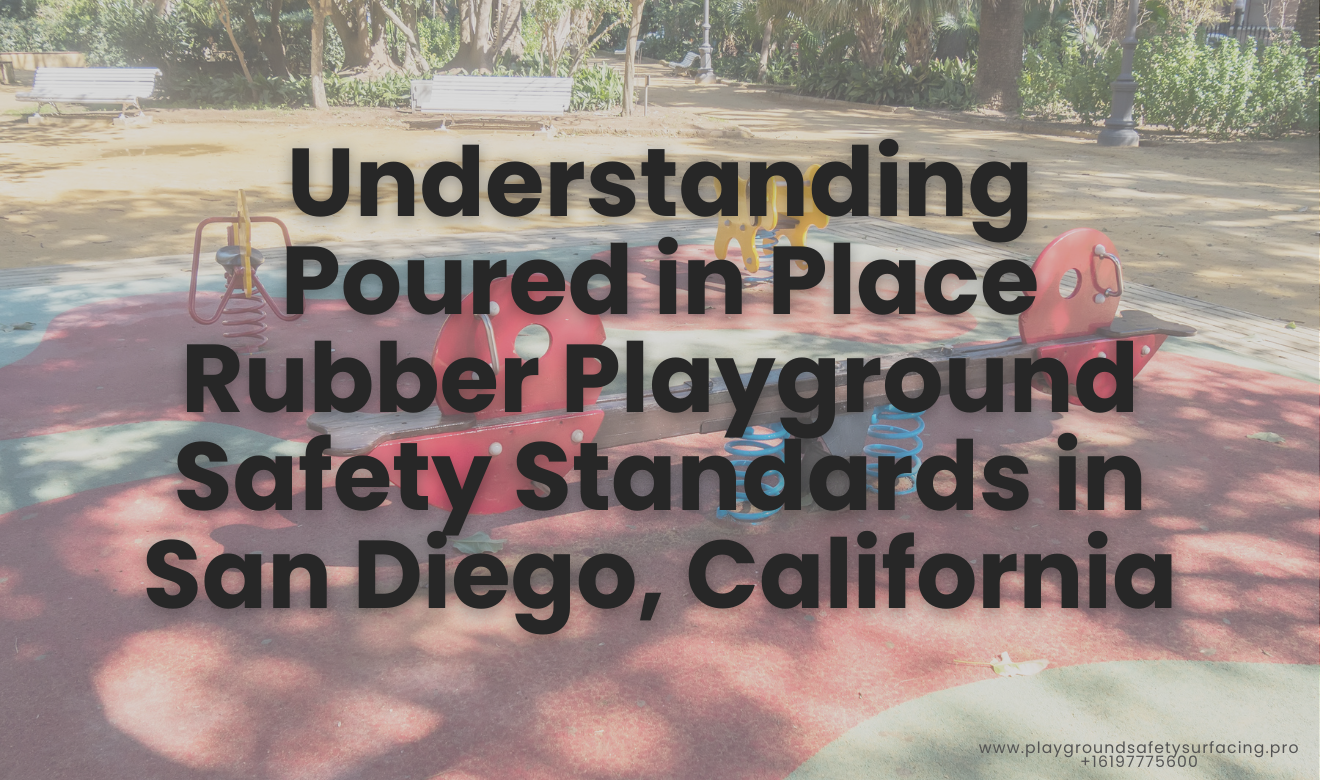
Poured in place rubber safety standards San Diego come down to one goal: making sure playground surfacing cushions falls at the right height, drains properly, and stays accessible and durable in everyday use. In San Diego, that typically means checking fall-height performance (like a play structure with a 6–8 foot deck needing surfacing rated for that height), confirming ADA accessibility (such as a wheelchair moving smoothly from the ramp onto the play area), and verifying installation quality (like even thickness under swings and at slide exits where impacts happen most). You’ll also want to look at maintenance expectations, because a surface that starts safe can become hazardous if seams open, wear spots form, or drainage clogs after heavy use. If you’re planning a new playground or reviewing an existing one, these standards help you ask the right questions and spot common red flags before they turn into injuries.
What “Safety Standards” Really Mean for PIP Rubber in San Diego
When people search for Poured in place rubber safety standards San Diego, they’re usually trying to confirm three things: (1) the surface is tested to the right fall height, (2) it’s accessible for all users, and (3) it will hold up to San Diego’s sun, coastal air, and daily traffic without becoming a trip hazard.
While local project requirements can vary by property type (public park vs. HOA vs. preschool), most owners and specifiers evaluate Poured in place rubber safety standards San Diego through a mix of national safety benchmarks, ADA expectations, and installation best practices.
The Standards and Agencies Most Commonly Referenced
Even though San Diego doesn’t have a single “one-size-fits-all” surfacing rulebook for every site, projects commonly align with widely used U.S. playground guidance and test methods:
- ASTM F1292: Impact attenuation testing (helps determine if surfacing meets a given critical fall height).
- ASTM F1951: Accessibility performance for mobility devices (often used to support ADA-related surfacing decisions).
- ADA Standards: Ensuring a wheelchair or mobility device can enter and use the play area with stable, firm pathways and appropriate transitions.
- CPSC Public Playground Safety Handbook: Federal guidance that many designers use to inform layout, use zones, and hazard reduction.
For general context about different surface types and why impact testing matters, see the overview of playground surfacing.
Critical Fall Height: The #1 Metric People Miss
The most important performance target behind Poured in place rubber safety standards San Diego is whether the installed system is rated for the equipment’s fall height. “Fall height” is typically tied to the highest designated play surface (platform height), not the top of a roofline or decorative element.
Featured-snippet style answer: What is “critical fall height” for poured-in-place rubber?
Critical fall height is the maximum height from which a fall is expected to result in acceptable head injury criteria during standardized impact testing. For poured-in-place rubber, it’s primarily achieved by installing the correct total thickness (base layer + wear layer) in each play zone.
Where to pay extra attention (high-impact zones)
- Swings: Highest wear and repetitive impacts at the bay; thickness and base prep matter.
- Slide exits: “Landing zone” compaction and scuffing can thin the wear layer over time.
- Spinners/merry-go-rounds: Circular traffic patterns accelerate abrasion.
- Climbers: Multiple fall vectors; correct use-zone coverage matters.
Because these zones degrade faster, many Poured in place rubber safety standards San Diego evaluations include not only initial testing but also a plan for periodic inspections and repairs.
ADA Accessibility: Beyond “Is It Flat?”
Accessibility is a major part of Poured in place rubber safety standards San Diego, especially for public agencies, schools, and inclusive play projects. PIP rubber is often selected because it can provide a continuous surface without loose-fill displacement.
Featured-snippet style answer: What makes PIP rubber “ADA-friendly”?
PIP rubber can support ADA accessibility when it is installed with stable, firm, slip-resistant characteristics and when transitions, slopes, and edges are built to avoid abrupt lips that can stop wheels or create a trip hazard.
Common ADA-related red flags
- Hard transitions from ramp to surfacing that create a wheel-stopping edge.
- Drainage slopes that are too steep or inconsistent, creating “washboard” rolling.
- Seam separation that forms gaps, lips, or curled edges.
- Surface polishing from heavy use that reduces traction (especially near entries and popular equipment).
If you’re comparing material choices and long-term value, it’s worth reading why cheap surfacing costs more long term—because “passing today” is not the same as “staying safe next year.”
Drainage Requirements in San Diego: What “Porous” Should Actually Do
San Diego’s weather is relatively dry, but when storms hit, water can arrive fast. Drainage is a practical part of Poured in place rubber safety standards San Diego because standing water can lead to slips, microbial growth, sub-base softening, and premature failure.
What good drainage usually looks like
- Water doesn’t pond after rain or washdown—especially at low points and under swings.
- Runoff is managed so water doesn’t undercut the edge restraints.
- Sub-base is correctly prepared to support permeability and prevent settlement.
Quick checklist: drainage-related warning signs
- Persistent puddles that remain hours after rainfall
- Algae/mildew patterns in shaded, wet zones
- Edges lifting where water likely infiltrates below the system
- Soft spots that feel “spongy” or uneven underfoot
Drainage is one reason site evaluation and base preparation are repeatedly emphasized in Poured in place rubber safety standards San Diego.
Installation Quality: The Hidden Variable Behind “Passing” vs. “Protecting”
Even when a product is capable of meeting ASTM performance ratings, the installation determines whether it actually performs in the field. Many safety issues in the real world aren’t “material problems”—they’re thickness variation, poor mixing ratios, rushed cure times, or inadequate base conditions.
Featured-snippet style answer: What should be verified during a PIP rubber install?
- Thickness verification (especially in high-impact zones) matches the specified fall-height requirement.
- Consistent base prep to prevent settlement, cracking, and water-related failures.
- Seam integrity to avoid future separation and trip edges.
- Proper cure conditions based on temperature and humidity to prevent premature wear.
If you’re planning an installation and want a deeper look at what to expect from start to finish, explore Poured In Place Rubber Installation San Diego.
Inspection & Maintenance: How Safety Changes Over Time
A key reality behind Poured in place rubber safety standards San Diego is that surfacing doesn’t remain “certified-safe” forever just because it was safe on day one. UV exposure, sand, repetitive play motion, and cleaning chemicals can all change traction and wear patterns.
What to inspect monthly (simple, high-value checks)
- Trip edges: seams lifting, curled corners, or transitions separating from concrete.
- Wear-through: thinning at swings, slide exits, and popular routes.
- Drainage performance: check after storms; confirm no new ponding.
- Surface texture: overly smooth areas that may become slippery when wet.
What to schedule annually (or after major changes)
- Professional condition assessment for thickness, seam condition, and base stability.
- Targeted repairs before small issues become system-wide failures.
- Impact performance review if equipment changed or if the site shows accelerated wear.
Maintenance planning is part of Poured in place rubber safety standards San Diego because most hazards develop gradually—and become expensive when ignored.
Common “Pass/Fail” Issues That Trigger Repairs
Whether you’re an HOA board member, a facilities manager, or a city project lead, the same failure patterns come up repeatedly in Poured in place rubber safety standards San Diego evaluations.
Most frequent safety-relevant issues
- Inconsistent thickness (especially around edges, footings, and transitions)
- Cracking from base movement or inadequate sub-base compaction
- Seam gaps that widen with heat cycling and traffic
- Delamination between layers due to installation timing or contamination
- Ponding that accelerates degradation and increases slip risk
These are the practical reasons people keep searching Poured in place rubber safety standards San Diego—because “rubber” alone doesn’t guarantee safety.
How Standards Apply by Property Type in San Diego
Different sites prioritize different parts of Poured in place rubber safety standards San Diego. The core principles are the same, but the risk profile changes based on user age, supervision, and traffic volume.
| Site Type | Top Safety Focus | Common Surfacing Risk |
|---|---|---|
| City parks / public spaces | ADA access + durability under high traffic | Edge wear, seam separation, vandalism damage |
| Schools / preschools / daycare | Age-appropriate fall protection + hygiene/cleanability | Slide exit thinning, chemical cleaning overuse |
| HOAs / residential communities | Trip hazard prevention + cost-controlled upkeep | Deferred maintenance leading to cracks and lifted seams |
| Corporate campuses / mixed-use | Aesthetics + accessibility + long-term performance | UV fade, high-heel damage, concentrated foot traffic |
Whatever the site type, Poured in place rubber safety standards San Diego still come back to measurable fall protection, reliable accessibility, and a surface that stays intact.
How to Specify PIP Rubber So It’s Easier to Keep Safe
If you want to reduce risk and simplify long-term ownership, build these items into your plan and scope. This is one of the most effective ways to align with Poured in place rubber safety standards San Diego from the start.
Specification practices that prevent problems
- Match surfacing thickness to the tallest fall height (and verify thickness in high-impact zones).
- Require consistent edge details (so the perimeter doesn’t become the first failure point).
- Plan for drainage (slope + base design + outlets) before surfacing is installed.
- Include a maintenance plan with cleaning methods that won’t damage binders or texture.
- Document post-install condition (photos + key measurements) to track change over time.
Why This Matters: Injury Prevention and Real-World Risk
Falls are one of the most common causes of playground injuries, and surface performance is a major factor in reducing severe outcomes. That’s why Poured in place rubber safety standards San Diego emphasize fall-height performance and consistent coverage in use zones—not just “having rubber.”
In practice, the safest sites are the ones that treat surfacing like a system:
- Equipment height + layout determines required protection.
- Base + drainage determines long-term stability.
- Install quality + cure conditions determine early-life durability.
- Inspections + repairs determine whether the site stays safe over time.
Built to Last, Designed to Protect
Choosing and maintaining surfacing through the lens of Poured in place rubber safety standards San Diego is one of the most direct ways to reduce preventable injuries and protect your investment. When the fall-height rating matches the equipment, ADA access is treated as a real performance requirement (not an afterthought), and installers verify thickness in high-impact zones, PIP rubber can deliver consistent, dependable protection.
In professional practice, the most reliable results come from teams that:
- Work from ASTM-aligned performance targets (impact attenuation and accessibility)
- Understand playground use zones and high-wear locations
- Prioritize drainage and base prep as much as the wear layer
- Document installation quality and provide maintenance guidance
That combination—standards-driven design, quality installation, and ongoing upkeep—is what turns Poured in place rubber safety standards San Diego from a checklist into real, day-to-day safety.
Frequently Asked Questions
Make Sure Your Playground Surfacing Actually Meets the Standards
If you’re trying to confirm fall-height ratings, ADA accessibility, drainage performance, and long-term durability, don’t leave it to guesswork—or a spec sheet that doesn’t match the real install. Playground Safety Surfacing helps San Diego property owners and project teams plan, evaluate, and install poured-in-place rubber that’s built to protect where it matters most—high-impact zones, heavy-traffic routes, and the places that fail first when corners get cut. Send your site details and we’ll help you identify red flags, align your surfacing with the right ASTM/ADA expectations, and make a plan that stays safe long after day one.
Related Posts

The Ultimate Guide to Rubber Playground Flooring in San Diego, California
Executive Summary Rubber playground flooring San Diego performs best when it is specified and installed…

Top Quality Rubber Playground Flooring Options in Orange County, California
Executive Summary Rubber playground flooring in Orange County performs best when specified and built as…
Leave a Reply