
Poured Rubber vs Rubber Tiles for Playgrounds: Choosing the Best Option in California
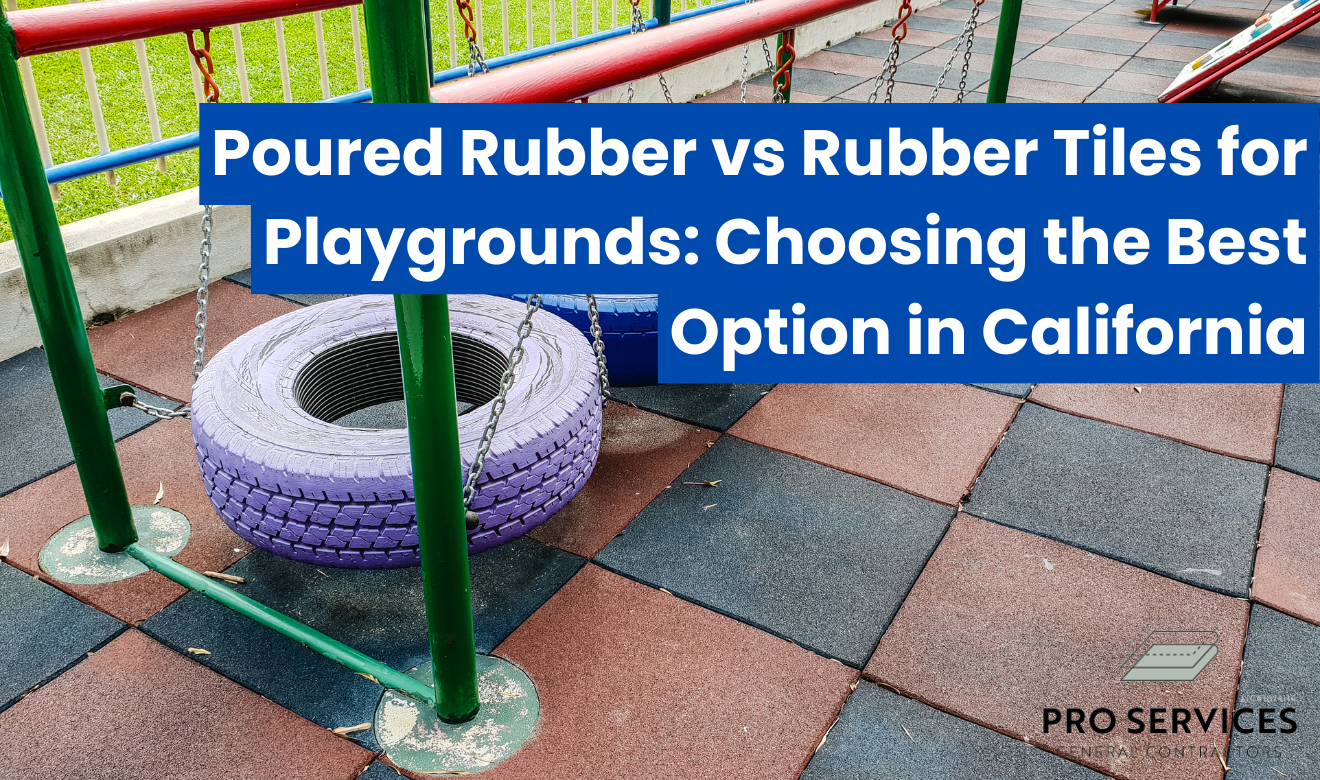
Executive Summary
Poured-in-place rubber is typically the best long-term choice when ADA continuity and minimal trip edges are the priority, while rubber tiles are often the better operational choice when you need fast, modular repairs in localized wear zones. In California, the definitive deciding factor is almost always base slope, drainage detailing, and edge restraint—because poor water management will cause premature failures in either system.
3 Core Insights
- Seams Drive Risk and Maintenance: Poured-in-place is monolithic and reduces seam-related trip points, while tiles introduce many joints that can trap moisture/sand and require ongoing seam and edge attention to stay flush.
- Drainage Is the Real Failure Point: Both surfaces depend on a correctly sloped, stable asphalt/concrete base with clear outfalls, because ponding accelerates tile seam/adhesive problems and poured-surface bond wear or delamination.
- Choose Based on Lifecycle Operations, Not Day-One Compliance: Both can meet ASTM F1292 and support ADA/ASTM F1951 expectations when properly specified, but PIP favors smooth wheelchair transitions over time, whereas tiles favor quick swap-out repairs if the substrate and restraints stay stable.
Poured-in-place rubber and rubber tiles are two ADA-friendly playground surfacing systems that differ most in seam count, drainage behavior, and long-term maintenance under California sun and sand. This poured rubber vs rubber tiles for playground choice matters in coastal fog zones like San Francisco and Daly City, where morning moisture can sit on tile seams, and in inland heat zones like Sacramento and the San Fernando Valley, where UV and high surface temperatures can accelerate binder wear. Poured-in-place forms a continuous, troweled surface over a prepared asphalt or concrete base, so wheelchair transitions stay smooth at ramps, slides, and merry-go-round entry points. Tiles install as modular squares over a flat base, so damaged areas near swing bays or at slide exits can be swapped without cutting and patching. For technical compliance, both systems are commonly specified to meet ASTM F1292 impact attenuation targets for a listed fall height, such as 6–10 feet at climbers, and to align with ADA accessibility expectations for firmness and stability on routes. In California installs, drainage design is a frequent failure point, so contractors often require correctly sloped bases, edge restraints, and stable subbase compaction to prevent ponding, tile curl, or poured surface delamination after winter rains in Los Angeles County or the Bay Area.
How to Compare Seamless Poured Rubber vs Modular Rubber Tiles
Poured-in-place (PIP) rubber and rubber tiles both serve the same job—accessible, impact-attenuating surfacing—but they behave very differently once installed. The most reliable way to choose is to compare seams, water management, repair workflow, and how each system weathers California UV, salt air, and windblown sand.
At a planning level, both systems are commonly specified around the same safety and accessibility frameworks:
- ASTM F1292 for impact attenuation at a stated “critical fall height” (CFH) tied to the tallest accessible play events.
- ASTM F1951 for wheelchair accessibility performance on an installed surface (often used as a performance check alongside ADA route expectations).
- ASTM F1487 for public playground equipment safety (where surfacing performance is part of overall system safety).
- 2010 ADA Standards for Accessible Design (especially accessible routes and ground/floor surface requirements for firmness, stability, and slip resistance).
Where California projects succeed or fail is rarely the “rubber vs rubber” choice alone—it’s whether base prep, slope, drainage, and edge restraint match the microclimate and usage pattern (swing bays, slide exits, wheelchair turning nodes, and maintenance access).
What You Actually Get: System Anatomy and Typical Build-Up
PIP is a field-mixed, troweled surfacing system bonded to a prepared base, while tiles are factory-made units adhered (or mechanically contained) on a flat substrate. That difference drives everything from seam behavior to repair methods.
Poured-in-Place Rubber (Two-Layer, Troweled System)
PIP rubber is installed in lifts to achieve a specified thickness for the target fall height and to produce a continuous accessible plane. Because it is seamless, it reduces trip edges and rolling resistance transitions around ramps and transfer points.
- Typical composition: SBR (recycled rubber) base layer + EPDM wear layer (or TPV in some specifications), bound with polyurethane binder.
- Common substrate: asphalt or concrete slab designed for exterior drainage.
- Key dependency: on-site workmanship, weather windows, and correct primer/bonding steps to prevent delamination.
If you want a deeper view of sequencing, cure times, and what installers should document, see the PIP Process service page.
Rubber Tiles (Modular Squares, Factory-Controlled Thickness)
Rubber tiles are manufactured at consistent thickness and installed in a grid pattern, creating many seams that must remain closed and flat. Their main advantage is replacement: you can remove and swap individual tiles when damage is isolated.
- Typical composition: molded rubber with binder; surface texture and edge geometry vary by manufacturer.
- Common substrate: concrete or asphalt with tight flatness tolerances; perimeter restraints are critical.
- Key dependency: adhesive selection, seam integrity, and edge restraint performance through wet/dry cycling.
California Climate Reality: How Fog, UV, Heat, and Sand Affect Each Surface
Coastal moisture and inland heat stress surfacing in different ways, and PIP and tile respond differently due to seam count and binder exposure. Matching the system to the climate zone reduces premature curling, seam opening, and wear-layer degradation.
Coastal Fog + Morning Dew (SF, Daly City, Coastal LA)
In fog zones, the key variable is persistent surface dampness and slow drying, which can amplify seam-related issues. Seamless PIP minimizes places where moisture and windblown grit can accumulate.
- Tile risk factors:
- Moisture lingering in seams can contribute to adhesive stress and seam edges that feel raised over time.
- Sand and organic debris can pack into seams, increasing trip potential and maintenance frequency.
- PIP risk factors:
- If base slope is insufficient, ponding can sit on top of the surface; chronic ponding accelerates wear and can encourage microbial staining.
- Improper primer/bond to asphalt or concrete can lead to localized delamination, especially where water tracks.
Inland Heat + High UV (Sacramento, San Fernando Valley, Inland Empire)
In heat zones, UV exposure and thermal cycling are the primary durability drivers. Both systems can perform well, but their failure modes differ: PIP can show binder oxidation and wear-layer thinning, while tiles can expand/contract at seams and edges.
- Tile risk factors: edge curl or corner lift if restraint/adhesion is not designed for expansion; seam widening as substrate moves.
- PIP risk factors: faster wear in high-traffic deceleration points (slide exits), especially if cleaning allows abrasive sand to remain.
Regardless of surface type, California projects benefit from planned shade. A correctly engineered canopy lowers surface temperature, improves user comfort, and reduces UV loading on the wear layer; see Shade Structures for planning options that pair with accessible routes and play zones.
Drainage and Base Prep: The Failure Point on Most Installations
Drainage design is not optional—water management is the main predictor of seam failure (tiles) and bond failure (PIP). The base must be sloped, stable, and detailed at edges so water exits the play area instead of collecting at low points.
For either system, the non-negotiables contractors should enforce are:
- Positive slope to drain across the full play footprint (commonly achieved with a sloped asphalt or concrete base and controlled edge elevations).
- Stable subbase compaction to prevent differential settlement that telegraphs into the surface as lips, birdbaths, or cracked tiles.
- Edge restraints and termination details at concrete mow bands, curbs, ramps, and drainage inlets.
- Drainage paths that stay open (no blocked scuppers, buried area drains, or landscape edging that traps runoff).
- PIP-specific base notes: Surface prep and primer selection must match the substrate and moisture conditions; bond failures often originate at contaminated or wet substrates.
- Tile-specific base notes: Flatness tolerance is critical; even small humps can create rocking tiles, which then loosen adhesive and open seams.
Safety and Accessibility Compliance: What to Require in Writing
Both surfaces can meet playground safety and accessibility requirements, but only if you require project-specific documentation: target fall height testing, installed thickness verification, and route performance checks. The spec should tie surfacing performance to the equipment fall heights and to accessible circulation patterns.
Impact Attenuation and Fall Height
The fall height requirement comes from the equipment layout—climbers, overhead events, and platform heights—not from the surfacing preference. Use ASTM F1292 results tied to the actual system thickness and wear layer you are purchasing.
- Require submittals showing ASTM F1292 compliance for the specified critical fall height (e.g., 6–10 feet depending on equipment).
- For renovations, require a plan for field verification of thickness in high-risk zones (swings, slide exits, and under overhead events).
ADA Route Performance and Wheelchair Mobility
ADA expectations focus on accessible routes, clear widths, and surface stability; for playground surfacing, teams commonly use ASTM F1951 as a performance indicator for wheelchair accessibility. Seamless surfaces generally reduce rolling resistance changes at transitions, while tile seams require closer maintenance to stay flush.
- Detail smooth transitions at:
- ramp bottoms and ramp returns
- merry-go-round entry points
- transfer platforms and turning spaces
- Include a maintenance plan to preserve surface continuity and drainage so accessibility doesn’t degrade over time.
Side-by-Side Comparison Table (Specs That Drive Real-World Outcomes)
This table summarizes the decision points that most directly affect performance in California public and private installs. Use it as a scope checklist during design review and contractor bidding.
| Feature / Metric | Specifications | Local Guidelines |
|---|---|---|
| Seams & trip potential | PIP: monolithic, troweled, minimal joints; Tiles: high seam count with adhesive/edge restraint dependence | Coastal fog + sand increases seam maintenance needs; require edge restraint details and regular seam inspection |
| Drainage behavior | Both rely on sloped asphalt/concrete base; ponding accelerates wear and bond issues | California rainy season demands positive slope and unobstructed outfalls; verify low points near ramps and slide exits |
| Impact attenuation verification | Require ASTM F1292 documentation for specified critical fall height at installed thickness | Tie CFH to actual equipment layout; prioritize swing bays and overhead events for verification |
| Accessibility performance | Use ADA route expectations; commonly supported with ASTM F1951 performance testing | Keep transitions flush at ramps/turning nodes; seam lift on tiles can degrade route usability faster in wet/sandy areas |
| Repair workflow | PIP: patch/cut-in repairs require skilled blending; Tiles: replace individual modules if base is intact | High-wear points (swings/slide exits) benefit from planned repair strategy and spare material storage |
| UV/heat durability | Both: wear layer and binder performance drives service life; color and texture affect heat retention | In inland heat zones, integrate shade and enforce cleaning to reduce abrasive wear; confirm product is rated for exterior UV exposure |
Maintenance and Lifecycle: What Owners Actually End Up Paying For
Lifecycle cost is dominated by cleaning discipline, seam/edge control, and how quickly small defects are corrected before water intrusion. Owners should plan maintenance from day one because “deferred upkeep” is what turns minor wear into delamination, curled edges, and accessibility complaints.
Maintenance Tasks That Keep Either System Compliant
Routine maintenance is mostly debris management and early correction of edges, seams, and drainage issues. These steps protect ADA usability and reduce slip/trip hazards.
- Weekly to monthly (site-dependent):
- Blow/sweep sand and leaf litter off high-traffic and deceleration zones.
- Confirm drains/inlets are not clogged and that water exits the play area.
- Quarterly:
- Inspect edges at curbs, ramps, and containment bands for gaps or lift.
- Check swing bays and slide exits for early wear patterns.
- After major rain events:
- Document any ponding locations and measure persistence (standing water indicates slope or outlet issues).
- Inspect for seam infiltration (tiles) or bond stress (PIP) near low points.
For a practical breakdown of what to inspect and how to keep the surface performing year after year, use the PIP Maintenance guidance as a baseline maintenance framework (many steps apply to tiles as well, especially around cleaning and drainage observation).
Long-term budgeting is easier when owners understand why “cheap now” can become “expensive later” due to accelerated repairs and downtime; see why cheap surfacing costs more long term for a lifecycle-focused procurement lens that applies directly to public agencies, HOAs, and schools.
Selection Checklist: Which Surface Fits Your Site and Risk Profile?
The best choice depends on your tolerance for seams vs patching, and on how predictable your site conditions are (slope, shade, sand load, and cleaning frequency). Use this checklist to force a decision based on operational reality, not just upfront install preferences.
Choose Poured-in-Place Rubber When:
PIP is the safest choice for continuous accessibility and clean transitions where wheels turn, stop, and pivot. It is also preferred when you want design flexibility (graphics, color fields) without seam grids.
- You have multiple ramps, transfer points, or inclusive play elements where flush transitions matter.
- The site is high-visibility public use (municipal parks, schools) and you want fewer seam-related trip complaints.
- You can control installation conditions: proper base, weather window, and experienced trowel crew.
Choose Rubber Tiles When:
Tiles are a strong option when you expect localized damage and want quick module replacement without specialized patch blending. They require more attention to seam management and edge restraint detailing.
- You anticipate repeat abrasion in tight zones (slide exits, swings) and want easy swap-outs.
- The substrate is already a very flat slab and can accept adhesives and restraints without movement.
- Your maintenance team can commit to seam inspection and prompt re-adhesion if needed.
Procurement and Documentation: How to Prevent Scope Gaps
Most disputes and premature failures trace back to missing documents: unclear fall heights, undefined base scope, and no plan for drainage verification. A tight submittal package makes the installer responsible for measurable outcomes.
- Equipment schedule with max fall height and surfacing thickness requirements mapped by zone.
- Surfacing submittals including ASTM F1292 documentation for the specified system build-up.
- Base drawings showing slope direction, low points, drain locations, and edge terminations.
- Warranty + exclusions that explicitly address ponding, substrate movement, and chemical exposure (as applicable).
- Maintenance requirements delivered at closeout (cleaning methods, inspection intervals, and repair procedures).
For terminology and broader context on surface categories used in public play areas, reference playground surfacing and then bring the discussion back to project-specific testing, slope, and maintenance planning.
Bottom-Line Decision: A Durable, ADA-Friendly Surface That Stays That Way
The practical difference between poured rubber and rubber tiles is not whether they can meet safety and accessibility targets on day one—both can. The difference is how reliably they maintain a smooth, drainable, low-trip surface across years of California fog, heat, UV exposure, sand abrasion, and winter rain.
- If accessibility continuity and minimal trip edges are the priority: a well-installed, properly sloped PIP system is usually the more stable long-term experience for mobility devices and strollers.
- If rapid, modular repairs are the priority: tiles can reduce downtime in localized damage zones, provided the base is flat, edges are restrained, and seams are actively maintained.
- If drainage is uncertain: fix the base design first—no surfacing system performs well over ponding, soft subgrade, or blocked outlets.
When the scope explicitly ties ASTM impact requirements to your equipment fall heights, aligns ADA route expectations with transition detailing, and treats drainage as a designed system (not an afterthought), either surface can be specified with confidence—based on how your site actually behaves, not how it looks at ribbon cutting.
Frequently Asked Questions
Get the Right Rubber Surface Installed Once—So You’re Not Paying for It Twice
Poured-in-place rubber and rubber tiles can both look great at the ribbon cutting—until the first rainy season exposes birdbaths, seam lift, and edge failures, or the first heat wave starts accelerating binder wear in high-traffic zones like slide exits and swing bays. And when the surface stops draining, starts tripping, or turns into a rolling-resistance nightmare, it’s not just a “maintenance issue”—it becomes downtime, complaints, accessibility risk, and unplanned repair invoices.
Here’s the hard truth: most surfacing problems don’t come from “bad rubber.” They come from skipped base prep, wrong slope, weak edge restraint details, rushed cure windows, or specs that never tied ASTM fall-height performance to the actual equipment layout. That’s how you end up with tiles that curl at corners, seams that catch wheels and toes, or poured surfaces that delaminate where water tracks and sits.
Trying to piece this together with a low-bid install or a general contractor who “also does playground surfacing” is where projects get expensive fast. One missed drainage detail can turn into recurring ponding, adhesive failures, and patches that never blend—plus the liability of a surface that slowly drifts out of ADA-friendly performance as transitions and seams degrade.
If you want a surface that stays smooth, drainable, and compliant year after year in Orange County conditions, you need a local crew that understands fall-height documentation, route transitions, climate-driven wear points, and the base design details that actually prevent failures—not just cover them up.
Related Posts

Expert Guide to Choosing the Best Rubber Playground Surface in San Diego, California
Executive Summary A rubber playground surface in San Diego is “safe” and durable only when…

The Ultimate Guide to Choosing Rubber Playground Surfaces in Orange County, California
A rubber playground surface in Orange County should be selected and accepted based on documented,…
Leave a Reply